
Background on Marcelo Ebrard and His Role
Marcelo Ebrard, Mexico’s Secretary of Economy, has been instrumental in shaping the country’s economic policies and international relations. As a prominent figure in Mexico’s government, Ebrard’s statements carry significant weight and influence the direction of bilateral agreements with neighboring countries, including the United States.
Collaborative Efforts on Advanced Manufacturing
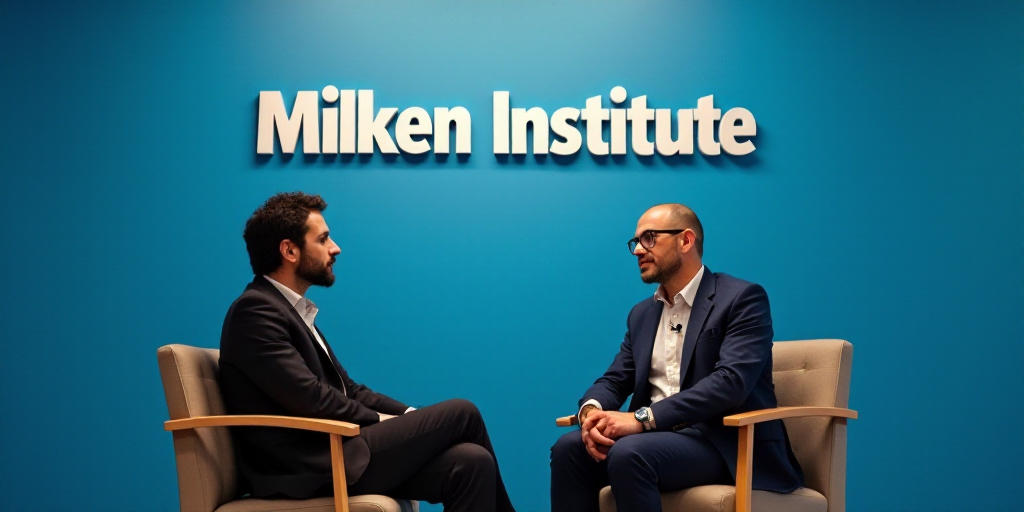
Ebrard announced that the United States and Mexico are working towards a shared vision on advanced manufacturing and supply chains during the Milken Institute’s Global Investors Mexico 2025 Symposium in Mexico City.
“We aim to establish security for our cooperation standards that we currently lack. This will enhance our capabilities and possibilities, becoming increasingly important in dialogues with the United States,” Ebrard stated.
Current Trade Figures
According to the latest data from the U.S. Department of Commerce, Mexico’s advanced manufacturing exports amounted to $14.46 billion in 2023, while its imports totaled $37.44 billion.
- Import categories include mobile robots, advanced materials, electronic sensors, simulation software, control or regulation instruments, integrated circuits, measurement instruments, and additive manufacturing materials like metal powders and wires, including polymers.
Ebrard’s Optimistic Outlook on Regional Integration
Ebrard expressed optimism about regional integration, emphasizing the importance of Mexico’s economic ties with both the U.S. and Canada.
“Our integration strength with the United States makes it impossible to imagine our future without the U.S., Mexico, and Canada. Despite immediate pressures and tensions visible in the media, we will achieve our primary goal: to survive with integration and create, for the first time, a shared vision and program to protect our supply chains and organize advanced manufacturing processes,” he said.
Ebrard highlighted that the three countries have not had coordinated plans regarding these issues, which has proven costly.
Upcoming Negotiations and APEC Cooperation
When questioned about ongoing tariff negotiations between Mexico and the U.S., Ebrard mentioned that Mexico anticipates U.S. President Donald Trump’s stance at the upcoming APEC Leaders Summit in South Korea.
“We have several meetings at APEC, and we need to see what position President Trump will take. After that, I can provide detailed information on the subsequent steps,” Ebrard explained.
Importance of North American Coordination
Ebrard stressed the necessity of close coordination among Mexico, the U.S., and Canada to compete with Asia in advanced manufacturing.
“The more time Mexican, U.S., and Canadian officials spend at the negotiation table, the clearer our shared vision or common interests will become compared to the challenges faced by these three nations,” he argued.
Ebrard pointed out that recent discussions have shifted from fentanyl to advanced manufacturing in North America, acknowledging the disparity in skills among the three countries.
Examples of New Integration
Ebrard outlined potential areas for collaboration, such as artificial intelligence development, data centers and the data economy between Mexico and the U.S., drone production, medical devices, and petrochemical products.
Key Questions and Answers
- What is the focus of collaboration between the US and Mexico? Both countries aim to establish a shared vision on advanced manufacturing and supply chains.
- What are the current trade figures for Mexico’s advanced manufacturing sector? In 2023, Mexico exported $14.46 billion worth of advanced manufacturing goods and imported $37.44 billion.
- What challenges do the three North American countries face? They lack coordinated plans to address advanced manufacturing and supply chain issues, which has proven costly.
- What is the significance of close cooperation among Mexico, the US, and Canada? It is crucial for competing with Asia in advanced manufacturing, as more time spent at the negotiation table clarifies shared visions and common interests.
- What are some examples of new integration areas? Artificial intelligence development, data centers and the data economy, drone production, medical devices, and petrochemical products.




