
Introduction to the Mucbipollo and Hanal Pixán
As autumn arrives in Yucatan, the cool northern wind carries the scent of smoke, corn, and burning plantain leaves. This signals that subterranean ovens, known as pib, are being fired up. Among these sacred foods is the mucbipollo, a giant corn-based tamal that symbolizes communication between the living and the dead during Hanal Pixán, the Mayan celebration of Día de Muertos.
Origins and Evolution
Before the arrival of the Spanish, Mayans cooked their food in pits dug into the earth as part of agricultural and funerary rituals. This was a way to return what the earth gave back. Early pibs contained tamales made from corn dough and venison, guajillo, or pecari meat, wrapped in corn husks and steamed with hot stones.
With the conquest, new ingredients like chicken, pork, and exotic spices were introduced. This syncretism transformed the ancient ritual tamal into a mestizo dish, but its spiritual sense remained unchanged. Burying the mucbipollo is still a gesture of respect towards ancestors and a communion with the earth.
Hanal Pixán: The Feast for Souls
In Yucatan, Día de Muertos is called Hanal Pixán, or “food for the souls.” Celebrated from October 31 to November 2, it has its own symbolic calendar: the first day is for deceased children, the second for adults, and the third for solitary souls. Each home sets up an altar with flowers, candles, photos, fruits, and dishes that the departed loved in life.
The centerpiece of this offering is usually the mucbipollo, a giant tamal that symbolizes the connection between the living and the dead.
Preparation and Community
The preparation begins at dawn. Families grind corn, prepare the red recado with achiote, garlic, cumin, and oregano, shred the chicken, and fire up the pib. The process involves everyone: grandmothers teaching, children watching, and men digging the oven. Cooking underground becomes a collective act that strengthens community bonds.
As the tamal bakes, the earth exhales smoke, and the air fills with a blend of corn and ash aroma. When the oven is finally opened, the charred plantain leaves envelop the mucbipollo’s hearty red center, shared among the living and the dead.
A Flavor Rooted in Memory
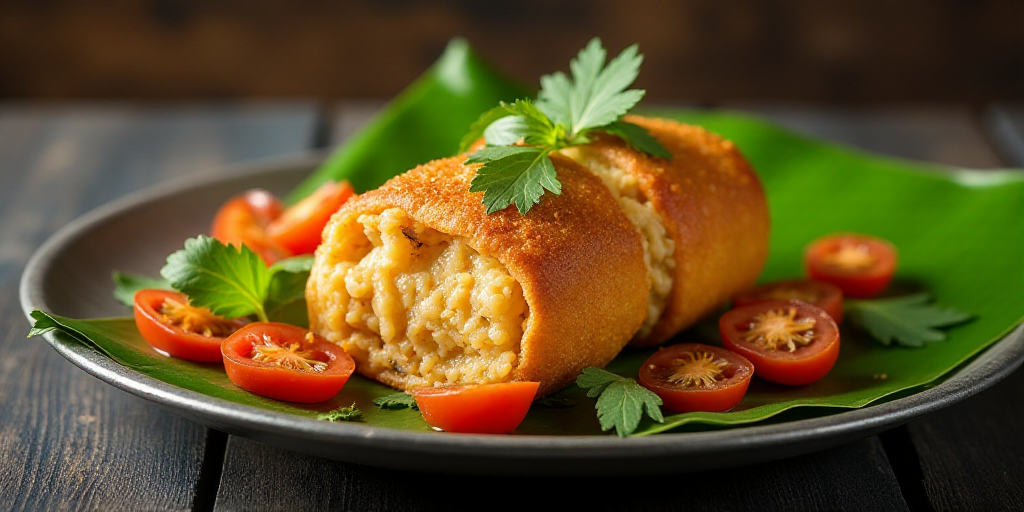
Unlike any other tamal, the mucbipollo has a thicker dough, a smoky flavor, and a dense, moist texture reminiscent of well-cooked bread. Its interior contains layers of chicken, tomatoes, purple onions, and sweet bell peppers, all dyed with achiote. Wrapped in fire-kissed plantain leaves and baked for hours, the mucbipollo releases a deep, earthy, and sweet aroma when split—the scent of cooked earth.
In some villages, it’s served with fresh atole or newly brewed coffee. In others, it’s eaten with ground habanero chili and lime juice. Beyond the recipe, what’s shared is the gesture: offering the best of corn, a symbol of life, to those who have passed away.
Key Questions and Answers
- What is the Mucbipollo? The mucbipollo is a giant, sacred tamal from Yucatan, baked underground during the Hanal Pixán celebration. It symbolizes communication between the living and the dead.
- What is Hanal Pixán? Hanal Pixán, or “food for the souls,” is a Mayan celebration of Día de Muertos in Yucatan, observed from October 31 to November 2.
- How is the Mucbipollo prepared? The mucbipollo is made by grinding corn, preparing a red recado with achiote and spices, shredding chicken, and baking it in a subterranean oven (pib).
- What makes the Mucbipollo unique? The mucbipollo has a thicker dough, smoky flavor, and dense texture. It contains layers of chicken, vegetables, and achiote-dyed corn dough, wrapped in charred plantain leaves.
- What is the significance of the Mucbipollo in Hanal Pixán? The mucbipollo serves as the centerpiece of offerings during Hanal Pixán, symbolizing the connection between the living and the dead.




