
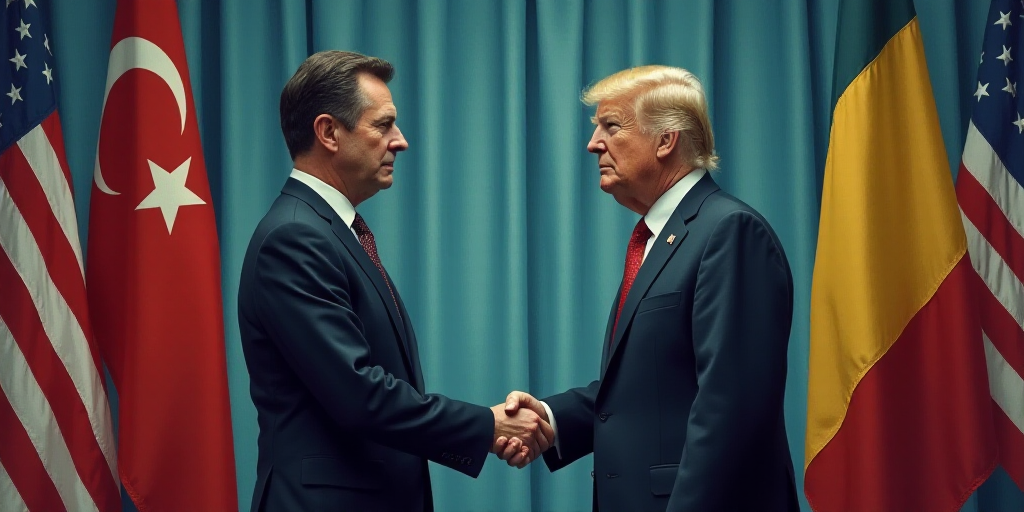
Background on the Negotiations
In a significant development, US President Donald Trump has agreed to Brazilian President Luiz Inácio Lula da Silva’s request and instructed his team to initiate tariff negotiations in Kuala Lumpur. The aim is to temporarily suspend the 50% tariff increase imposed on Brazilian products during the negotiation period, seeking a definitive solution.
The Road to Negotiations
Previously, Washington had raised political issues. However, following the conversation between Lula and Trump, the dialogue has shifted to trade matters, focusing on bilateral discussions with the Brazilian government rather than the Bolsonaro family.
In parallel, the US has temporarily suspended steep tariffs while negotiating with China. Brazil anticipates a similar outcome soon.
The Meeting: A Positive Start
Brazil’s Foreign Minister, Mauro Vieira, summarized the 45-minute conversation as “very positive and productive,” stating that both presidents addressed all topics.
The meeting was scheduled for 15:30 local time. Journalists from Brazil and the US were allowed to observe the initial moments, evident by Trump’s enthusiasm in engaging with the press. For approximately nine minutes, Trump answered questions, expressing his admiration for Brazil as a “great country” and a “big and beautiful nation.”
Trump also mentioned the possibility of reaching “very good agreements” and maintaining a “very good relationship.” He acknowledged the need to discuss tariffs, stating that both parties are familiar with each other’s interests.
Lula emphasized that the US justification for imposing tariffs does not apply to Brazil, citing a $410 billion trade surplus in bilateral relations over the past 15 years. He presented Trump with a document outlining these figures in English.
Key Questions and Answers
- Who are the key figures involved? US President Donald Trump and Brazilian President Luiz Inácio Lula da Silva.
- What was the main topic of discussion? The 50% tariff increase imposed on Brazilian products during negotiations.
- Why were these negotiations initiated? In response to Lula da Silva’s request, aiming for a definitive solution and temporary suspension of tariffs.
- What is the significance of these negotiations? These talks could potentially lead to a more favorable trade relationship between the US and Brazil, similar to the ongoing negotiations with China.
Context and Impact
Luiz Inácio Lula da Silva, a former Brazilian president (2003-2010), has been instrumental in fostering international relations. His recent engagement with Donald Trump signifies a shift in focus from domestic political issues to trade matters, potentially benefiting both nations.
The US-Brazil trade relationship has been marked by a significant trade surplus for the US. By addressing this imbalance, these negotiations could lead to a more balanced and mutually beneficial commercial partnership.
Moreover, the positive tone of the initial meeting suggests a willingness to collaborate and find common ground. This could pave the way for future cooperation in various sectors, including technology, agriculture, and manufacturing.




