
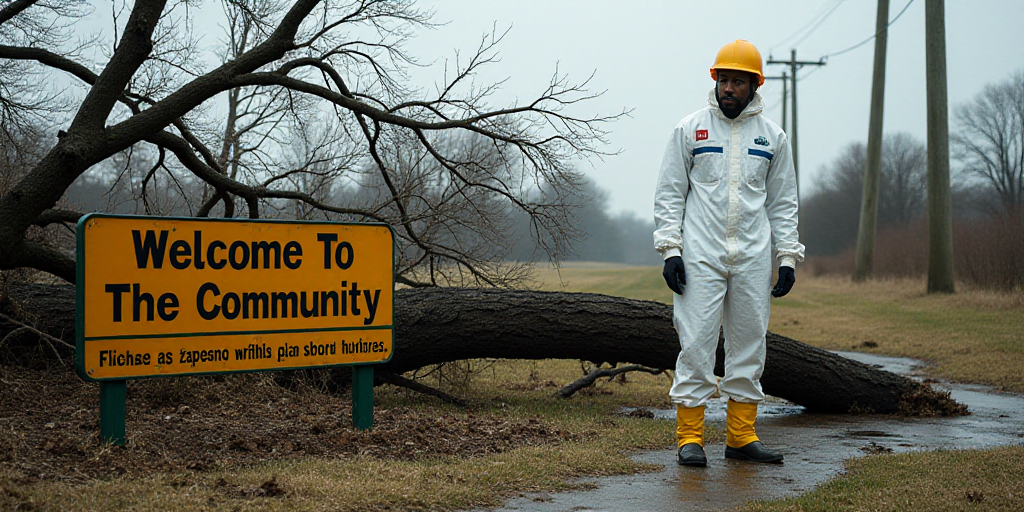
Introduction to Hurricane Melissa
Hurricane Melissa, one of the strongest Atlantic huracanes ever recorded, made landfall in Jamaica on Tuesday with fierce winds and torrential rains, becoming the most powerful storm to ever hit the Caribbean island. The hurricane, initially a Category 5 with sustained winds of up to 295 km/h, was downgraded to Category 4 by the National Hurricane Center (NHC) of the United States. However, the NHC warned that Melissa remained a “very powerful” storm with winds up to 240 km/h.
Impact on Jamaica
Jamaica has been enduring flooding and extreme winds caused by Melissa, a slow-moving and destructive hurricane. Its power surpasses that of some of the most devastating hurricanes in recent years, such as Katrina, which ravaged New Orleans in 2005.
- At least seven deaths have been attributed to the deteriorating weather conditions caused by Melissa: three in Jamaica, three in Haiti, and one in the Dominican Republic.
- Jamaica’s Prime Minister, Andrew Holness, warned about the hurricane’s consequences in the most affected areas: “I don’t believe there is any infrastructure in this region that can withstand a Category 5 hurricane.”
- Anne-Claire Fontan from the World Meteorological Organization stated, “For Jamaica, this will be the storm of the century so far.”
Many residents disregarded evacuation orders, prompting concerns from authorities. Famous Jamaican figures like Olympic sprinter Usain Bolt urged citizens to stay safe on social media. Ishack Wilmot, sheltering in Kingston with his family, reported losing electricity and water supply during the night but remaining safe from the hurricane’s eye.
Melissa’s Slow Advance Towards Cuba
Melissa is expected to reach Cuba by Tuesday night. The National Defense Council declared the “alarm phase” in six eastern provinces: Santiago de Cuba, Guantánamo, Holguín, Camagüey, Granma, and Las Tunas.
- Authorities began evacuating approximately 650,000 people in these provinces, where residents stocked up on supplies and secured their rooftops with cords.
- Non-essential classes and work activities were suspended.
In Jamaica, the Red Cross distributed potable water and hygiene kits in anticipation of service disruptions. The organization’s spokesperson, Esther Pinnock, expressed concern over Melissa’s slow pace, which heightened anxiety.
Meteorologists predicted up to a meter of rainfall, with sudden flooding and landslides also expected in Haiti, the Dominican Republic, and Cuba.
Climate Change and Hurricane Intensity
Scientists assert that human-induced climate change has intensified large storms and increased their frequency, as seen with Hurricane Melissa. Meteorologist Kerry Emanuel explained that global warming causes more storms to intensify rapidly, raising the risk of extreme rainfall.
“Water kills far more people than wind,” Emanuel told AFP.
The last major hurricane to affect Jamaica was Beryl in July 2024, an unusually strong storm for that time of year. Climate scientist Daniel Gilford emphasized, “Human-induced climate change is exacerbating the most severe aspects of Hurricane Melissa.”




