
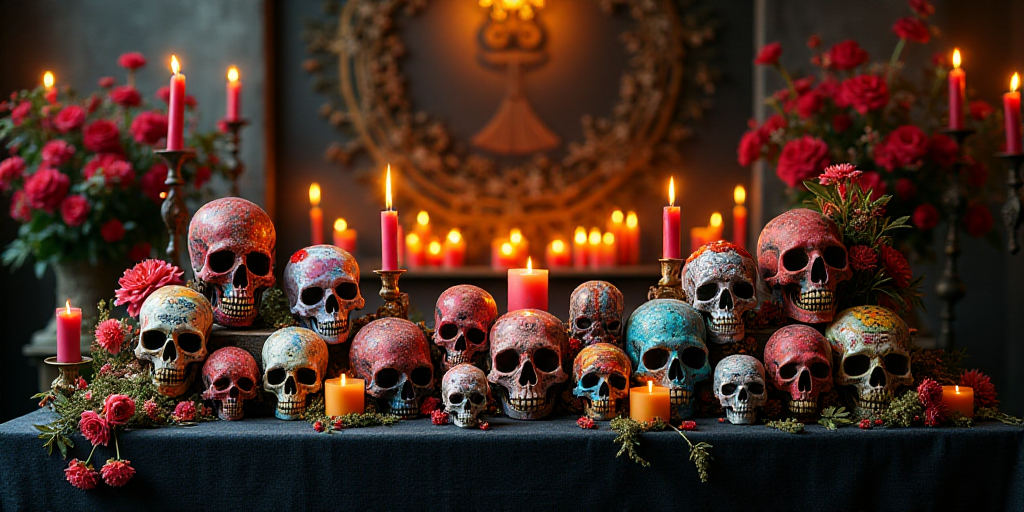
The Meaning of Día de los Fieles Difuntos
On November 2nd, Mexico observes Día de los Fieles Difuntos, a day dedicated to honoring adults who have passed away. Rooted in both Catholic tradition and pre-Hispanic customs, it is believed that the souls of deceased adults return to the world of the living to reunite with their families, enjoy the aroma of altars, and be remembered.
The Calendar of Día de Muertos: A Breakdown
While the celebration begins on October 28th, the ritual calendar distinguishes specific days for different types of souls:
- October 28th: Souls of those who died tragically return.
- October 30th and 31st: Remembering unbaptized children.
- November 1st: All Saints’ Day, dedicated to deceased children or “angelitos.”
- November 2nd: Día de los Muertos or of adults who have passed away.
This division stems from the syncretism between indigenous beliefs, such as Mexica festivals for Miccailhuitontli (dead children) and Hueymiccailhuitl (adult deceased), and Catholic celebrations brought by the Spanish.
A Blend of Worlds: Pre-Hispanic Origins and Catholic Faith
For various indigenous cultures, such as the Mexicas or Mixtecos and Zapotecs, death was an integral part of life’s natural cycle. Upon dying, the soul embarked on a journey to Mictlán, while the living kept their memory alive through offerings, food, and agricultural rituals.
With the arrival of Christianity, these customs did not disappear; instead, they were incorporated into the Catholic celebrations of All Saints’ Day and the Faithful Departed, giving rise to the mestiza festivity we know today.
This cultural harmony led the UNESCO to declare in 2003 the Día de Muertos as Intangible Cultural Heritage of Humanity.
The Altar: A Bridge Between the Living and the Dead
The altar of the dead is the central element of November 2nd. It symbolizes reunion and carries multiple meanings:
- Candles and censers: guide the souls on their return journey.
- Incense or copal: purifies and cleanses the space.
- Water: quenches the thirst of souls after their long journey.
- Salt: protects the spirit and prevents corruption.
- Cempasúchil flower: its aroma and color mark the path; petals are placed from the entrance to the altar or cemetery.
- Pan de muerto: represents the cycle of life and death.
- Fruits and traditional dishes: mandarins, sugar cane, guava, mole, coffee, or the deceased’s favorite foods.
- Sugar skulls or chocolate skulls: replace the real skulls used in ancient times.
- Paper cutouts: symbolize the wind and joy of welcoming those who return.
- Photographs: are the heart of the altar; without them, the deceased cannot “recognize” they are welcome.
- Visiting the cemetery: a visit that illuminates graves and memories
November 2nd is also a day for visiting cemeteries. Families clean graves, place flowers, candles, and in traditional places like Mixquic (CDMX), Janitzio, Pátzcuaro (Michoacán), Oaxaca, or Cuetzalan (Puebla), vigils are held until dawn. In Mixquic, for example, “La Alumbrada” is celebrated, where thousands of candles illuminate the cemetery.
Celebrating Life Through Death
Contrary to a somber tradition, Día de los Muertos celebrates memory. In the Mexican worldview, death is not absence but a living presence through remembrance. Hence, crying is uncommon on this day; instead, the deceased are welcomed with food, music, and affection, as if they were returning home annually.
Key Questions and Answers
- What is Día de los Fieles Difuntos? It’s a Mexican holiday on November 2nd honoring deceased adults, blending Catholic and pre-Hispanic beliefs.
- What does the altar symbolize? The altar represents reunion and carries multiple meanings, each element having a specific purpose to guide and welcome the souls.
- How do people celebrate this day? Families visit graves, clean them, and adorn them with flowers, candles, and offerings. They also build elaborate altars in their homes.
- What is the significance of photographs on the altar? Photographs are crucial as they help the deceased recognize their welcome.
- Why is Día de los Muertos not a mournful occasion? It celebrates life and memory, welcoming the deceased as if they return home annually.




