
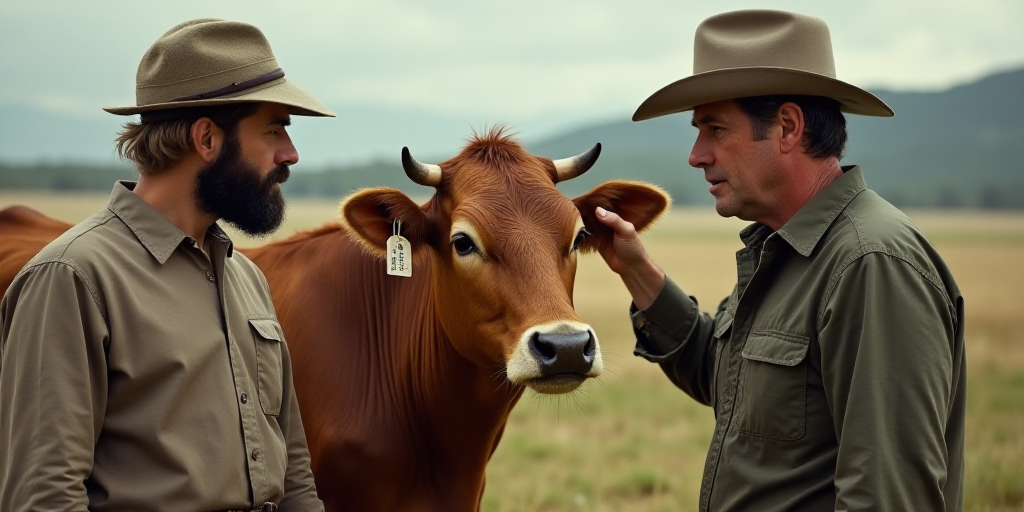
Background on Brooke Rollins and Her Role
Brooke Rollins serves as the United States Secretary of Agriculture, a position crucial in overseeing the nation’s food and farming policies. Her recent statements highlight a significant concern regarding the New World Blister Fly outbreak and its impact on livestock trade with Mexico.
New World Blister Fly Outbreak and Its Impact
The New World Blister Fly, a parasitic fly whose females lay eggs in wounds and whose larvae feed on living flesh, has been causing concern in Mexico. This pest poses a threat to both the US and Mexican cattle industries as it spreads northward from Central America.
Current Situation and Concerns
Despite US President Donald Trump’s focus on reopening the border, which has been largely closed to Mexican livestock since May, Secretary Rollins stated that the US is not yet prepared to do so due to the ongoing outbreak. She emphasized the need for complete confidence that all measures are in place to prevent the pest’s entry.
Mexico’s Efforts to Contain the Outbreak
Mexico has been actively working to contain the outbreak, which originated in Central America. Although the pest hasn’t crossed into the US border yet, it threatens to cause $1.8 billion in damages alone to the Texas economy, according to USDA estimates.
Recent Developments and Collaboration
In a recent meeting with Mexican officials, including the capital’s mayor Claudia Sheinbaum, Rollins expressed satisfaction with Mexico’s efforts to control the pest. She described their collaboration as “a completely different, more sophisticated, and impressive operation” compared to earlier in the year.
The New World Blister Fly: Understanding the Threat
The New World Blister Fly is a parasitic fly whose females lay eggs in wounds, and the larvae feed on living flesh, eventually killing their host if not treated. Rollins reported 11 cases of the fly in Mexican border states with the US, all contained and treated.
The key, according to Rollins, is keeping the fly away from the southern US border, which it has come dangerously close to. She stressed the need to ensure it retreats rather than advances.
Illegal Livestock Movement and Cross-Border Trade
Rollins highlighted the illegal movement of livestock as a “major issue,” noting that Mexico has implemented new safeguards and checkpoints to monitor illicit trade better. Animals can be smuggled from Guatemala, Honduras, Nicaragua, or other Central American countries with fake documents and crossbreeding facilities.
Impact on US Livestock Industry
The border closure has exacerbated the already tense situation in the US livestock supply, with cattle prices reaching record highs while herd sizes are at their lowest in decades. Consumer demand remains strong, with approximately 250,000 head of cattle waiting south of the US border to enter.
Key Questions and Answers
- What is the current status of reopening the US border to Mexican livestock? The US is not yet prepared to reopen the border due to the New World Blister Fly outbreak.
- Who is Brooke Rollins, and what is her role? Brooke Rollins serves as the United States Secretary of Agriculture, responsible for overseeing food and farming policies.
- What is the New World Blister Fly, and why is it a concern? The New World Blister Fly is a parasitic fly threatening both US and Mexican cattle industries as it spreads northward from Central America.
- How is Mexico addressing the outbreak? Mexico has been actively working to contain the outbreak, implementing new safeguards and checkpoints to monitor illicit trade better.
- What factors are influencing the decision to reopen the border? The primary concern is ensuring the safety of US livestock rather than market prices.




