
Recent Achievements and the Rise of Women’s Soccer in Mexico
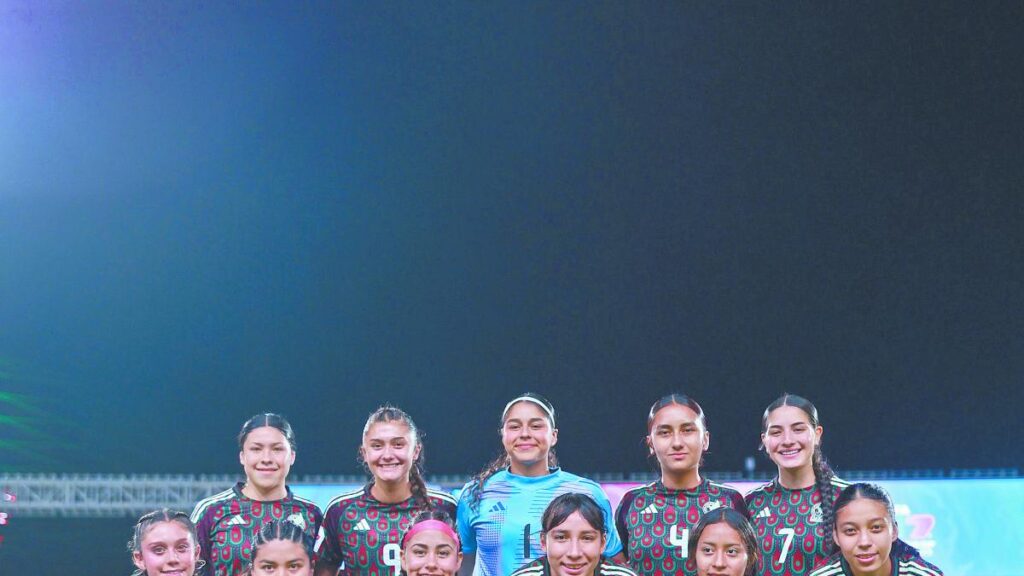
Over the past seven years, coinciding with the establishment of Liga MX Femenil in 2017, Mexico has achieved its best results in youth-level World Cups. The team secured a silver medal at the U17 World Cup in Uruguay 2018 and a third-place finish at the U17 World Cup in Morocco 2025.
The Emergence of Women’s Soccer in Mexico
Liga MX Femenil, launched in 2017, has given young girls an incentive to consider soccer as a career option. The Mexican national team has already taken significant steps towards professionalizing women’s soccer and reaching podium finishes in World Cups.
Andrea Rodebaugh’s Vision for the Future
After Mexico’s third-place finish at the 2025 World Cup in Morocco, where they defeated teams like the Netherlands, Italy, and Brazil, Andrea Rodebaugh, Director of National Teams Femeniles, emphasized the need for structural adjustments from the ground up.
“We can keep working harder and I often talk about building a strong foundation from the bottom,” Rodebaugh stated, highlighting the importance of nurturing young talent and providing them with consistent opportunities to develop their skills for international competitions.
Tracking Player Development
Mexico has made a quiet but impactful entrance in the U17 World Cups of 2018 and 2025, securing podium finishes and individual accolades. Nicole Pérez won the Silver Ball in Uruguay 2018, while Valentina Murrieta earned the Golden Glove in Morocco 2025.
However, concerns remain about player development. Of the 21 players called up for the 2025 World Cup, 14 will turn 17 by November-December, seven are 16, and one even played at the age of 15. Fifteen players are registered in Liga MX Femenil clubs, while the remaining six play in semi-professional teams in the US or are part of a collegiate league.
Expert Opinions on Strengthening Women’s Soccer in Mexico
Gabriela Batocletti, a coach endorsed by the Mexican Football Federation (FMF) and currently leading Persas FC in Kings League Americas, believes that federating female youth categories between U13 and U17 is crucial for providing more opportunities and exposure to young girls.
“We need to start working on female youth bases to ensure a steady escalation of positions, so players don’t just appear and then disappear,” Batocletti told El Economista. “I also recommend federating the U17 category to keep nurturing talented players who might not yet be signed with a club.”
Ileana Dávila, former director of Pumas Femenil from 2017 to 2021, stresses that the real challenge for players begins after a youth-level World Cup.
“The true challenge for players is to maintain their physical, technical, and mental progress so they don’t just remain promising prospects but actually consolidate as high-performance soccer players,” Dávila explained.
Accelerated Development
The U17 Female World Cup was first held in 2008 and has occurred every two years since. Starting in 2025, it will become an annual event, similar to the male category.
Only the U20 World Cups will continue to be held every two years, being the only ones sanctioned by FIFA regarding age limits.
This rapid development requirement places a significant challenge on talent nurturing from both the FMF and Liga MX Femenil, as Andrea Rodebaugh pointed out: “There isn’t time to start searching; instead, we already have a U16 category being prepared for follow-up.”
Currently, Liga MX Femenil hosts a U19 competition with all 18 teams participating. In recent years, there have also been U17 and U18 tournaments.
“One crucial aspect is that the women’s league has grown considerably, prompting clubs to invest in their youth systems,” Ileana Dávila noted. “This early, comprehensive training sets Mexican players apart and fosters a strong competitive culture focused on high performance.”
Looking Ahead to Senior-Level World Cups
Mexico has yet to qualify for the senior-level Female World Cup in both 2019 and 2023, making success in upcoming major tournaments (Brazil in 2027 and an undisclosed location in 2031, with Mexico being one of the candidate hosts alongside the US, Costa Rica, and Jamaica) a crucial goal for these promising generations.




