
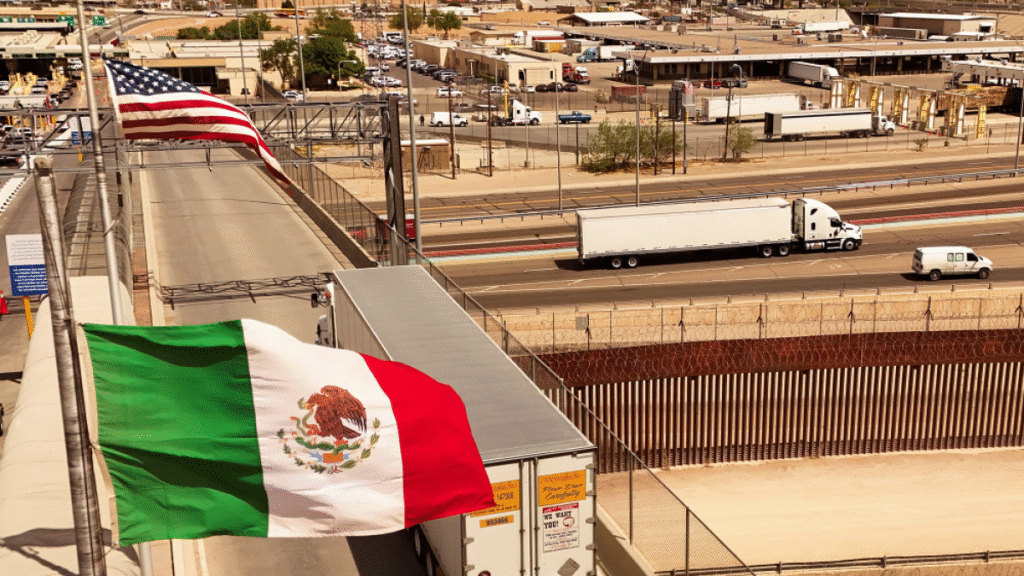
Background on Mexican Customs and Relevance
Mexico’s customs offices have achieved a historic milestone, surpassing one trillion pesos in tax revenue during the first nine months of 2025. This remarkable achievement highlights the importance of customs in Mexico’s tax collection system.
With 50 customs offices, including terrestrial, maritime, and air facilities, Mexico’s customs play a crucial role in generating revenue through various taxes. Among these, the Impuesto al Valor Agregado (IVA), or Value Added Tax, accounts for nearly two-thirds of the total tax revenue collected at customs. Other significant taxes include the Impuesto Especial sobre Producción y Servicios (IEPS), Impuesto General de Importación (IGI) or tariffs, Derecho de Trámite Aduanero (DTA), and Impuesto Sobre Automóviles Nuevos (ISAN).
Key Customs Offices and Revenue
Among the 50 customs offices, Nuevo Laredo in Tamaulipas leads in tax collection with 163,995 million pesos so far in 2025. Manzanillo in Colima follows closely with 139,664 million pesos, while the Veracruz port ranks third with 107,692 million pesos.
Recent Reforms to Boost Customs Revenue
In October 2025, the Mexican Congress approved a reform to the Customs Law with the primary goal of increasing tax collection at customs offices.
This reform introduces substantial changes to key aspects of Mexican customs operations. Notably, it makes customs agents fully and jointly responsible for the commercial operations they engage in. Previously, exculpatory clauses in legislation shielded agents from liability if they received false information from importers or exporters that they couldn’t detect.
With the elimination of these exculpatory clauses, customs agents now share responsibility with importers or exporters and must verify the accuracy of goods information. Additionally, patents and authorizations for customs agents and agencies will have a 20-year validity, with the possibility of extension for another 20 years.
The reform also mandates annual certification for customs agents and establishes a Customs Council responsible for granting, renewing, suspending, or extinguishing patents and authorizations.
Key Questions and Answers
- What taxes are collected through Mexican customs? The primary tax collected at Mexican customs is the Value Added Tax (IVA), accounting for nearly two-thirds of total tax revenue. Other significant taxes include the Special Production and Services Tax (IEPS), General Import Tax (IGI) or tariffs, Customs Brokerage Fee (DTA), and New Vehicle Tax (ISAN).
- Which customs offices generate the most tax revenue? Nuevo Laredo in Tamaulipas, Manzanillo in Colima, and the Veracruz port are among the top customs offices for tax collection in Mexico.
- What changes were introduced by the recent customs law reform? The reform makes customs agents fully and jointly responsible for commercial operations, eliminates exculpatory clauses that previously shielded agents from liability, extends patent validity to 40 years, and establishes a Customs Council for granting, renewing, suspending, or extinguishing patents and authorizations.




