
Introduction
The modern screens found in Mexican-made cars, which enable navigation via Google Maps and music streaming on Spotify, face a new reality due to President Donald Trump’s tariff war. These screens, assembled in Mexico by companies like Ford, General Motors, and Stellantis, rely on approximately 800 components sourced from various countries, primarily China. This complex supply chain is now under scrutiny due to Mexico’s proposed tariff reform by President Claudia Sheinbaum.
Mexico’s Tariff Reform Proposal
President Sheinbaum’s proposed reform aims to impose tariffs on products and components from China, South Korea, India, among others, with which Mexico lacks trade agreements. This move is intended to decrease the trade deficit with China and bolster domestic industries. However, this comes at a time when Sheinbaum is negotiating with Trump to avoid tariff impositions and as the T-MEC agreement is set for review in 2026.
The Significance of the Automotive Industry in Mexico
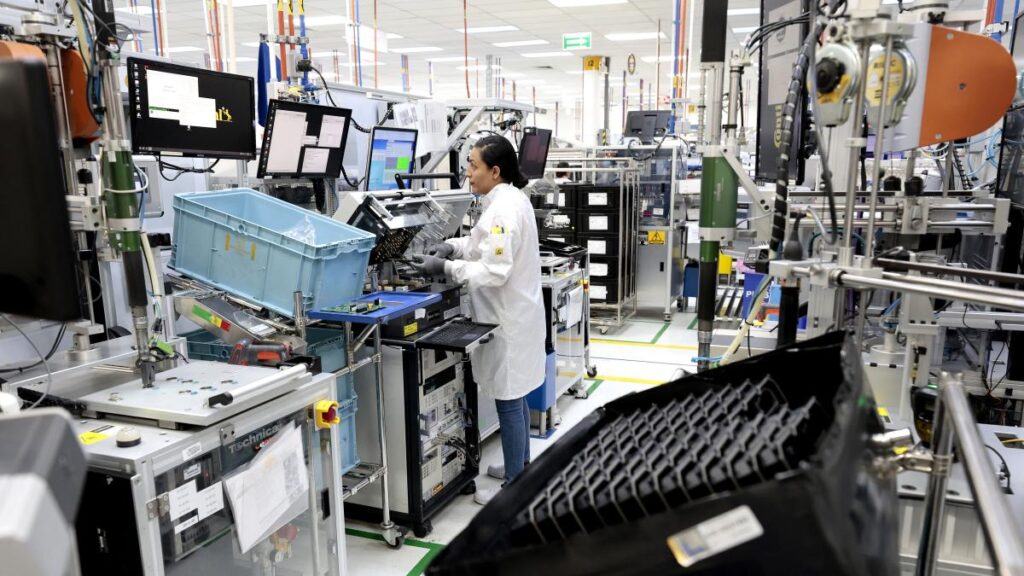
Mexico has become a significant player in the automotive industry, thanks to the T-MEC agreement between Mexico, the United States, and Canada. Companies like Aumovio, based in Germany, assemble components such as screens in cities like Guadalajara for major automotive brands. This industry has transformed North America into an efficient manufacturing platform, with millions of drivers worldwide unaware of the intricate supply chains and numerous components sourced from different countries, mainly China.
China’s Role in Mexican Manufacturing
Despite the United States being Mexico’s largest trading partner, China has emerged as a crucial source of components for Mexican manufacturers due to its lower costs and advanced technology. This dependency is reflected in the substantial increase of Mexican imports from China, pushing the trade deficit with China to a record high of nearly $120 billion in 2024.
Reactions from Industry Players
Companies like Aumovio oppose the proposed tariff increase while engaging in discussions with the Mexican government. Carlos Gómez, Director of Purchasing and Quality for Providers at Aumovio, explains that building a national supply chain is challenging due to the need for significant investments in assets and machinery, along with a lengthy learning curve.
Challenges and Opportunities
Amapola Grijalva, representative of the Mexico-China Chamber of Commerce and Technology, acknowledges that certain components, especially electronics, photovoltaic generation, and batteries, are highly efficient and primarily sourced from China. She warns that approving these tariffs could lead to higher prices for consumers.
However, some companies view these changes as opportunities. Kold Roll, a steel bar manufacturer for the automotive industry and other sectors, has maintained its commitment to using 100% North American materials despite market and cost pressures, according to Eric González, the company’s General Director.
Key Questions and Answers
- What is the main issue at hand? The primary concern is Mexico’s proposed tariff reform targeting China, South Korea, India, and others, which could disrupt the complex supply chains in Mexico’s thriving automotive industry.
- Why is China a significant component supplier for Mexican manufacturers? China offers lower costs and advanced technology, making it an attractive source for components like screens in Mexican-made cars.
- How are industry players responding to the proposed tariffs? Companies like Aumovio oppose the tariff increase while engaging in discussions with the Mexican government. Meanwhile, some firms like Kold Roll see this as an opportunity to strengthen their use of North American materials.
- What are the challenges in building a national supply chain? Establishing a national supply chain requires substantial investments in assets and machinery, as well as a lengthy learning curve.
- What are the potential consequences of these tariffs for consumers? Industry representatives warn that approving these tariffs could lead to higher prices for consumers, especially regarding electronics and battery components.




