
Key Players and Their Visions for Autonomous Vehicles
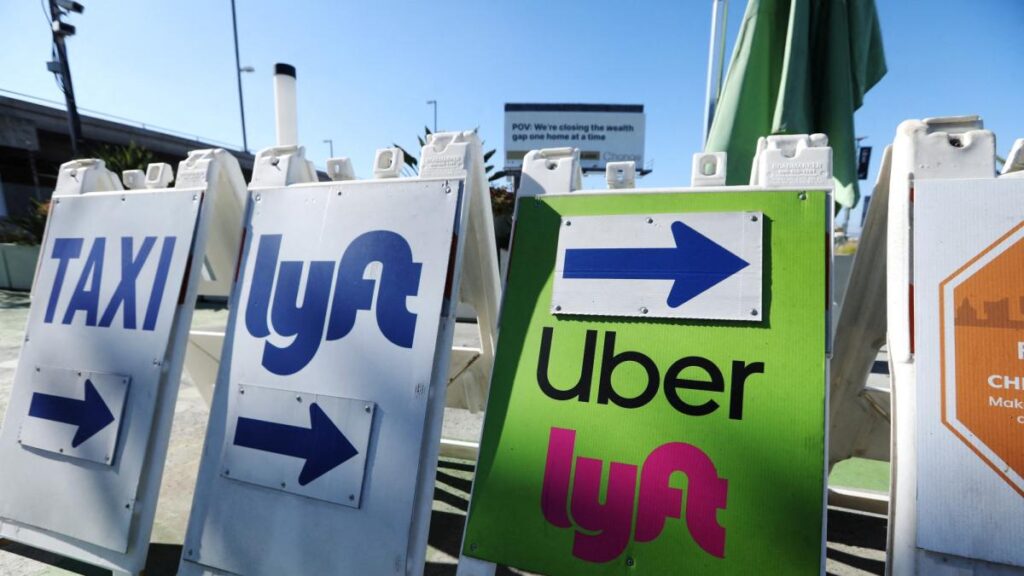
Uber and Lyft, major mobility platforms, have outlined plans for the introduction of autonomous vehicles during the Web Summit in Lisbon. However, infrastructure, regulatory development, and passenger preference for human contact are hindering this process.
Andrew McDonald, Uber’s Chief Operating Officer, stated on Tuesday that the challenge of creating safer autonomous vehicles than human-driven cars “has largely been resolved.” He emphasized that the remaining issue is commercialization.
David Risher, Lyft’s CEO, expressed optimism on Wednesday, stating that if autonomous driving accounts for even 10% of the business within five years, it would be a significant success. This would represent approximately $500 million out of Lyft’s gross earnings of $5 billion in the last quarter.
Partnerships and Trials
Lyft, with a 30% market share in the US and having recently acquired European taxi app FreeNow, plans pilot projects in select cities. The company is collaborating with California-based startup Waymo for trials in Nashville, US, where Waymo already operates driverless vehicles in San Francisco.
Lyft is also partnering with Chinese tech giant Baidu to conduct trials in Germany and the UK. Meanwhile, Uber has teamed up with Waymo in Austin and Atlanta, US, and with Chinese firm WeRide in Abu Dhabi.
Geopolitical Tensions and Collaboration
Despite fierce competition between US and Chinese companies in fields like Artificial Intelligence (AI) and semiconductors, cooperation exists in the autonomous vehicle sector. However, due to geopolitical tensions, Chinese manufacturers are unlikely to attempt conquering the US automotive market with autonomous vehicles, according to Risher of Lyft.
In markets where Chinese companies lack connections and understanding of the environment, these firms “consider partnering with companies like ours to market their technology,” Risher added.
The Human Factor
Both Uber and Lyft anticipate that human drivers will continue to operate the majority of rides in the short term.
“The transition from a fully human workforce to AI in the world of autonomous vehicles will be delicate,” acknowledged Uber’s Andrew Macdonald. He believes that Uber’s extensive network will aid in introducing these vehicles and ensuring a smooth transition.
Risher of Lyft noted that currently, there aren’t enough autonomous vehicles worldwide to meet the demand. Moreover, passengers often appreciate human assistance with luggage or a friendly conversation at the end of their journey.
Key Questions and Answers
- What is the current status of autonomous vehicle technology? – The production of safer autonomous vehicles than human-driven cars is nearly resolved, according to Uber’s COO.
- What are the main challenges for autonomous vehicle implementation? – Infrastructure, regulatory development, and passenger preference for human contact are significant obstacles.
- What partnerships have been established by Uber and Lyft? – Both companies have partnered with Waymo, acquired FreeNow, and are collaborating with Baidu. Lyft also recently partnered with Tensor, May Mobility, and Mobileye.
- How do geopolitical tensions affect autonomous vehicle development? – Despite competition, cooperation exists in the autonomous vehicle sector. Chinese manufacturers are unlikely to target the US market due to current tensions.
- What role will human drivers play in the transition to autonomous vehicles? – Human drivers are expected to continue operating most rides in the short term, as passengers often appreciate human assistance and conversation.




