
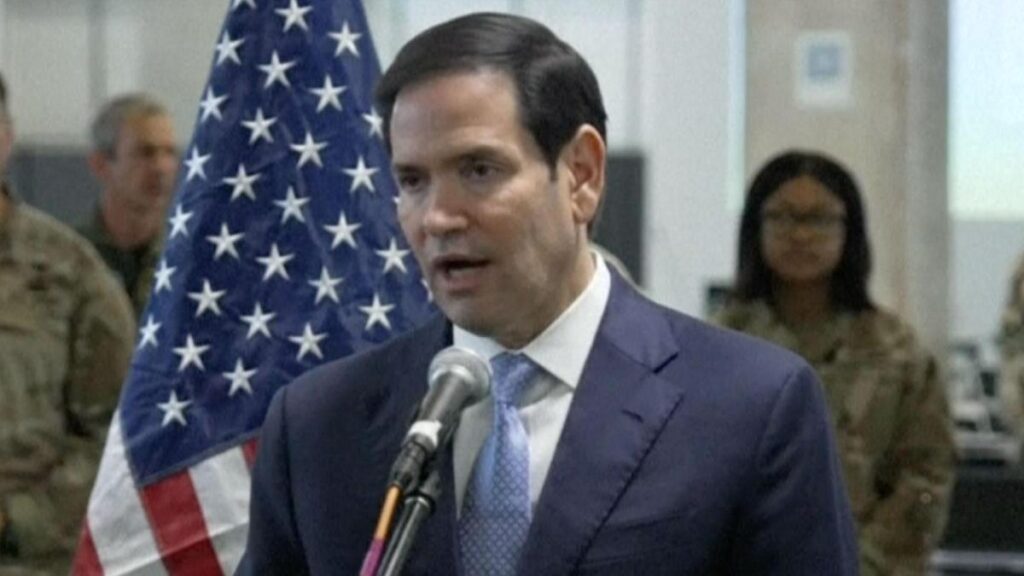
Background on Marco Rubio and His Role
Marco Rubio, the U.S. Secretary of State, has been a prominent figure in American politics since his election to the Senate in 2010. Known for his conservative views, Rubio has been a strong advocate for national security and anti-drug initiatives. As the top U.S. diplomat, he plays a crucial role in shaping foreign policy and addressing international concerns.
U.S. Military Operations in the Caribbean and Pacific
Recently, Rubio has defended controversial U.S. military operations in the Caribbean and Pacific aimed at combating drug trafficking. These operations have sparked criticism from various international entities, including the European Union (EU), which claims they violate international law.
Rubio’s Response to EU Criticism
During a press conference in Niagara-on-the-Lake, Canada, where the G7 Foreign Ministers’ meeting was taking place, Rubio firmly defended the U.S. actions.
- Question: What is Rubio’s stance on EU interference in U.S. policy?
- Question: How did Rubio address concerns about the legality of these operations?
- Question: Were the U.S. military operations discussed at the G7 meeting?
Answer: Rubio stated that the EU cannot dictate how the United States defends its national security. He emphasized that only the U.S. has the right to determine its approach to combat drug trafficking in its hemisphere.
Answer: Rubio asserted that if drug-smuggling vessels ceased operations immediately, the U.S. could halt its actions. He also criticized countries for accepting U.S. military assistance while objecting to its regional operations.
Answer: Rubio denied that these operations were discussed during the G7 meetings, stating that his counterparts may have talked about them privately but not in any official settings.
International Reactions and Concerns
Rubio’s defense comes amidst growing international concern over the U.S.’s military activities in the Caribbean and Pacific.
- Question: How did the French Foreign Minister respond to these operations?
- Question: What is the United Nations’ stance on the escalating tensions between the U.S. and Venezuela?
Answer: French Foreign Minister Jean-Noël Barrot expressed worry that these operations disregarded international law and could lead to destabilization in the region.
Answer: UN Secretary-General António Guterres urged for de-escalation through increased diplomatic dialogue, citing growing concerns over heightened hostilities between the U.S. and Venezuela.
Impact on Regional Stability and Drug Trafficking
The U.S. anti-drug operations in the Caribbean and Pacific aim to disrupt drug trafficking networks, which have significant implications for both American and European security.
Critics argue that these military actions could further destabilize the region, potentially exacerbating tensions between the U.S. and countries like Venezuela. Meanwhile, supporters of these operations maintain that decisive action is necessary to curb the flow of illicit drugs and protect national interests.




