
Background on COP30 and Indigenous Participation
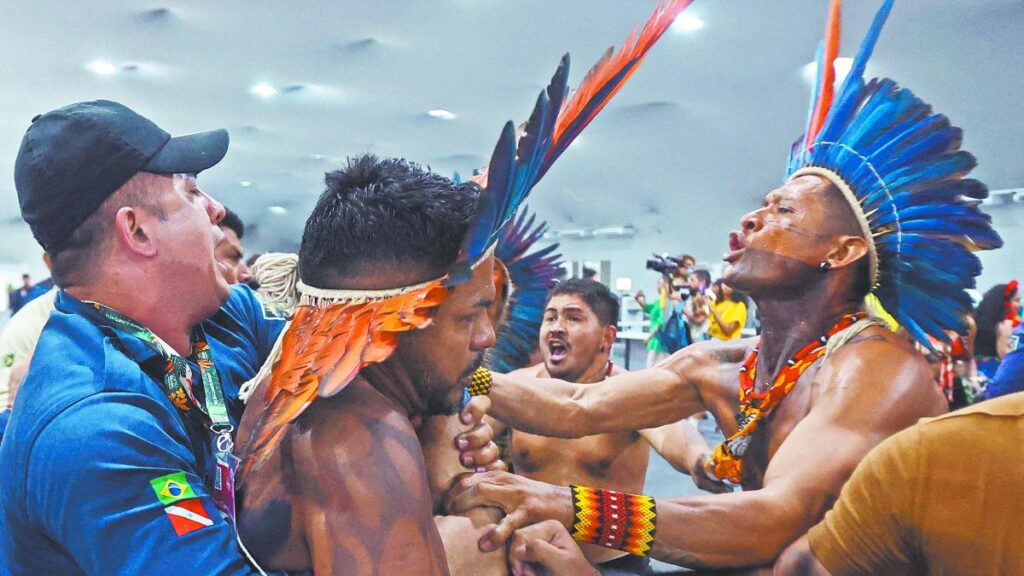
The 30th United Nations Climate Change Conference (COP30) is currently underway in Belém, Pará, Brazil. Despite the event’s purpose to address climate change, protests have erupted, particularly from indigenous leaders of the Amazon region.
Indigenous Leaders’ Protests
Since Tuesday, dozens of indigenous representatives from the Amazon region have faced off with security guards at the Belém Convention Center, attempting to present their demands inside but being denied entry, according to AFP reporters. Joao Santiago, a professor at the Federal University of Pará, explained that the protesters wanted to “voice their claims,” but were not allowed in.
Maria Clara, a protester from the Rede Sustentabilidade de Bahia association, stated that their demonstration aimed to “highlight the situation of indigenous peoples,” as their voices are often ignored. In contrast, Brazil’s Minister of Indigenous Affairs, Sonia Guajajara, expressed a desire for Brazil to host “the best COP in terms of indigenous participation.”
COP30 Preparatory Measures for Indigenous Participation
The COP30 organizers announced that over the past seven months, the Brazilian government, in collaboration with the Articulation of Indigenous Peoples of Brazil (APIB) and through the Ministry of Indigenous Affairs (MPI), conducted a series of meetings to prepare indigenous leaders and inform them about the COP30’s function and significance.
This initiative, called Ciclo COParente, gathered opinions from around 80 indigenous groups in the region to establish working agendas for the conference. Nearly 2,000 representatives from the 391 indigenous groups in Brazil participated in these preparatory meetings.
“We organized the entire process to prepare for this participation and ensure that the world listens, through their presence, to the contributions indigenous peoples have already made in addressing the climate crisis: our way of life, food systems through agroecology, reforestation and restoration actions,” emphasized Sonia Guajajara.
Greenpeace’s Maritime Protest
Meanwhile, Greenpeace reported that approximately 5,000 people aboard 200 vessels sailed in the Amazon delta waters to protest “false climate solutions.”
Carolina Pasquali, Greenpeace Brazil’s executive director, stated that the participants demonstrated “the strength of a unified global movement: communities affected by extreme weather events, businesses profiting from planet destruction, indigenous peoples fighting for their rights and lands, and civil society demanding real action from world leaders and COP negotiators. This must be the COP of action: action for climate, forests, and people.”
Luene Karipuna, an indigenous leader, asserted, “We are here to tell people that the answer lies with us, indigenous peoples. Our ancestral knowledge and land protection are crucial. Our territories face threats from oil exploration in the Amazon and disregard for indigenous rights. We need COP to discuss a transition away from fossil fuels.”
Key Questions and Answers
- What is COP30? The 30th United Nations Climate Change Conference, where countries gather to discuss and negotiate global climate action.
- Who are the protesters? Indigenous leaders from the Amazon region and Greenpeace activists.
- What are their demands? Indigenous leaders seek recognition of their contributions to climate action and a transition away from fossil fuels. Greenpeace protests false climate solutions and demands real action from world leaders.
- What preparatory measures were taken for indigenous participation? The Brazilian government, in collaboration with APIB and MPI, conducted meetings called Ciclo COParente to prepare indigenous leaders and inform them about COP30.




