
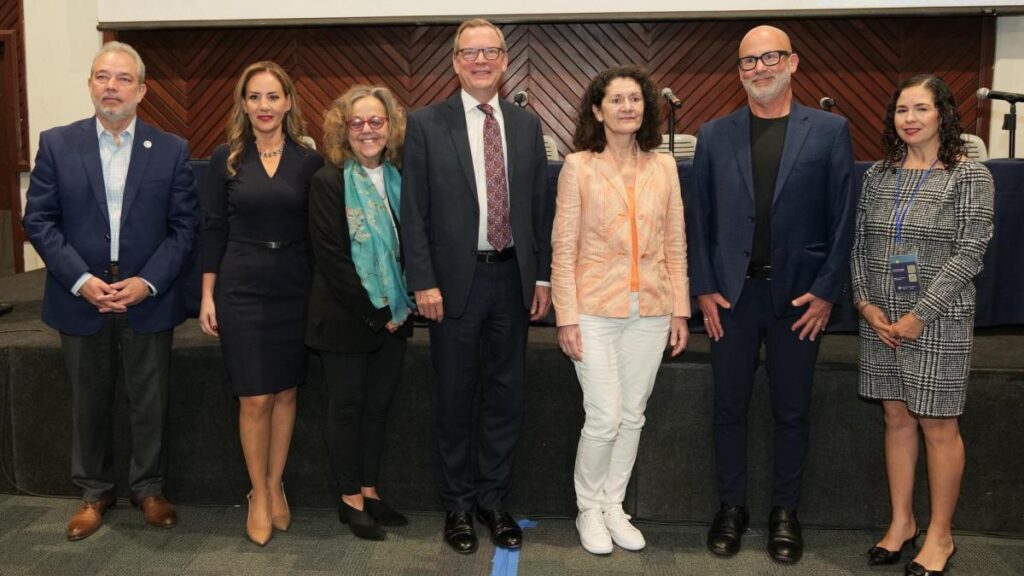
The International Early Childhood Forum: A Global Call for Integral Care in Latin America
Monterrey, Mexico. – The III International Early Childhood Forum: A Region That Cares, organized by Tec de Monterrey’s Center for Early Childhood and the FEMSA Foundation, brought together distinguished experts from institutions such as Harvard, Stanford, and the FEMSA Foundation. The forum emphasized the urgent need to address child development from a holistic and intersectoral perspective, prioritizing children and their caregivers in Latin America.
The Overlooked Aspect: Caring for Those Who Care
One of the central messages of the forum, highlighted by Sindy González, Manager of Early Childhood at FEMSA Foundation, is the need to focus on adults who provide care for children. “Often we focus on caring for children and forget about those who provide care,” González pointed out. “Investing in the well-being of caregivers is undoubtedly a direct strategy to positively influence the well-being of children. When caregivers feel supported and strengthened, they can exercise this responsibility with more confidence, patience, and effectiveness.”
Liana Ghent from the international Step by Step association reinforced this point, sharing a lesson learned during the Ukraine crisis: when attending to children exposed to trauma, they realized that the well-being and mental health of the workforce working with families must be a priority.
Academics Demand Relevance and Integral Approach
The international panelists agreed that academic institutions and research must transcend their disciplinary boundaries to better serve society. James Cairns, representing Harvard University’s Child Development Center, emphasized that while human development is “highly integrated,” the organization of disciplines is “highly separated” (biology, medicine, psychology, etc.). Therefore, a university center dedicated to early childhood in an integral manner, like Tec de Monterrey, is “essential” for interdisciplinary convergence and collaboration.
Phil Fisher from Stanford University insisted that university research “must become relevant” to social issues. Fisher highlighted the need for a two-way knowledge exchange, where universities not only share science but also listen to the wisdom and needs emanating from communities to shape the scientific agenda.
The experts pointed out that simply viewing violence as “specific episodes” is insufficient. Cairns stressed the importance of addressing the environment in which children and their caregivers are raised, an environment often “infused with this violence.”
Early Childhood in the Global “Multi-Crisis”
Joan Lombardi from Georgetown University warned about the reality faced by children, which UNICEF has termed a “multi-crisis”: a combination of risks such as persistent poverty, conflict, displacement, and crucially, climate change.
Lombardi made a direct call to action: “We need to put [very young children] at the center of our efforts to provide care from the beginning, from pregnancy and through the first years of life.”
The forum, according to Manuel Pérez Jiménez, Director of Tec de Monterrey’s Early Childhood Center, aims to “generate and publish validated scientific knowledge and bring it to the community in an effective way,” transforming evidence into programs impacting child development and well-being.
Key Aspects of the Forum
- Integral Approach: Recognizing that child development requires the sum of learning, health, security, and emotional well-being.
- Systemic Transformation: The need for child care projects (especially for victims of violence or orphanage) to be part of long-term system transformation, not just isolated projects.
- Strategic Alliances: The urgency of collective action involving public, private, academic, and civil society sectors.
- Placing Early Childhood on the Agenda: A global call for early childhood to be a central priority in social and political agendas, from humanitarian response to peace reconstruction.
Adriana Gidi, Executive Director of the Center, concluded that this edition aims to chart a shared vision for the next 10 years in Latin America, being a place where “evidence, policy, and action unite to drive real transformation.”




