
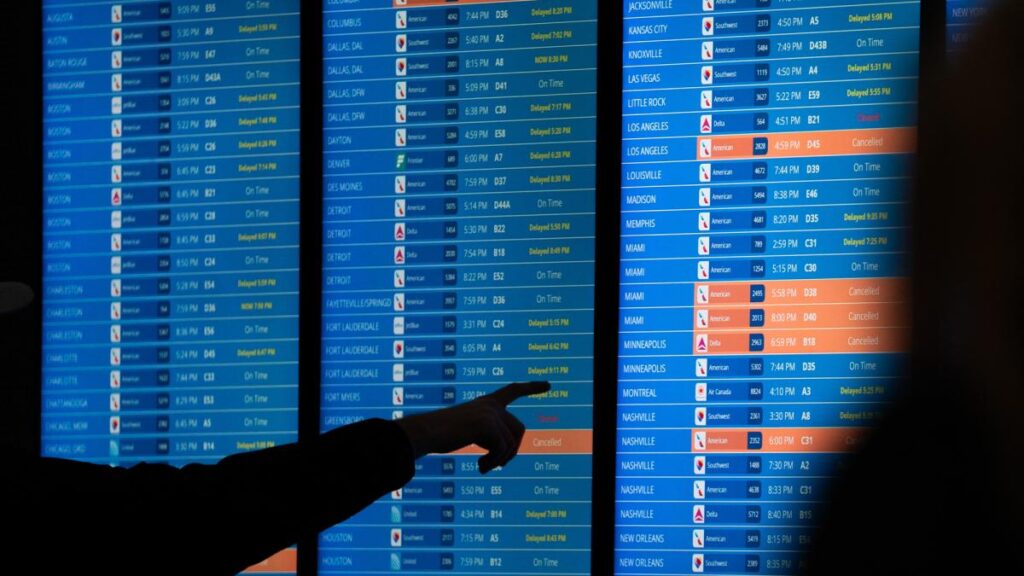
Background on the Situation
The recent government shutdown in the United States, which began on October 1st and ended on Wednesday, had a significant impact on various sectors, including aviation. The Federal Aviation Administration (FAA), the regulatory body for air travel, implemented flight reductions at the busiest U.S. airports due to budget constraints.
During the 43-day government closure, thousands of non-essential employees, including air traffic controllers, were placed on unpaid leave. Essential workers, such as air traffic controllers, continued working without pay, leading to increased absenteeism among controllers. This situation exacerbated existing staffing shortages in air traffic control towers before the budget impasse.
Improving Air Travel Situations
On Friday, U.S. Transportation Secretary Sean Duffy expressed relief that air traffic in the country had one of its “best days” following the end of the shutdown. He noted that there were only a few absent air traffic controllers, a stark contrast to the height of the budget crisis.
With the government shutdown over, the FAA announced on Friday that starting Saturday morning, only 3% of scheduled domestic flights would be canceled. This is a decrease from the previous 6% cancellation rate that resulted from the government closure.
According to data from aviation data provider Cirium, the cancellation rate on Friday was 2%, equating to 540 out of a total 25,294 scheduled flights. Major airports like Atlanta, Chicago-O’Hare, Newark, Dallas Fort Worth, and Denver experienced around 20 cancellations each.
Looking Ahead
Cirium predicts a return to normal operations by Monday. This improvement in air travel stability comes just before the Thanksgiving holiday, a crucial family gathering for Americans on November 27th.
As of late Friday, according to FlightAware, 635 U.S. flights had been canceled and 2,359 were delayed. The platform anticipates 159 cancellations on Saturday and 24 on Sunday.
Key Questions and Answers
- What was the impact of the government shutdown on air travel? The shutdown led to flight reductions at major U.S. airports due to staffing shortages among air traffic controllers who were working without pay.
- How many flights were typically canceled during the shutdown? Prior to the government reopening, 6% of scheduled domestic flights were canceled.
- What is the current cancellation rate after the government reopened? The cancellation rate has dropped to 2% of scheduled domestic flights.
- Which airports were most affected by the cancellations? Major airports like Atlanta, Chicago-O’Hare, Newark, Dallas Fort Worth, and Denver experienced around 20 cancellations each.
- When can we expect full recovery in air travel operations? Cirium predicts a return to normal operations by Monday.




