
Understanding the Importance of Tropical Forests in Climate Change Mitigation
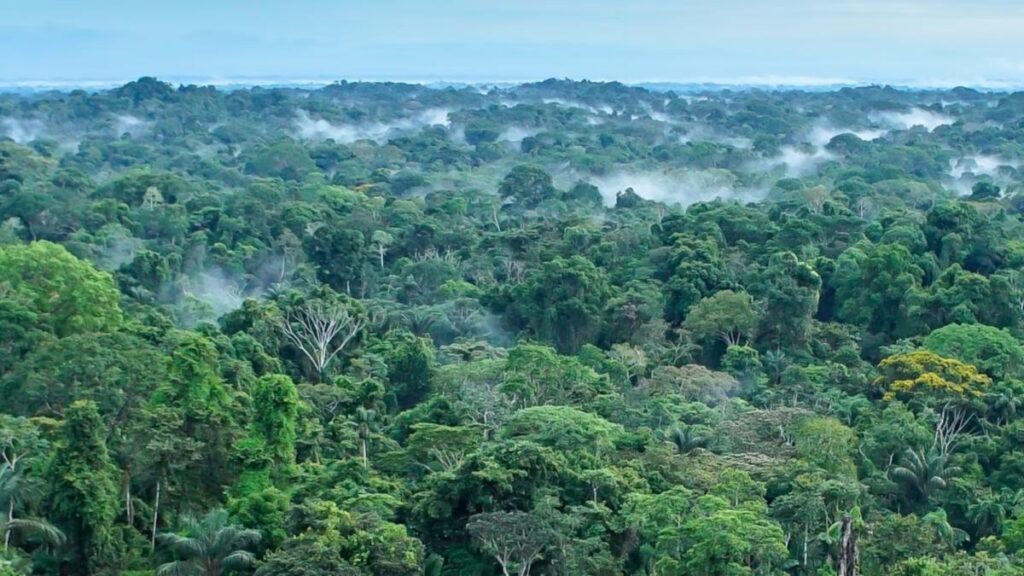
Tropical forests play a crucial role in mitigating climate change by absorbing approximately 30% of greenhouse gas emissions. However, their capacity as a carbon sink is uncertain due to increasing degradation and potential large-scale release of carbon dioxide (CO₂) into the atmosphere. This could accelerate and exacerbate climate change.
Recent signs suggest this process may have already begun, with CO₂ emissions reaching record growth in 2024 due to massive tropical wildfires.
The Challenge of Preserving Forests Amidst Degradation and Deforestation
Preserving forests from degradation and deforestation requires financial resources. Unfortunately, the value of forests often increases when they are converted into agricultural lands or mining sites, or even after a fire when carbon credits can be claimed for subsequent reforestation.
The key to forest conservation lies in making a healthy, well-managed forest more valuable than a degraded or cleared one.
Introducing the Tropical Forest Forever Facility (TFFF) at COP30
At the Brazilian climate summit, COP30, a new financial mechanism, the Tropical Forest Forever Facility (TFFF), will be presented to tackle this issue. Before explaining its details, it’s important to note that TFFF is not the first biodiversity financing initiative.
Read more: COP30 in Brazil: An Uncertain but Necessary Summit for Climate Action
Community and Indigenous Management of Forests
Forests are not purely natural environments but also cultural ones. Over 90% of tropical forests have been managed by humans for the past 10,000 years. What determines their conservation status is not the presence or absence of humans but what humans have done to manage these environments.
Historically, forest preservation was linked to the utilization by rural or indigenous communities, followed by value chain development. For instance, the long-term need for wood fostered sustainable forest management.
This management was reinforced in the 19th century with the establishment of specialized schools like those for forest engineers, which elevated traditional knowledge to scientific and technical knowledge. A significant change occurred in the 1990s with the development of forest certification systems that authenticate the environmental and social sustainability of resource exploitation, thereby increasing product value.
“Debt-for-Nature” Swap
During the latter half of the 20th century, environmental consciousness grew in society, capitalized on by environmental NGOs. These NGOs have been creative in finding funding sources. An example is the “debt-for-nature” swap initiated by the World Wildlife Fund (WWF).
Through this initiative, a country’s external debt (acquired by an NGO or other countries’ governments) can be reduced if it undertakes nature restoration actions.
For instance, Belize reduced its external debt by $216 million in 2021 after committing to allocate $107 million for nature conservation. Currently, there are over 100 similar projects, with a significant portion of these budgets directed towards environmental NGOs responsible for implementing or certifying restoration actions in collaboration with governments.
Issues with Environmental NGOs
While the environmental objectives of these initiatives are positive, conflicts of interest and deficient practices have been reported behind these projects.
These operations often involve replacing indigenous or rural communities with environmental NGOs in their land management and fund receiving roles. Predictably, these measures have led to significant tension between NGOs and rural or indigenous communities.
In 2004, anthropologist Mac Chapin warned about environmental NGOs exploiting rural and indigenous communities. At the third International Union for Conservation of Nature (IUCN) Congress, Maasai representative Martin Saning’o openly declared that they were enemies of nature conservation, as they were being evicted from their lands for supposed conservation efforts.
Furthermore, scientific disciplines like ecology and dendrology, along with social sciences such as history and anthropology, have documented that the best way to preserve forests is through their management by rural or indigenous communities dependent on them.
Ecological NGOs have traditionally resisted acknowledging this reality, as it undermines their purpose if local communities are the best nature stewards. However, scientific evidence is so overwhelming that these organizations have had to concede this fact openly.
The TFFF Fund Announced at COP30
To conserve biodiversity and ensure rural and indigenous communities continue managing their ancestral ecosystems, the Tropical Forest Forever Facility (TFFF) has been designed.
The TFFF follows a scheme that was essentially outlined over two decades ago: it involves paying for the preservation of ecosystem services. However, this mechanism is structured through bonds.
Firstly, an investment fund is created, fueled by governments and private investors, aiming to mobilize $125 billion. This fund invests its capital in a portfolio based on emerging markets and developing economies, ensuring that some profits reach the selected tropical forest countries for payment.
Forest monitoring systems are used to ensure no deforestation occurs. If targets are met, the receiving country gets $4 per preserved forest hectare; deforestation and degradation result in reduced payments.
Creating financial funds for biodiversity conservation is not new, nor is selling bonds. However, there are novel aspects to the TFFF: firstly, local communities will finally be compensated for their efforts, with at least 20% of the income going to these traditional managers.
Secondly, policies are funded rather than specific projects, theoretically ensuring government oversight for national implementation.
It’s crucial to clarify that TFFF is an investment fund seeking profits while preserving biodiversity, with benefits primarily going to investors and sponsors, and the remainder to forest payments.
Similar investment funds like TFFF are gaining traction. Earlier this year, Goldman Sachs launched a $500 million fund to preserve nature.
These investment funds follow the path set by the UN Biodiversity Convention, aiming to mobilize $200 billion annually for biodiversity conservation. This is a massive amount of money, indicating a substantial business opportunity.
We need forests managed to be more valuable than those destroyed. It’s unclear if TFFF or the Goldman Sachs fund will achieve this, but we know similar initiatives had good intentions yet significant failures. Let’s hope this time is different, and local communities—rural and indigenous—are genuinely benefited.




