
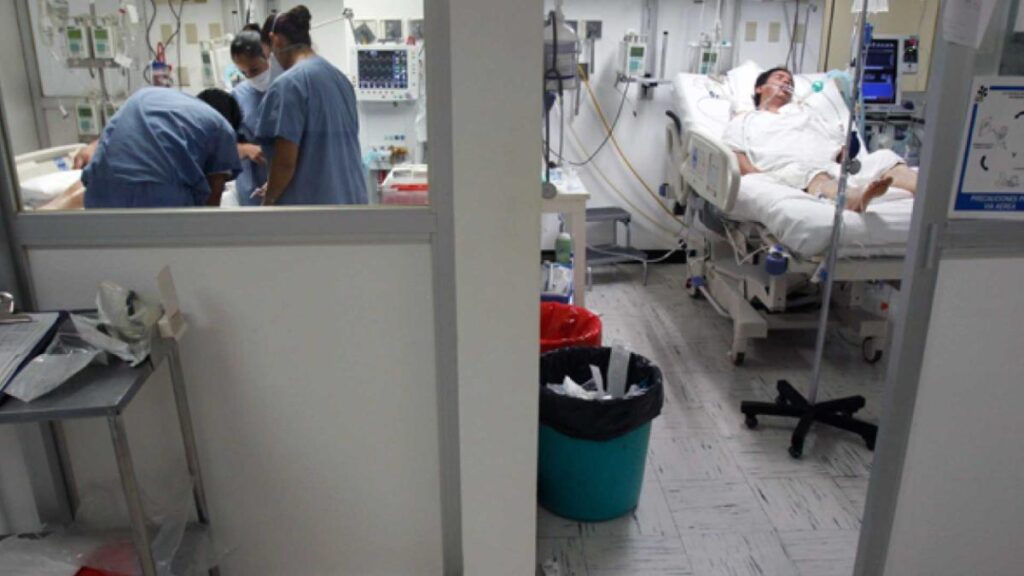
Low Life Expectancy and High Preventable Mortality in Mexico
The latest report from the Organisation for Economic Co-operation and Development (OECD), titled “Health at a Glance 2025,” reveals that Mexico continues to face significant health challenges compared to other OECD countries. The report indicates that Mexico’s life expectancy is 5.6 years below the OECD average, and it records high levels of preventable and treatable mortality, reflecting persistent issues in access, quality, and coverage of medical services.
Life Expectancy Below Average and More Preventable Deaths
According to the report, Mexico’s life expectancy is 75.5 years, while the OECD average is 81.1 years. This difference of more than five years highlights a structural lag influenced by chronic diseases, limited access to timely services, and regional disparities.
Regarding causes of death, the OECD report states that Mexico registered 243 preventable deaths per 100,000 inhabitants, a figure significantly higher than the OECD average of 145. In treatable deaths, i.e., those that could be prevented with effective medical care, the gap widens further: Mexico reports 175 deaths per 100,000 inhabitants compared to the OECD average of 77.
Unequal Access and Low Quality in Key Areas
The study warns that Mexico only covers 78% of its population with essential services, reflecting substantially lower coverage than other universal access systems.
Moreover, quality indicators of hospital care show significant challenges. The 30-day mortality rate after acute myocardial infarction is 22.6%, compared to the OECD average of 6.5%. For cerebrovascular events, the mortality rate is 17%, more than double the OECD average of 7.7%.
Vaccination levels also show delays: only 78% of children receive the full three doses of the DTP (diphtheria, tetanus, and pertussis) vaccine, below the international standard. In early detection, only 20% of women aged 50-69 access mammograms, far below the OECD average of 55%.
Health Risks: Less Smoking and Alcohol, but More Pollution
Although Mexico has advantages in some public health factors, such as lower smoking rates (8.5%) and alcohol consumption (6.2 liters per capita), other risks continue to pressure the population.
Among them is exposure to fine particulate matter (PM2.5), which in Mexico is 14.4 micrograms per cubic meter, above the OECD average of 11.2. This pollutant is associated with respiratory and cardiovascular diseases.
Less Spending and Limited Infrastructure
The report also notes that Mexico continues to allocate fewer resources to health compared to other OECD countries. Per capita spending was $1,588, less than a quarter of the OECD average of $5,967. In terms of GDP, Mexico invests 5.9%, compared to the OECD average of 9.3%.
Infrastructure is also limited: Mexico has 1 hospital bed per 1,000 inhabitants, compared to the OECD average of 4.2. It also has only 10 CT, MRI, or PET scanners per million people, compared to the OECD average of 51.
Key Questions and Answers
- What are the main health challenges facing Mexico according to the OECD report? Mexico faces significant health challenges, including a life expectancy 5.6 years below the OECD average and high levels of preventable and treatable mortality, reflecting issues in access, quality, and coverage of medical services.
- What are the causes of death with high rates in Mexico? Mexico has 243 preventable deaths and 175 treatable deaths per 100,000 inhabitants, both significantly higher than the OECD average.
- How does Mexico’s healthcare system compare in terms of access and quality? Mexico covers only 78% of its population with essential services, and quality indicators show significant challenges, such as high 30-day mortality rates after acute myocardial infarction and cerebrovascular events.
- What are the major health risks in Mexico? While smoking and alcohol rates are lower than the OECD average, exposure to fine particulate matter (PM2.5) is higher, associated with respiratory and cardiovascular diseases.
- How does Mexico’s health spending compare to other OECD countries? Mexico spends less on health, with per capita spending at $1,588 and a GDP investment of 5.9%, both significantly below the OECD averages of $5,967 and 9.3%, respectively.




