
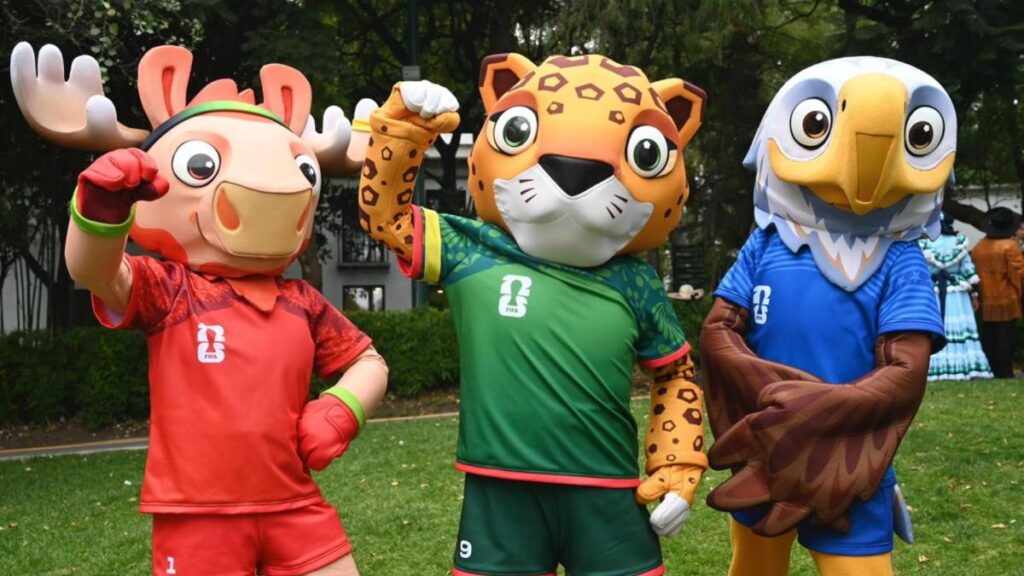
Mexico to Host 13 Matches in the Largest FIFA World Cup in History
Mexico is gearing up to host 13 matches in the FIFA World Cup 2026, an event that will not only mark a historic milestone as the first country to host three World Cups but is also projected to generate an estimated economic impact of $1.8 billion to $3 billion, according to federal government projections.
President Claudia Sheinbaum Highlights Cultural Grandeur and Historical Moment
President Claudia Sheinbaum recently presented the FIFA World Cup 2026 at Los Pinos Cultural Complex, asserting that Mexico is “ready” and that the tournament will showcase the country’s cultural greatness and its empowered people to the world.
5.5 Million Visitors and Infrastructure Developments
Sheinbaum emphasized that the World Cup will bring 5.5 million visitors to Mexico, primarily arriving through the airports in Mexico City, Guadalajara, and Monterrey. She mentioned the $900 million investment in renovations at Benito Juarez International Airport (AICM) and confirmed that the AIFA-CDMX train will be operational before the tournament.
Mexico will host 13 official matches across three host cities: Mexico City, Guadalajara, and Monterrey. The country will also serve as home to 17 sports venues for training purposes, according to official project documents.
Logistical Scale and Impact on 32 States
Beyond the tourism economic boost, the government aims to expand the social impact of the World Cup through the “Mexico 2026” program, featuring massive, free, and simultaneous activities in all 32 states.
- Cultural and sports activations
- Public spaces to watch matches
- Family events across the country
- Collaboration with state, local governments, and private sector
“Mexico 2026”: A Celebration Across All 32 States
In addition to the tourism economic impact, the government seeks to broaden the World Cup’s social influence with the “Mexico 2026” program, which includes massive, free, and simultaneous activities in all 32 states.
- Cultural and sports activations
- Public spaces to watch matches
- Family events across the country
- Collaboration with state, local governments, and private sector
World Cup Social: Fields, Tournaments, and FIFA Fest
Sheinbaum also announced the “World Cup Social,” a parallel program that will develop sports activities nationwide:
- Construction of new fields
- “World Cup Little” tournaments for girls, boys, young adults, seniors, and people with disabilities
- Community tournaments
- Free-to-watch spaces (FIFA Fest)
The goal is to make football a space of inclusion and participation for everyone. In this context, the president announced that she will donate her ticket number 001 to an enthusiastic girl or young woman to inspire female participation in sports.
Security and Binational Coordination
Gabriela Cuevas, coordinator of the Mexican government’s efforts for the World Cup, explained that with support from security and civil protection agencies, an Integral Plan has been developed with all levels of government to ensure a secure event.
“Our country is the first and only nation in the world to host three World Cups; therefore, we are committed to organizing the best World Cup in history,” she stated.
An Economic Window: Tourism, Culture, and International Promotion
The estimated economic impact of up to $3 billion will come not only from visitor flow and tourist consumption but also from international promotion of the country.
- Culinary arts
- Handicrafts
- Biodiversity
- Creative industries
- Tourism infrastructure
Rosa Icela Rodríguez, Secretary of the Interior, mentioned that Mexico will be “on the international agenda,” providing a unique opportunity to showcase its full potential.
Betting Big on Sports Tourism Leading to 2026
The event’s magnitude promises to position Mexico in an unprecedented wave of global exposure. FIFA projects record-breaking numbers: over 6 million attendees to Mexico’s Fan Festivals, along with thousands of hotel nights, making the tourism sector one of the primary beneficiaries.
According to Jurgen Mainka, Director of FIFA Mexico: “The FIFA World Cup 2026 will be the largest in history.”
The challenge for Mexico is to ensure that this boost translates into economic growth, country promotion, and secure experiences for millions of fans.




