
Introduction
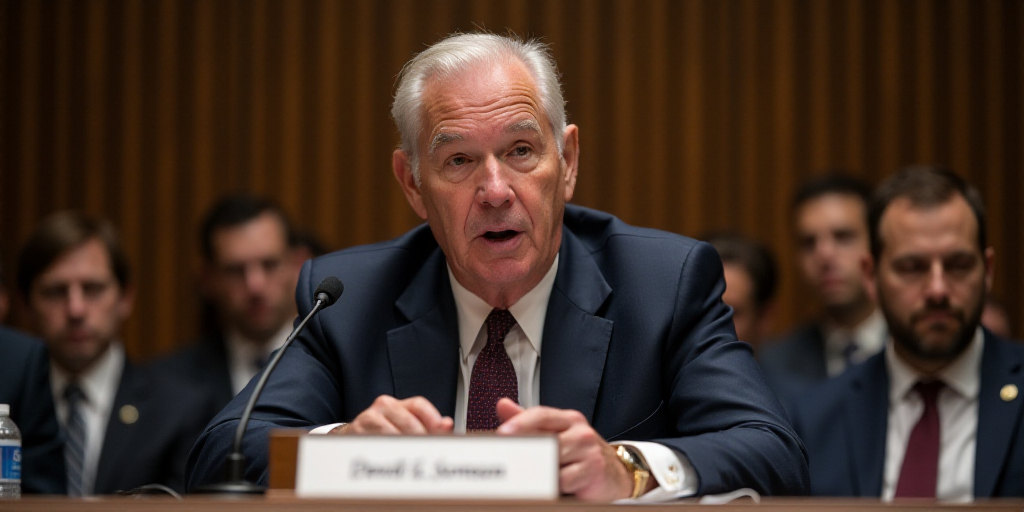
Jamieson Greer, the head of the U.S. Trade Representative’s (USTR) office, recently presented a report to the House Ways and Means Committee and the Senate Finance Committee on December 16 and 17, respectively. The report focused on the functioning of the USMCA (United States-Mexico-Canada Agreement) before its joint review in July 2026.
USMCA’s Achievements
Greer acknowledged that the USMCA has been a “partial success” so far, with widespread support from stakeholders. The agreement has provided some trade certainty for U.S. businesses, with exports of goods and services to Canada and Mexico increasing by 56% since 2020. Moreover, Mexican workers’ wages have nearly doubled, from $2.3 per hour in January 2020 to $4.2 per hour in September 2025, partly due to labor reforms mandated by the USMCA and the frequent use of the Rapid Response Mechanism.
Positive Impacts
- Increased U.S. exports to Canada and Mexico
- Nearly doubled wages for Mexican workers
- Mexico’s contribution to reducing the U.S.-China trade deficit by approximately 25%
Areas Requiring Improvement
Despite these achievements, Greer emphasized that not all U.S. objectives have been met, particularly in strengthening U.S. manufacturing capabilities and creating good jobs. Most stakeholders advocate for improvements.
Specific Deficiencies
- Mexico’s ongoing challenges with labor law enforcement, including lack of sanctioning authority for the Federal Center for Labor Conciliation and Registration
- Budgetary shortfalls in Mexico’s electronic Single Window program for customs clearance
- High U.S. trade deficit with partners, reflecting deindustrialization and structural disadvantages
- Harmful business climate changes in Mexico, such as recent constitutional reforms to renationalize its energy sector and Mexico’s refusal to compensate U.S. company Vulcan Materials for mine theft
- Canada’s persistence in maintaining its Wireline Transmission Act, which discriminates against U.S. tech and media companies, as well as other trade-restricting digital services measures
- Canada’s market access restrictions for U.S. dairy products
- USMCA’s failure to address the sudden rise in non-market economy-based corporations’ investments and industrial overcapacity impacts in the region
USTR’s Proposals and Future Outlook
Greer proposed mechanisms to penalize the offshoring of U.S. production to Mexico or Canada due to regulatory arbitrations and other means. The USTR also called for addressing harmful business climate changes in Mexico and renegotiating Canada’s trade-restricting digital services measures.
Stakeholder Opinions
Stakeholder opinions vary, with many wanting to maintain the status quo while demanding significant changes to address identifiable deficiencies. The USTR believes that, regardless of the USMCA’s value for the U.S. or North America, its shortcomings necessitate a non-automatic approval of the agreement to serve national interests.
Key Questions and Answers
- Q: What is the current status of the USMCA? A: It has been a partial success, with room for improvement in several areas.
- Q: What are the USMCA’s achievements? A: Increased U.S. exports to Canada and Mexico, higher wages for Mexican workers, and reduced U.S.-China trade deficit.
- Q: What areas require improvement? A: Labor law enforcement in Mexico, budgetary shortfalls in Mexico’s customs programs, high U.S. trade deficit with partners, harmful business climate changes in Mexico, Canada’s trade-restricting digital services measures, and market access restrictions for U.S. dairy products.
- Q: What are the USTR’s proposals? A: Mechanisms to penalize offshoring of U.S. production, addressing harmful business climate changes in Mexico, and renegotiating Canada’s trade-restricting digital services measures.
- Q: What are stakeholder opinions on the USMCA? A: Most want to maintain the status quo while demanding significant changes; the USTR believes non-automatic approval of the agreement is necessary to serve national interests.




