
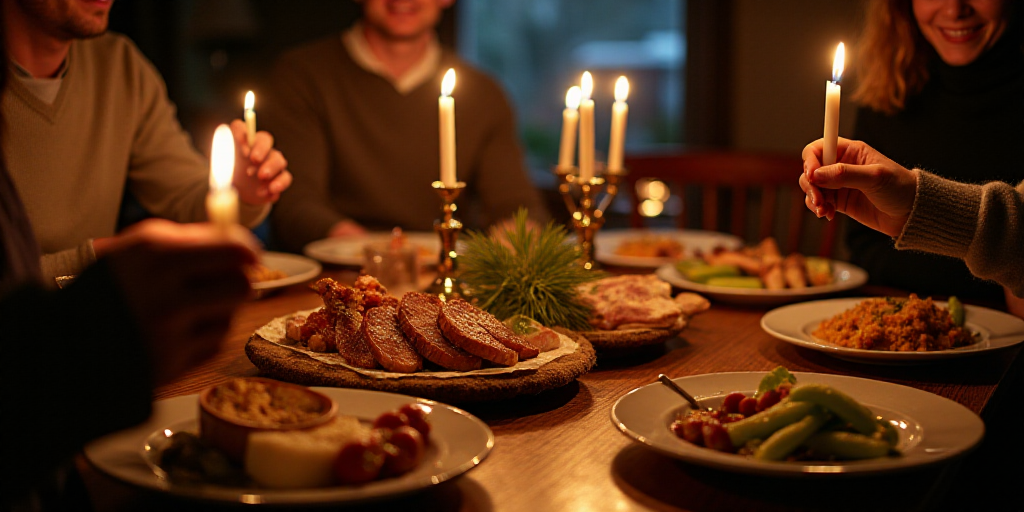
Celebrating Around the Table in Mexico
In Mexico, Christmas and New Year’s celebrations continue to revolve around the dining table. Food is not just a complement to the festivities but their very core, where homes fill with aromas, inherited recipes, and dishes that appear only once a year.
However, in 2025, this gastronomic ritual comes marked by the rise in prices. According to the annual monitoring by the National Alliance of Small Businesses (ANPEC), organizing a Christmas dinner for up to 15 people will cost approximately 17,100 pesos, a 17% increase from the previous year. This amount equates to an average expenditure of 1,140 pesos per person, including essential elements that traditionally make up these celebrations.
The Traditional Menu Under Pressure
The menu structure remains faithful to tradition. Appetizers—various finger foods like fritters, pâtés, cheeses, olives, and other complements—cost around 1,750 pesos. The main course concentrates the majority of the budget: 7,150 pesos for seasonal classics like turkey, leg, cod, and romeritos, accompanied by purée, pasta, stuffing, and vegetables.
Beverages—beer, cider for toasting, tequila, punch, soft drinks, and ice—sum up to approximately 4,550 pesos. Desserts, led by cake and the traditional apple salad, account for another 1,450 pesos. Additional costs include home decoration (around 1,200 pesos) and the secret Santa gift, priced between 500 and 1,000 pesos.
Beyond the figures, ANPEC’s report confirms that the Christmas dinner remains a deeply gastronomic act: the dishes defining the season stay on the table, even if their preparation now requires more economic effort.
Celebrating Outside: Costs That Multiply
The contrast arises when comparing the cost of cooking at home to celebrating outside. According to ANPEC, dining in restaurants or hotels can be between two and five times more expensive per person, depending on the type of establishment and package chosen.
In high-end hotels, gala dinners with special menus, live music, and toasts start at 5,000 pesos per person and can reach up to 10,000 pesos per adult. In mid-range hotels and upscale restaurants, packages range from 2,500 to 5,000 pesos per person, while more moderate options with special menus and light ambiance cost between 1,200 and 1,800 pesos per guest.
Home Cooking: A Conscious Choice
Faced with this scenario, hosting at home remains a decision that goes beyond saving money. Cooking allows adjusting the menu to the budget, choosing seasonal ingredients, and prioritizing family recipes, as well as strengthening local consumption.
“A significant portion of purchases is made in the neighborhood businesses, which benefits small commerce and stimulates community economic activity,” said Cuauhtémoc Rivera, ANPEC president.
During these December celebrations, inflation increases the cost of dinner but fails to displace it. Among turkey, cod, romeritos, and apple salad, Mexican families continue to find in food a meeting point that transcends price.
Key Questions and Answers
- What is the average cost of a Christmas dinner for 15 people in Mexico in 2025? The estimated cost is around 17,100 pesos.
- What does this amount include? It includes essential elements that traditionally make up Christmas celebrations, such as appetizers, main courses, beverages, desserts, home decoration, and a secret Santa gift.
- How much more expensive is celebrating outside compared to cooking at home? Celebrating in restaurants or hotels can be between two and five times more expensive per person.
- What are the traditional dishes included in a Mexican Christmas dinner? Traditional dishes include turkey, cod, romeritos, and apple salad.
- How does cooking at home support local businesses? Cooking at home allows for purchasing from neighborhood businesses, benefiting small commerce and stimulating community economic activity.




