
Introduction and Background
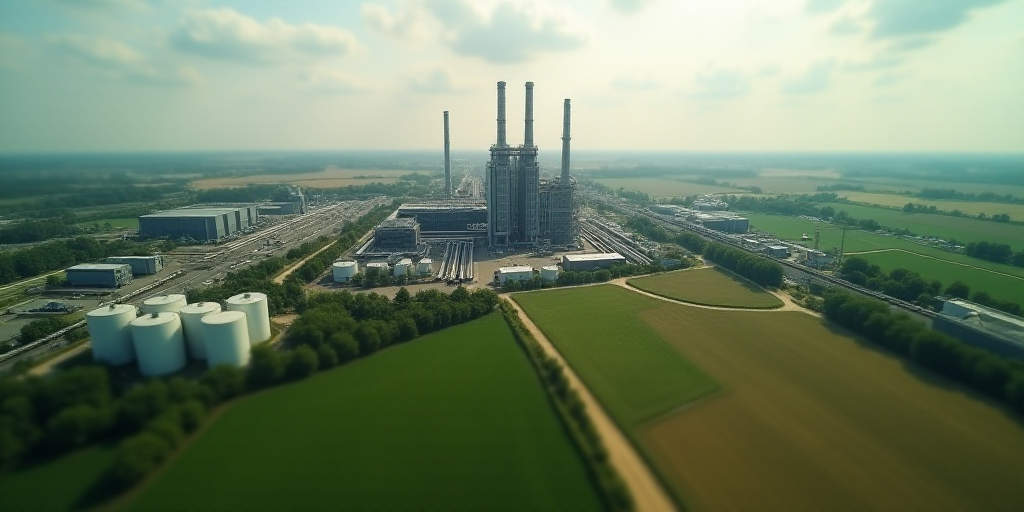
Querétaro, Qro. The new Combined Cycle Power Plant (CCC) El Sauz II, with a net capacity of 268 megawatts (MW), was inaugurated on December 20, 2020. The plant will be named after Josefa Ortiz Téllez-Girón, a heroine of Mexico’s independence.
Project Details and Impact
Located in Pedro Escobedo, this project aims to meet the energy needs of Querétaro state and benefit over four million users. The inauguration was led by Mexico’s President, Claudia Sheinbaum Pardo.
Addressing Energy Demand
According to Emilia Esther Calleja Alor, the General Director of the Federal Electricity Commission (CFE), the infrastructure increases capabilities to ensure state energy demand. Cenace records show Querétaro’s energy demand was 1,535 MW this year, while installed capacity was only 723 MW.
However, with the addition of El Sauz II’s 269 MW and existing centrals (Salamanca in Guanajuato with 958 MW and Villa de Reyes in San Luis Potosí with nearly 450 MW), these three centrals contribute an additional 1,677 MW to the National Electric System, ensuring state demand satisfaction.
Future Expansion Plans
Another combined cycle plant, Salamanca II in Guanajuato with 483 MW capacity, is planned to secure future supply and address growing demand in the Bajío region.
Investments and Future Projects
Over the next few years, CFE will invest over 140,000 million pesos to increase generation capacity, transmission lines, maintenance of installations, and other services. The Secretary of Energy, Luz Elena González Escobar, mentioned adding approximately 29,000 MW of new capacity, complemented by private investments exceeding 45,000 million dollars.
These investments will include strategic transmission and distribution projects to meet future demand and deliver cleaner energy across the country.
Historical Context
The previous administration announced the central in 2019, as part of a project to strengthen public company capabilities. Earlier administrations reportedly planned to privatize CFE, but the current administration has made changes to Article 28 of the Constitution, ensuring CFE generates majority (54%) electricity while private entities cover the remaining 46%.
Honoring Josefa Ortiz Téllez-Girón
During the inauguration, President Claudia Sheinbaum announced that this infrastructure will be named after Josefa Ortiz Téllez-Girón, acknowledging women’s contributions to Mexico’s independence.
“Today, we launch this combined cycle power plant El Sauz II, now Josefa Ortiz Téllez-Girón. We do this because women have always been integral to building our nation, and it’s time to recognize their contributions by naming new power plants after remarkable women, including CFE engineers,” she said.
Relevance and Local Impact
Querétaro’s Governor, Mauricio Kuri González, emphasized the new central’s importance in meeting the state’s energy needs. With high internal migration and growing businesses, Querétaro requires reliable power supply.
Plant Features and Job Creation
El Sauz II uses natural gas as its primary fuel and operates with a dry cooling system. Its construction generated 1,054 jobs, starting in 2021 and commencing operations this year.
Key Questions and Answers
- What is the new power plant’s capacity? The new Combined Cycle Power Plant (CCC) El Sauz II has a net capacity of 268 megawatts (MW).
- Who is the power plant named after? The power plant is named after Josefa Ortiz Téllez-Girón, a heroine of Mexico’s independence.
- What are the future expansion plans for CFE? CFE plans to invest over 140,000 million pesos in increasing generation capacity, transmission lines, and maintenance of installations.
- What changes have been made to CFE’s operations? The constitutional modification ensures CFE generates majority (54%) electricity, while private entities cover the remaining 46%.
- What is the significance of naming power plants after women? This move acknowledges and honors women’s contributions to Mexico’s history, including those working in CFE.




