
Introduction
Despite Mexico being a significant importer of genetically modified products, the nation’s domestic biotechnology production remains restricted due to political and regulatory constraints, according to the United States Department of Agriculture (USDA).
Understanding Biotecnology and Transgenics
Biotecnology encompasses any development using living organisms for practical purposes, such as medicines or biofertilizers. Transgenics are a specific type of biotechnology, genetically modified for desired traits. However, not all biotechnology involves altering DNA.
Mexico’s Biotecnology Production and Importation
The USDA highlighted that Mexico is a major importer and consumer of biotechnology-derived products, but its domestic production remains extremely limited due to political and regulatory limitations.
- Between January 2025 and November 2025, the Mexican government approved the importation of ten different transgenic food and feed items: corn (5), potato (1), and soybean (4).
- Since 2019, no new permits have been granted for planting transgenic crops in Mexico.
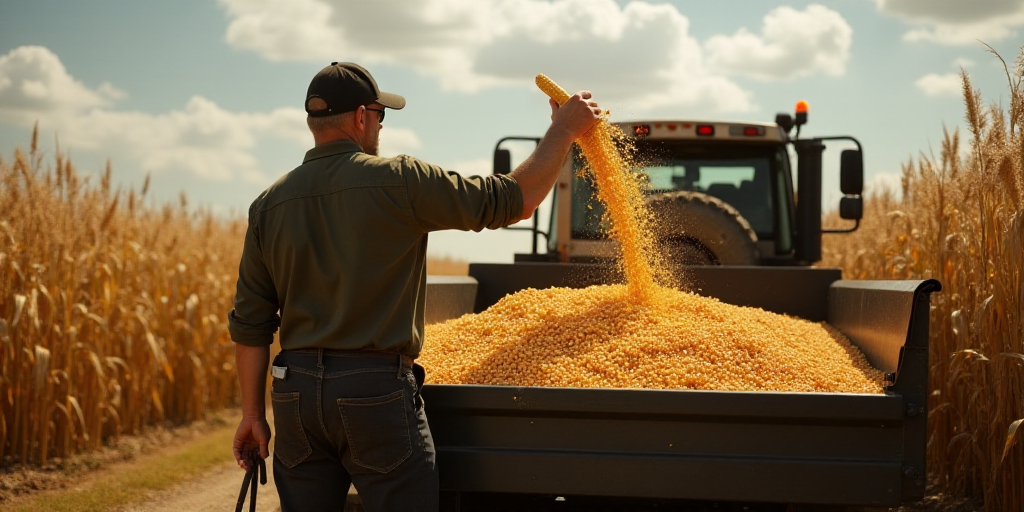
- Mexico is the world’s largest importer of corn, primarily purchasing from countries that produce transgenic corn, mostly the United States.
- Over the past decade, Mexico’s corn import volume has increased by more than 80%. For the 2025/26 marketing year, USDA forecasts Mexico’s corn imports to reach a record-high 25.8 million tons.
- In 2024, Mexico imported all its distillers dried grains with solubles (DDGS) and corn gluten feed (CGF) from the United States, totaling 2.5 million tons of DDGS and 80,817 tons of CGF.
- Mexico also imports genetically modified cotton from the United States to meet nearly 50% of its internal demand. For the 2025/26 marketing year, cotton imports are projected to rise by 17% to 700,000 bales due to low production.
- Nearly all Mexico’s imported cotton comes from the United States, driven by favorable cotton quality, geographical proximity, and preferential market access. Over 90% of the cotton grown in the United States is genetically modified.
Microbial Biotecnology Expansion
In a notable exception, the production and use of microbial biotechnology continue to expand across multiple food and agricultural sectors. In 2024, the value of USDA-estimated trade in Mexico for products potentially incorporating microbial biotechnology at some stage of the value chain reached approximately $15.4 billion.
Mexico imports over 95% of its national soybean consumption, and USDA forecasts Mexico’s soybean imports to reach 6.7 million tons in the 2025/26 marketing year, primarily from the United States and Brazil.
Key Questions and Answers
- What is biotechnology? Biotecnology involves using living organisms for practical purposes, such as medicines or biofertilizers.
- Why is Mexico’s biotechnology production limited? The primary reasons are political and regulatory constraints.
- What products does Mexico import in large quantities? Mexico imports significant amounts of genetically modified corn, soybeans, and cotton.
- Why does Mexico rely heavily on US imports for these products? Factors include favorable product quality, geographical proximity, and preferential market access.
- What is microbial biotechnology? Microbial biotechnology refers to the use of microorganisms for various applications, including food and agricultural sectors.




