
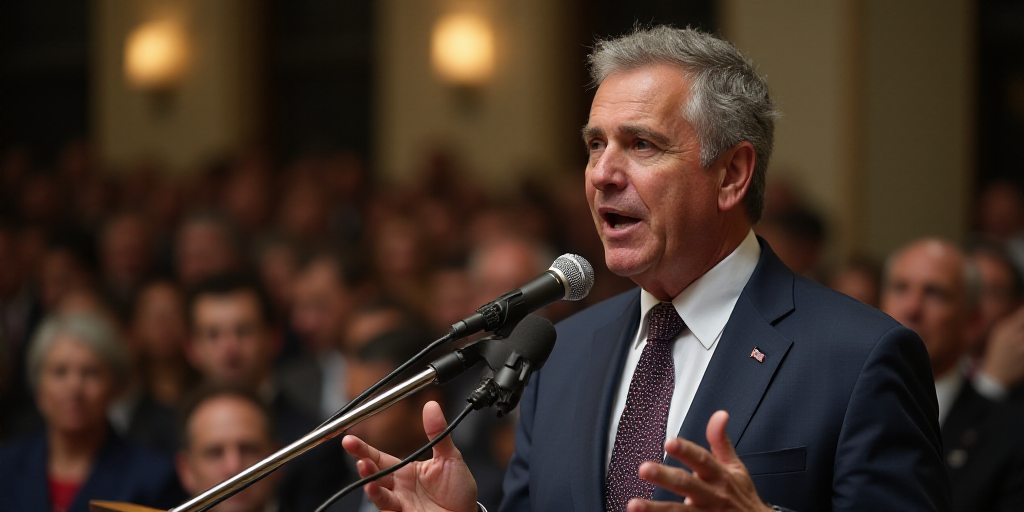
Background on President Javier Milei and His Budget Proposal
Javier Milei, a prominent Argentine politician and leader of the Libertad Avanza party, took office as President two years after a period of budget extensions. His first proposed budget, which was approved by the Argentine Senate, marks the end of a decade-long streak without a projected fiscal surplus. This budget is significant as it outlines Milei’s economic vision and priorities for Argentina.
Budget Details
The approved budget totals $101.8 billion (148 billion Argentine pesos) and projects a 5% GDP growth rate for 2026, an annual inflation rate of 10.1%, a December 2026 exchange rate of $1,423, a primary surplus of 1.2% of GDP, and a 10.6% growth in exports.
Controversial Aspects and Negotiations
The budget proposal included contentious changes, such as modifications for debt restructuring and the repeal of minimum financing targets in education, science, and defense. These changes sparked tension during the Senate session, with even allied senators threatening to vote against it. Ultimately, the contentious articles were approved with 42 affirmative votes, 28 negative votes, and 2 abstentions.
Key Players in the Negotiation Process
The negotiation process involved several key figures, including Senator María Eugenia Bullrich, Interior Minister Diego Santilli, Karina Milei’s advisor Eduardo “Lule” Menem, House of Deputies President Martín Menem, Treasury Secretary Carlos Guberman, and Strategic Affairs Secretary Manuel Adorni’s aide Ignacio Devitt. These individuals were present throughout the Friday afternoon in the Palacio, observing the voting from the podium.
Conflicting Articles
The contentious articles included:
- Article 30, which eliminates the obligation to allocate 6% of GDP to the educational system, 1% of GDP for financing the National System of Science, Technology, and Innovation, and percentages allocated to technical-professional education. It also affects the progressive funding scheme of the National Defense Fund.
- Article 12, related to national universities’ funding. The text sets a global amount for resources in the university system but conditions the transfer of funds based on compliance with information requirements to the Subsecretariat of University Policies at the Ministry of Human Capital.
Key Questions and Answers
- What is the significance of this budget approval? This approval marks the end of a two-year extension period and a decade without projected fiscal surplus. It represents President Milei’s economic vision and priorities for Argentina.
- What are the projected economic indicators in Milei’s budget? The budget projects a 5% GDP growth rate for 2026, an annual inflation rate of 10.1%, a December 2026 exchange rate of $1,423, a primary surplus of 1.2% of GDP, and a 10.6% growth in exports.
- What changes did the budget propose regarding debt and education? The budget included controversial modifications for debt restructuring and the repeal of minimum financing targets in education, science, and defense. These changes sparked tension during the Senate session.
- Who were the key players in the budget approval negotiations? Key figures involved in the negotiation process included Senator María Eugenia Bullrich, Interior Minister Diego Santilli, Karina Milei’s advisor Eduardo “Lule” Menem, House of Deputies President Martín Menem, Treasury Secretary Carlos Guberman, and Strategic Affairs Secretary Manuel Adorni’s aide Ignacio Devitt.




