
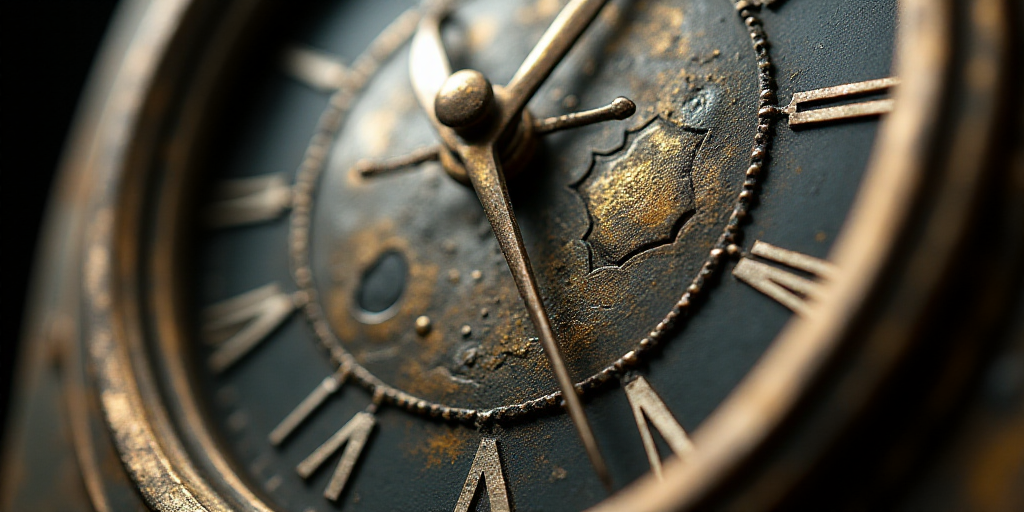
The Post-Holiday Angst and the Futility of Predicting the Future
Dear reader, it’s true that a sense of anxiety lingers after the holiday celebrations. This feeling stems from the endings of past experiences and the anticipation of what’s to come. However, don’t be disheartened; as our grandmothers used to say, “water under the bridge won’t turn a mill,” and Oscar Wilde was right when he stated that the only charm of the past is that it’s over.
The Impossibility of Accurate Predictions
Trying to foresee the future or determine the best course of action is futile. As Alexander the Great proved, reliable predictions and solemn oracles are a thing of the past. Fortune-tellers have become astrologers, cabalists have turned into influencers, magicians are now digital content creators, and witches sell collagen ampoules and gluten-free bread to maintain their youthful appearance.
Understanding the Basics of Time
Astronomers and almanacs confirm that a year consists of 355 days, 5 hours, 48 minutes, and 46 seconds. Since it’s impossible to align the year with an exact number of days, we have variable-length years: 365-day common years and 366-day leap years. To avoid confusion, we use the Gregorian calendar, which is more practical and widely recognized, ensuring each date remains steadfast.
While Jewish communities celebrated the new year weeks ago, and the Chinese New Year begins a month later (on February 17, 2026, with the Year of the Fire Horse), the Catholic liturgical calendar offers precision and comfort, with each day having its saint and every chapel receiving its festivity.
Historical Figures and Their Fortune Tellers
Throughout history, leaders have sought the counsel of seers to predict outcomes and avoid potential disasters. These fortune tellers would interpret entrails of fish, sniff the ground for enemies, and study the flight patterns of eagles to determine the best course of action. Yet, many perished before their predicted time, never faced betrayal, and found no certainty after interpreting tarot cards, listening to unlucky birthdays, throwing shells, consulting the I Ching, or randomly opening the Bible.
Practical Ways to Embrace the New Year
If none of these practices instill hope, tranquility, and optimism, remember that you will repeat yourself if you remain the same. As Tucidides wisely stated, history is an endless cycle of beginnings. Reflect on Heraclitus’ Eternal Return and Jorge Luis Borges’ assertion that one who strays from home has already returned, and the path is singular, whether coming or going.
- New Year’s Traditions: Engage in wise, healthy, and ritualistic practices such as listing New Year’s resolutions, eating twelve grapes, standing up and sitting down with each chime, receiving the new year with a secret note, walking your street round-trip carrying luggage, choosing new underwear colors, and enjoying a dish of lentils while toasting with loved ones at the strike of midnight.
- Year-End Rituals: Spend time tidying your home, cleaning from inside out, discarding or donating unused items, and ensuring your living space mirrors the clarity of the upcoming year. Believe in something, have faith in yourself, your loved ones, humanity, the planet, and the entire universe. Remember to express gratitude for blessings received throughout the year.
If none of these suggestions inspire hope, remember that the year 2026 will undoubtedly be one of the best in this 21st century and among your happiest years, as the number 26 has always been considered lucky across all calendars, almanacs, religions, and mythologies.
Forget about astronomical calculations, random quotes, or outside thoughts. Begin anew and be certain of one thing: today is the last Monday of the year 2025.




