
It’s universally acknowledged that year-end summaries and the holiday festivities need a wrap-up. That’s why we’re here.
Back in the 80s, when filmmaker Martin Scorsese was in one of his emotional lows, his friend Robert De Niro visited him to persuade him to direct a project he was passionate about. Even in Scorsese’s distressed state, he agreed, but as a meticulous speaker of the audiovisual language, he requested “patience.” It wasn’t that filming would take a long time; it was about achieving the required excellence through repetition, time, and perseverance. This anecdote is shared in Rebecca Miller’s excellent documentary series, “Mr. Scorsese.”
From Dance to Mysticism
The narrative begins with a hip twist and a spiritual quest. Two names have dominated music headlines this year, in a time when it’s rare to hear about someone for more than two days.
In January, Bad Bunny released “DeBÍ TiRAR MáS FOToS,” an album that revisited Puerto Rican rhythms. By recovering traditional melodies, he managed to captivate a segment of the population that had previously ignored his songs. He may not be a pioneer – artists like Rozalén, La M.O.D.A., Nathy Peluso, and Rodrigo Cuevas have also looked to the past for inspiration – but he has dominated streams, concerts, and influence. In fact, he’s set to perform at the Super Bowl halftime show, making him the first Spanish-language performer to do so.
Rosalía’s feverish popularity in the fall has served as a case study for terms like linguistic bricolage and christiancore. And if we’ve been mentally reciting “La perla’s” lyrics for weeks, it’s comforting to know there’s a neuroscientific explanation for our brains’ tendency to latch onto a song.
We conclude this tale of pure enjoyment with the blend of body and soul, mysticism, and dance. This brings us closer to the Spanish cinematic phenomenon of the year – “Sirat” – and the multiple dimensions of the rave culture.
All the Cinema and the World
We may not be singing “Bad Romance’s” lyrics, but our brains do release memories of television series rapidly, sometimes faster than we’d like. Accustomed to giving us audiovisual binges, we often forget. Fortunately, the brain is plastic, and if we’re present and stop consuming audiovisual content like one would overindulge in cookies, the plots and characters will settle in our minds.
It’s worth doing so, as the power of stories is infinite. Even if we read endless articles about facts and data, giving a face to a narrative inevitably engages us with it. Noteworthy is the cinema’s focus on the less privileged, the residents of the Gaza Strip, and telling their lives and deaths directly.
As we try to understand how Palestinians can endure under such conditions while the world watches, history teaches us that it hasn’t always been this way. If there was peace in the past, perhaps there could be in the future… a future where, as Omar El Akkad ironically states, we’ve all been against genocide.
The Stirring of History
Donald Trump, always in a rush to do and tell, seems to want posterity to remember him with the same admiration he displays towards an idealized past of humanity that was better, more prosperous, more successful… more imperial.
Many historians have analyzed his insistence on echoing ancient Rome incorrectly. Here, we’ve debunked some of Trump’s and the far-right’s attempts to appropriate a historical period, despite its advanced nature but with its edges.
Interestingly, ancient Rome never ends. The Romans demonstrate that having a close relationship with pets, protesting against tourists, or preventing fires isn’t something we’ve popularized in this century. Nor was it in the past.
The Great Female Authors
2025, as indicated in my article’s introduction, has been the Austen year. We commemorated 250 years since the English author’s birth, though in Spanish we haven’t matched the intensity of British celebrations nor the extensive coverage of our colleagues at The Conversation UK. However, we’ve gathered a broad group of researchers who dissected the nuances of her novels to encourage readers to immerse themselves in her stories.
In Spain, it’s also been the centenary of two great literary figures: Ana María Matute and Carmen Martín Gaite. We’ve honored them as they deserve, though I always feel a pang knowing that it’s researchers –women– who continue to explain these writers –women– as if only we read them.
We also bid farewell to the latest Spanish-language Nobel laureate in literature: Mario Vargas Llosa. Perhaps it’s time the Swedes add another (or more) to the list.
The Technological Urgency
The third installment of “Avatar” has just been released – causing great joy at the box office – likely one of the few films that capitalized on the accelerated, capitalist phenomenon that was 3D cinema (just as it arrived, it deflated).
This bubble reminds us that technology has always aided cultural advancement – from the printing press to sound cinema or record players – but it alone has never achieved significant humanistic leaps. It’s there to lend a hand, not replace.
That’s why it’s okay not to panic when new tools like artificial intelligence (which is still in its creative infancy) appear and to use art and thought to ask ourselves, once we have them, what we want to do with them.
Other names have passed through the Cultura section this year: Robert Redford, Francis Scott Fitzgerald, Diane Keaton, Cervantes… But to avoid rushing and overwhelming people, I simply recall that in 2025, we launched the Cultural Supplement, a bi-weekly bulletin where we compile many of the articles and research mentioned here so that subscribers can read, calmly, the best texts from the section.
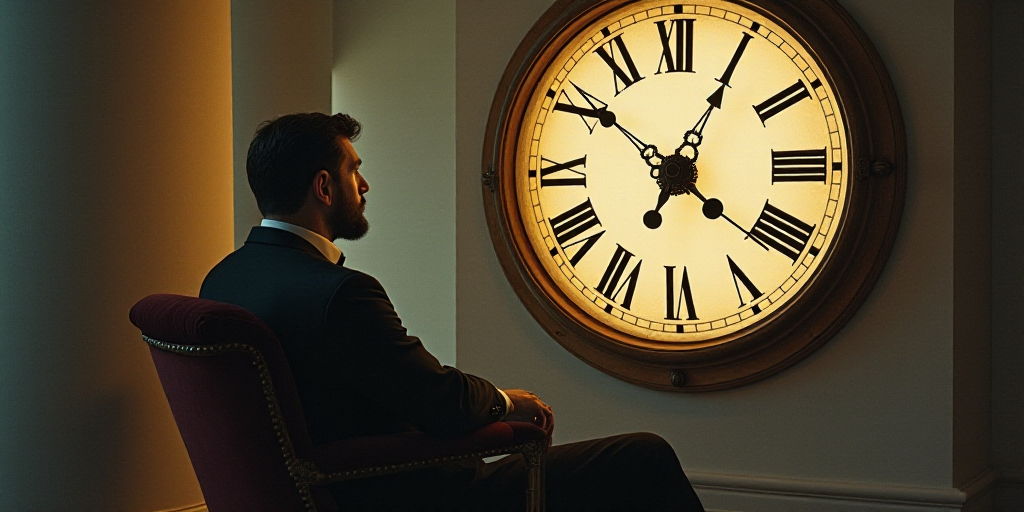
As Scorsese said, “patience.” Perhaps by practicing it more, we’ll open up time gaps and find a silent space for contemplation.




