
Mexico’s Favorable Financial Markets in 2025
Mexico’s financial markets reported strong gains in 2025, driven by the unexpected absence of tariffs from the United States and increased investor confidence. These positive results were underpinned by strategic business decisions and political policies that shaped trade negotiations.
The Role of Adrian Owen and TMF Group
Adrian Owen, responsible for Mexico and Mid-Americas at global management firm TMF Group, provides context on the business landscape and 2026 prospects. His insights are crucial as he highlights the importance of governments making their countries less complex for businesses while pursuing trade agreements to foster cross-investment.
Countries Seeking Lower Business Complexity
Donald Trump’s victory in the 2024 U.S. presidential election signaled a challenging 2025 for international trade. However, Mexico ended the year relatively unscathed in terms of trade measures, a feat few countries can boast.
Owen explains that uncertainty creates a complex volatile environment for long-term planning, even with temporary agreements in place. Governments aim to make countries less complex for businesses, driving these agreements.
Risks and Opportunities in 2026
Despite these advancements, the review of the Mexico-United States-Canada Agreement (T-MEC) and Trump’s shifting policies remain latent risks. TMF Group advises businesses to prepare for opportunities amidst these uncertainties.
In 2025, a more protectionist commercial environment and tightening geopolitical conditions strained supply chains, complicating business decisions. Yet, these conditions can also create strengths.
“A more protectionist environment may strain supply chains, but it can also accelerate the professionalization of operations. Companies with robust compliance programs, reliable reporting, and strategic advisory will be better positioned,” Owen emphasized.
Continuity of Nearshoring
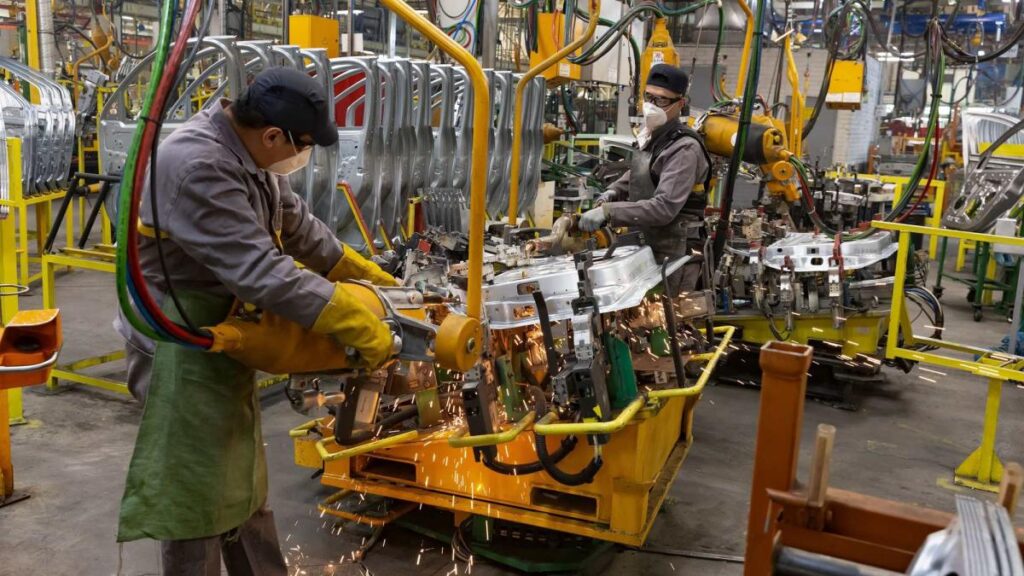
The lack of tariffs has allowed Mexico to continue reaping benefits from nearshoring, thanks to its proximity to the United States and favorable labor conditions. However, businesses face challenges in relocation.
Foreign companies looking to operate in another country must adapt to labor regulation differences, which add to the need for interpreting varying regulations across regions and sectors.
A greater challenge for Mexico is the labor skills shortage: “59% of jurisdictions face a lack of qualified workers. This is prevalent in Latin America (60%), Europe, Middle East and Africa (61%), but especially in North America (64%),” Owen explained.
Favorable Regions and Sectors
Nearshoring could continue bolstering expectations about Mexico, significantly driving the performance of Mexican assets. However, its benefits might concentrate in specific states and sectors due to the conditions they offer.
TMF Group identifies Nuevo León, Aguascalientes, and Coahuila as promising states due to their skilled workforce, better labor conditions, and infrastructure. High-potential sectors are infrastructure and automotive.
Financial Sector Scrutiny
In 2025, Mexico’s financial sector was marked by the closure of Vector Casa de Bolsa, CiBanco, and Intercam due to anti-money laundering control omissions. This episode may have affected confidence in the Mexican financial system.
However, TMF Group views regulation as evidence of a complex business jurisdiction. It also reflects the maturity of a financial system raising its control standards, potentially strengthening investor confidence in the long run.
“Moreover, when an actor exits the market, it’s highly competitive, and banks, fintechs, and funds seek to capitalize on it, enhancing their compliance and value proposition. In this environment, TMF finds opportunities for its trust and fund units,” Owen concluded.
Key Questions and Answers
- What were the key factors behind Mexico’s strong financial market performance in 2025? The absence of tariffs from the U.S. and increased investor confidence were crucial.
- How did political decisions influence Mexico’s trade landscape in 2025? Strategic business decisions and political policies shaped negotiations, making countries less complex for businesses.
- What risks does Mexico face in 2026 regarding trade? The review of the T-MEC and Trump’s shifting policies pose latent risks.
- How can businesses navigate a more protectionist environment? Companies with robust compliance programs, reliable reporting, and strategic advisory will be better positioned.
- What challenges does Mexico face concerning labor skills shortages? There’s a significant lack of qualified workers across Latin America, Europe, Middle East and Africa, with North America being the most affected region.
- Which states and sectors are expected to thrive due to nearshoring in Mexico? Nuevo León, Aguascalientes, and Coahuila are promising states, with infrastructure and automotive sectors showing high potential.
- How did the financial sector’s challenges in 2025 impact Mexico? Closures due to anti-money laundering control omissions may have affected confidence in the Mexican financial system.
- What does TMF Group see as the long-term implications of increased regulation in Mexico’s financial sector? It reflects a mature financial system raising control standards, potentially strengthening investor confidence.




