
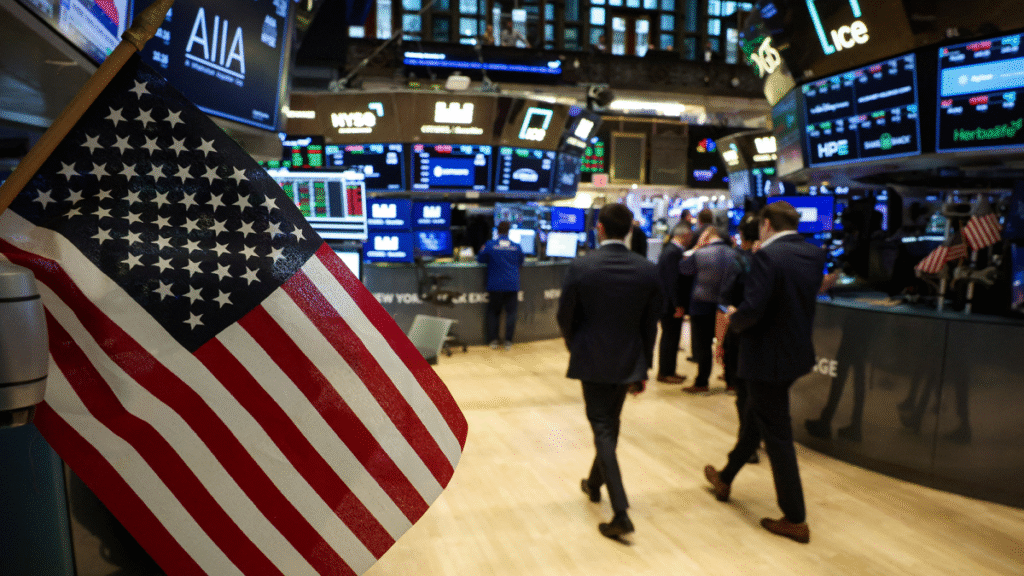
Overview of Wall Street Performance in 2026 Opening Day
On the first trading day of 2026, Wall Street’s major indices displayed mixed performance. Trading volume was low, with notable declines in the shares of electric vehicle manufacturer Tesla and e-commerce giant Amazon.
Index Performance
- Dow Jones Industrial Average: Up 0.66% to 48,382.39 points
- S&P 500: Up 0.19% to 6,858.47 points
- Nasdaq Composite: Down 0.03% to 23,235.63 points
Key Stock Movements
Elon Musk’s Tesla (-1.65%) experienced a significant drop after learning that it lost its position as the world’s largest electric vehicle seller, now trailing behind Chinese manufacturer BYD, which saw a 28% increase in sales compared to Tesla’s second annual decline.
Following a strong 2025 with solid gains, Wall Street faced limitations in the technology sector’s high valuations during the year’s final stretch. Amazon’s stock (Amazon.com) fell 1.89% today.
Sector Performance
Eight of the eleven leading sectors in the S&P 500 closed with gains. However, the discretionary consumer sector led the losses, pressured by Tesla and Amazon’s performance. Within the Dow Jones, Boeing (Boeing) demonstrated the best performance with a 4.91% increase.
Key Questions and Answers
- Q: Who is Elon Musk, and why is Tesla relevant?
Elon Musk is a prominent entrepreneur and businessman, known for founding and leading companies such as Tesla, SpaceX, Neuralink, and The Boring Company. As CEO of Tesla, he has played a crucial role in popularizing electric vehicles and advancing sustainable energy solutions. His influence extends beyond the automotive industry, impacting technology and space exploration.
- Q: Why did Tesla’s stock price drop?
Tesla’s stock price fell due to losing its position as the world’s largest electric vehicle seller, now trailing behind Chinese manufacturer BYD. This decline comes after Tesla’s second annual sales contraction, while BYD experienced a 28% increase in sales.
- Q: What is the discretionary consumer sector, and why did it lead losses?
The discretionary consumer sector comprises companies that sell non-essential goods and services, such as luxury items, entertainment, and travel. This sector led losses on Wall Street due to poor performances from Tesla and Amazon, reflecting investor concerns about their future growth prospects.




