
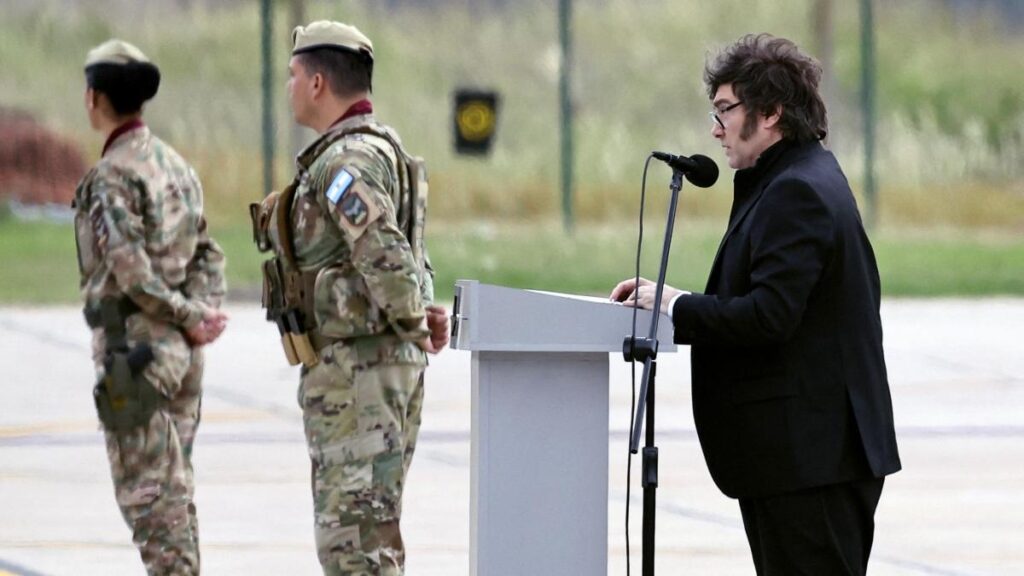
Background on Javier Milei and His Relevance
Javier Milei, the newly elected President of Argentina, has taken a bold step by decreing a restructuring of the country’s intelligence services. As a libertarian politician, Milei aims to reshape the Secretaría de Inteligencia del Estado (SIDE) to better align with his vision of limited government intervention. However, this decision has sparked controversy and criticism from various political factions.
The Reform and Its Key Provisions
In a recent official gazette, Milei’s decree outlines the reorganization of SIDE, with the objective of “defining and clarifying” its structure and competencies. The decree grants SIDE personnel the authority to detain individuals, subject to immediate notification of relevant law enforcement agencies. Furthermore, the decree mandates that intelligence activities be conducted covertly.
Opposition’s Concerns
The opposition, comprising legislators from Provincias Unidas, Coalición Cívica, and Encuentro Federal (center-right), has raised concerns that the reform could lead to excessive surveillance of unrelated areas and personnel. They argue that intelligence services should not morph into a “secret police.”
Agustín Rossi, a centrist opposition lawmaker from the Peronist party, has also voiced his disapproval. He asserts that the decree enables military forces to engage in domestic intelligence tasks, which he believes is an overreach. Rossi has pledged to work within the Congress to repeal the decree, requiring a joint rejection from both legislative chambers.
SIDE’s Rationale for the Reform
In response to criticism, SIDE issued a statement asserting that the reform aims to safeguard Argentina against external intelligence, espionage, or interference. The agency emphasizes that the counterintelligence tasks outlined in the decree are intended to protect the nation from potential threats.
Historical Context: Argentina’s Intelligence Challenges
Argentina has faced significant challenges in its intelligence sector, particularly during the 1990s. The country endured two major attacks: a bombing at the AMIA Jewish Mutual in Buenos Aires in 1994, resulting in 85 fatalities and over 300 injuries, and another bombing at the Israeli embassy two years prior, causing 29 deaths and more than 200 injuries.
Key Questions and Answers
- What is the main objective of Milei’s decree? The decree aims to restructure SIDE, clarifying its structure and competencies while granting personnel the authority to detain individuals under specific conditions.
- Which political factions oppose the reform? The opposition includes center-right parties like Provincias Unidas, Coalición Cívica, and Encuentro Federal, as well as centrist opposition lawmaker Agustín Rossi from the Peronist party.
- What are the opposition’s primary concerns? Opponents worry that the reform could lead to excessive surveillance and the potential transformation of intelligence services into a “secret police.”
- What is SIDE’s justification for the reform? SIDE argues that the reform is necessary to protect Argentina from external intelligence, espionage, and interference.
- What significant events shaped Argentina’s intelligence challenges? Argentina experienced two major attacks in the 1990s: a bombing at the AMIA Jewish Mutual in Buenos Aires in 1994 and another at the Israeli embassy in 1992.




