
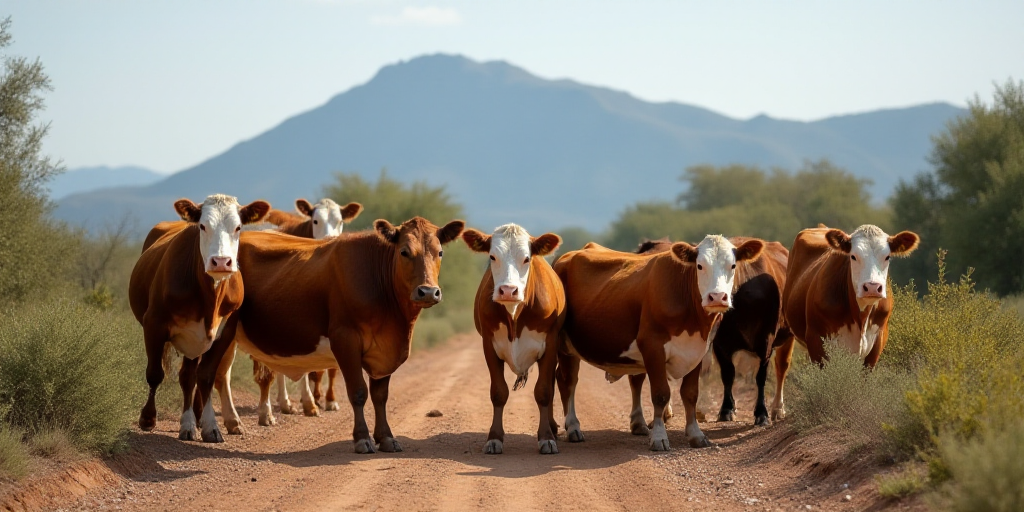
Strengthening Efforts to Contain the Spread of the Cattle Worm (GBG)
Federal and state authorities have agreed on a new special action plan to contain and control the advance of the cattle worm (GBG) in central and northern Veracruz, as well as Tamaulipas.
Key Participants and Their Roles
The agreement was sealed following meetings led by Julio Berdegué Sacristán, Mexico’s Secretary of Agriculture and Rural Development, alongside Tamaulipas Governor Américo Villarreal Anaya and Veracruz’s Secretary of Agriculture, Rural Development, and Fisheries (Sedarpa), Rodrigo Calderón Salas.
Immediate Actions and Measures
The central purpose of these meetings, which involved ganadero leaders and the Senasica (National Service of Health, Food Safety and Quality) directorate, is to implement immediate actions within the coming weeks.
- Strengthening control of cattle movement
- Formation of 20 new field teams, totaling 170 personnel to expand coverage
- Increase in the release of sterile flies
- Intensification of training and the number of traps
- Reinforcement of animal health checkpoints and implementation of four mobile inspection modules in Veracruz
Berdegué Sacristán emphasized that “the cornerstone of stopping the plague’s advance is the continuous strengthening of coordinated actions between state, municipal governments, producers, Senasica, and Agriculture. This collaboration forms the foundation of our containment and eradication strategy for GBG.”
Immediate Tasks and Focus Areas
He detailed that “the immediate task is to neutralize recent cases in Tamaulipas and reinforce preventive measures there. In northern and central Veracruz, we aim to contain the spread and guide it in a controlled manner towards the south of the state.”
Governor Américo Villarreal acknowledged the collective effort and expressed optimism about the plan. He urged producers to maintain their commitment: “Let’s keep up the effort so we can regain economic opportunities not just for ranchers but also for those working in this vital sector, a tradition in Tamaulipan culture.”
Senasica’s Contributions
Javier Calderón Elizalde, Senasica’s Director General, added that the plan includes strengthening control of cattle movement with itinerant routes in San Luis Potosí, Tamaulipas, and Veracruz, supported by the National Guard.
Berdegué Sacristán concluded that proactive collaboration is key to success, assuring ranchers that “it is possible to halt the GBG’s advance by working together. Together, we can overcome this challenge and bolster the cattle sector.”
Key Questions and Answers
- Who is involved in this new agreement? Federal and state authorities, ganadero leaders, and the National Service of Health, Food Safety and Quality (Senasica).
- What are the immediate actions planned? Strengthening cattle movement control, forming 20 new field teams, increasing sterile fly releases, intensifying training and traps, reinforcing animal health checkpoints, and implementing mobile inspection modules in Veracruz.
- What is the focus of these efforts? Neutralizing recent cases in Tamaulipas, reinforcing preventive measures there, containing the spread in northern and central Veracruz, and guiding it towards the south of the state.
- What role does collaboration play in this plan? Proactive collaboration between all parties is crucial for successfully containing and eradicating the cattle worm (GBG) infestation.




