
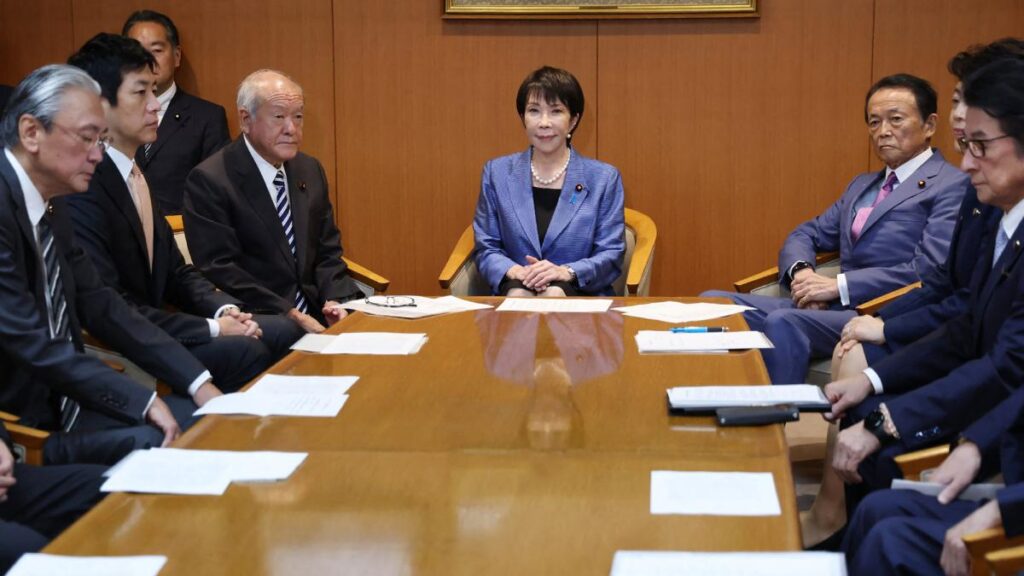
Background and Relevance of Sanae Takaichi
Sanae Takaichi, Japan’s current Prime Minister, is contemplating the suspension of sales tax on food as part of her campaign for upcoming general elections, according to the Mainichi newspaper citing anonymous sources.
Takaichi leads the Liberal Democratic Party (LDP), which, along with the Japan Innovation Party (JIP), will meticulously assess the market impact before making a decision. The elimination of an 8% sales tax on food would reduce Japan’s government revenue by approximately 5 trillion yen (around $30 billion) annually, as reported by the newspaper in its Friday night edition.
In an October coalition agreement, both the LDP and JIP agreed to study the possibility of excluding food from consumption tax for two years. Meanwhile, the newly formed “Center Alliance for Reform” party, led by opposition figures, also prioritizes permanently eliminating the value-added tax (VAT) on food.
Japan’s Tax System and its Impact
Japan imposes an 8% consumption tax on food and a 10% tax on other goods and services, serving as a primary funding source for escalating social welfare costs amidst an aging population.
Perspective from LDP’s Taro Aso
Taro Aso, Vice President of the LDP and former Finance Minister, emphasized fiscal discipline and suggested focusing on deregulation to control prices instead of reducing taxes.
Takaichi’s Election Plans
Takaichi intends to dissolve the Parliament on Friday and call for early elections, seeking public support for her spending plans that have shaken financial markets.
According to two LDP legislators interviewed by Reuters, Takaichi is considering holding the elections on February 8.
The LDP formed a coalition government with the right-wing Japan Innovation Party (Ishin) in October, paving the way for Takaichi to become Japan’s first female Prime Minister.
Key Questions and Answers
- Who is Sanae Takaichi? Sanae Takaichi is Japan’s current Prime Minister, leading the Liberal Democratic Party (LDP).
- What is she considering? Takaichi is contemplating suspending the 8% sales tax on food.
- Why is this significant? The move would reduce Japan’s government revenue by approximately 5 trillion yen ($30 billion) annually.
- What are other parties’ stances? The Japan Innovation Party (JIP) and the opposition’s “Center Alliance for Reform” party also prioritize eliminating VAT on food, though with different timeframes.
- What is Japan’s current tax system? Japan applies an 8% consumption tax on food and a 10% tax on other goods and services.
- What is the rationale behind tax considerations? The government aims to address escalating social welfare costs amidst an aging population.
- What are Takaichi’s election plans? She intends to dissolve Parliament and call for early elections, seeking public support for her spending plans.




