
Background on Key Figures and Institutions
Guatemala, a Central American nation with over 3.5 million inhabitants, has been grappling with escalating violence from criminal gangs. Recently, the situation took a tragic turn when nine police officers lost their lives in coordinated attacks by gang members.
Bernardo Arévalo, the President of Guatemala, has been at the forefront of addressing this crisis. His administration aims to bring stability and justice to the country, particularly in light of upcoming changes within the judicial system.
The Series of Attacks
Over the weekend, inmates affiliated with the Barrio 18 gang staged a revolt, taking nearly 50 hostages across three prisons in central and southern Guatemala. Their demands included better conditions within the penitentiaries.
On Sunday, after security forces regained control of one prison, coordinated assaults on police officers occurred in the capital and surrounding areas. These attacks resulted in seven fallen officers, ten injured, and one gang member killed.
The Fallen Officers
Two more police officers succumbed to their injuries: one, Frallan Medrano, died Sunday night, and another, whose name has not been disclosed, passed away early Monday morning. Medrano was ambushed while riding a motorcycle in Villa Canales, approximately 22 kilometers south of Guatemala City. Two assailants shot him, causing severe injuries that eventually led to his death.
Presidential Response and Context
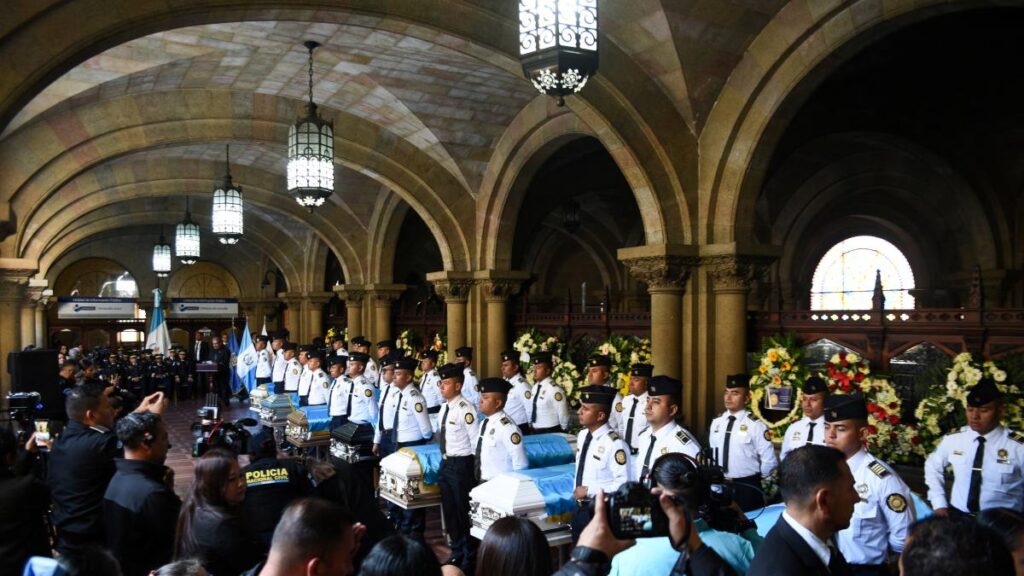
In response to these attacks, President Arévalo declared a 30-day state of emergency to restore order. He addressed the nation during the funeral procession for the fallen officers, emphasizing that the assault was not only against law enforcement but also against the entire nation.
Arévalo accused “politico-criminal” mafias of orchestrating these acts of terror to intimidate impending changes in the judicial system. These changes include the upcoming election of a new attorney general in May and the renovation of Guatemala’s highest court, the Corte de Constitucionalidad. Both institutions have been embroiled in controversial constitutional decisions and are openly at odds with the executive branch.
Legislative and International Efforts
In October, Guatemala’s Congress amended laws to label Barrio 18 and Mara Salvatrucha gang members as terrorists and impose harsher prison sentences. The United States has also designated both gangs as terrorist organizations, reflecting their long-standing menace to Guatemala.
Key Questions and Answers
- Who is Bernardo Arévalo? Bernardo Arévalo is the President of Guatemala, who has been actively addressing the country’s escalating violence and gang-related crimes.
- What are the upcoming changes in Guatemala’s judicial system? The changes include the election of a new attorney general in May and the renovation of the Corte de Constitucionalidad, Guatemala’s highest court.
- Why are these judicial changes significant? These changes have been met with opposition from certain groups, leading President Arévalo to suspect politico-criminal mafias are attempting to instill fear and disrupt the process.
- What actions have been taken against gangs in Guatemala? The Guatemalan Congress has reformed laws to label gang members as terrorists and impose harsher prison sentences. Additionally, both Guatemala and the United States have designated Barrio 18 and Mara Salvatrucha as terrorist organizations.




