
Background on Key Figures and Relevance
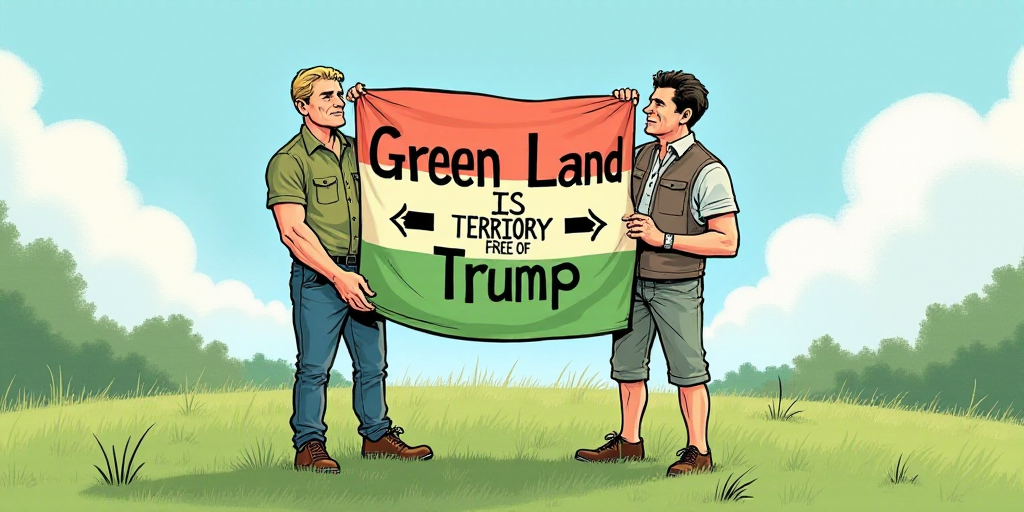
Donald Trump, the President of the United States, is attending the World Economic Forum in Davos, Switzerland amidst controversy over his interest in purchasing Groenlandia, an autonomous Danish territory rich in mineral resources. This situation has sparked strong reactions from European leaders, including France’s President Emmanuel Macron and the European Union (EU) as a whole.
Who are the key figures?
- Donald Trump: The 45th President of the United States, known for his unconventional approach to international relations.
- Emmanuel Macron: The President of France, a prominent figure in the European Union and a vocal critic of Trump’s policies.
- European Union (EU): A political and economic union of 27 European countries, which has expressed strong opposition to Trump’s Groenlandia plan.
Why are they relevant?
These leaders’ stances and actions directly impact transatlantic relations, global trade agreements, and the geopolitical landscape of Arctic regions. The controversy surrounding Trump’s interest in Groenlandia has heightened tensions and prompted discussions about the future of international cooperation.
The Controversy Unfolds
Trump’s interest in acquiring Groenlandia has been met with firm rejection from eight European NATO members, including the United Kingdom, Germany, and France. The EU has warned that any attempt to impose tariffs would be met with a “firm, united, and proportionate response.”
Key Events
- Trump’s Statements: Trump has maintained a cryptic stance on his willingness to pursue Groenlandia, saying “you’ll see” when asked about the extent of his ambitions.
- Macron’s Warning: Macron cautioned against the United States attempting to “subordinate” Europe and deemed new tariffs “unacceptable.”
- EU Response: The EU has vowed to respond firmly to Trump’s threats, emphasizing that imposing tariffs on long-standing allies is a mistake.
- Canadian Prime Minister Carney’s Speech: Mark Carney, Canada’s Prime Minister, strongly supported Groenlandia and Denmark in his Davos speech and highlighted the strain on global governance systems.
Impact and Consequences
The tension has led the European Parliament to suspend the ratification process of the EU-US trade agreement. Furthermore, Trump’s invitation to Russian President Vladimir Putin and Ukrainian President Volodymyr Zelenskyy for the “Council of Peace” has raised eyebrows, with Zelenskyy expressing concerns about the potential diversion of international attention from the ongoing conflict in Ukraine.
Key Questions and Answers
- Q: What is Groenlandia? A self-governing Danish territory in the Arctic region, known for its mineral resources.
- A: Groenlandia is an autonomous Danish territory located between the North Atlantic and Arctic Oceans. It is rich in minerals, including rare earth elements, which have attracted Trump’s interest.
- Q: Why are European leaders opposed to Trump’s plan?
- A: European leaders view Trump’s interest in Groenlandia as an attempt to expand US influence in the Arctic, which could destabilize regional security and undermine international cooperation.
- Q: What is the EU’s response to Trump’s threats?
- A: The EU has pledged a firm, united, and proportionate response to Trump’s threats of imposing tariffs, emphasizing that such actions would damage transatlantic relations.
Conclusion
The controversy surrounding Donald Trump’s interest in Groenlandia has created significant tension between the United States and European nations. As leaders gather in Davos, the EU remains resolute in its opposition to Trump’s expansionist ambitions, emphasizing the importance of maintaining strong transatlantic ties and upholding international cooperation.




