
Background on Key Figures and Context
The current situation revolves around US President Donald Trump’s announcement of a 10% tariff on goods from the United Kingdom, Denmark, Finland, France, Germany, the Netherlands, Norway, and Sweden starting February 1st. This move aims to pressure Denmark into ceding Greenland, a US territory since 1953.
Key figures in this scenario are:
- Donald Trump: President of the United States, initiating this trade dispute.
- Steve Mnuchin: Secretary of the US Treasury, cautioning against European retaliation.
- Howard Lutnick: CEO of Cantor Fitzgerald, advising the EU against retaliation.
The Trade Dispute and Its Potential Impact
Trump’s announcement has sparked outrage from US allies, who are considering countermeasures such as retaliatory tariffs and divesting from US Treasury bonds.
Approximately one-third of the $30 trillion US Treasury bonds are held by foreign entities, with Japan being the largest holder. Other significant holders include the United Kingdom, Belgium, Canada, and France.
A forceful sale of these bonds would increase long-term interest rates, making it more expensive for the Trump administration to refinance US debt and burdening corporate financing and the overall economy.
Ipek Ozkardeskaya, senior analyst at Swissquote, notes that European holdings of US assets total around $10 trillion, including $6 trillion in US stocks and approximately $4 trillion in Treasury bonds and other securities. She warns that selling these assets would deal a significant blow to US markets.
Mnuchin’s Response to European Retaliation Threats
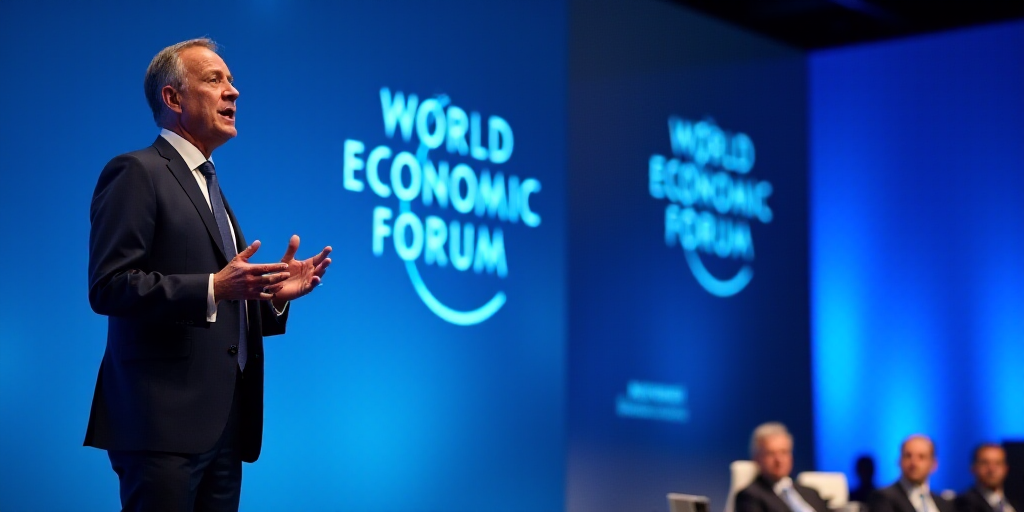
When questioned about the possibility of European retaliation at the World Economic Forum in Davos, Mnuchin stated that such a scenario “defies all logic.”
Mnuchin described the US Treasury market as “the best-performing market in the world” and the “most liquid debt market,” expressing confidence that Europeans would maintain their positions.
He dismissed the notion of European retaliation as “completely false” and advised against overreacting to media hype.
EU Leaders’ Reaction and Global Market Indications
EU leaders will convene an emergency summit in Brussels on Thursday to discuss their response to the Greenland crisis. Trump mentioned he would meet with “several parties” during his Davos visit this week.
Market signals suggest a “sell-off of US assets” globally, according to Kathleen Brooks, research director at XTB trading firm.
US markets were closed on Monday for a holiday, but Treasury bond yields have risen significantly in anticipation of Tuesday’s reopening. The dollar has fallen, and Japan is leading a massive global bond sale, while US stocks have also declined before the Wall Street session on Tuesday.
Concerns have grown over the Trump administration’s confrontational stance towards global counterparts, potentially dampening interest in US assets and longer-term bonds bearing the brunt of the sell-off, according to Patrick Munnelly, fund manager at Tickmill.
Lutnick’s Warning to the EU
Howard Lutnick, CEO of Cantor Fitzgerald, cautioned the EU against taking retaliatory measures in response to Trump’s tariff threats.
Lutnick warned that if the EU proceeds with such retaliation, it would lead to an escalation of “eye for an eye” tariffs. He noted that similar threats were made when Trump initially imposed tariffs on EU products last year, but both parties eventually reached a trade agreement.




