
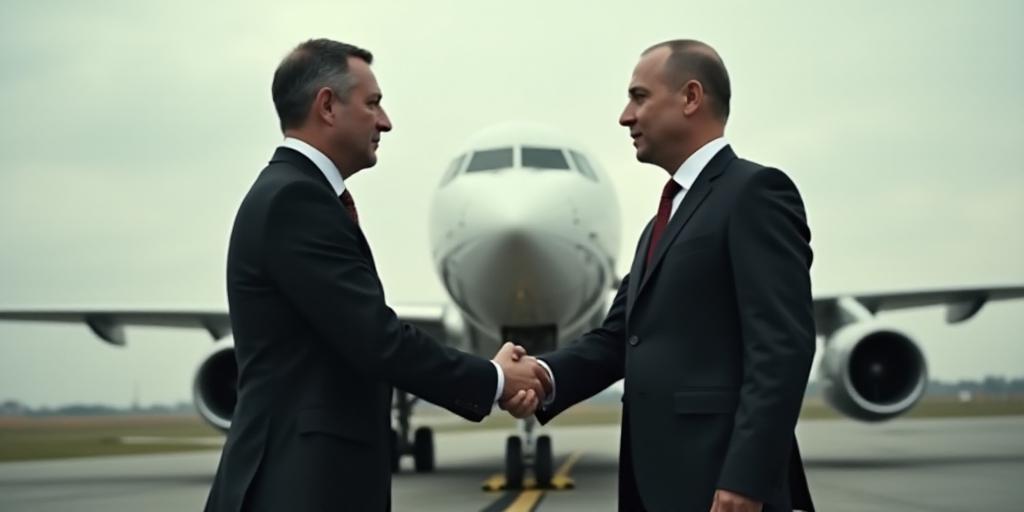
Background on Donald Trump and Vladimir Putin
Donald Trump, the 45th President of the United States, and Vladimir Putin, the President of Russia, have maintained a complex relationship since Trump took office in 2017. Their interactions have often been marked by controversy, including investigations into Russian interference in the 2016 U.S. elections and sanctions imposed on Russia by the U.S. for various actions deemed hostile.
Trump’s ‘Peace Council’ Announcement at Davos
At the World Economic Forum in Davos, Switzerland, on January 20, Trump announced that Putin had accepted his invitation to join the ‘Peace Council,’ an entity Trump envisioned as a body that could potentially rival the United Nations in global influence.
Trump’s Statement
During a press briefing at the forum, Trump declared, “He was invited. He accepted,” referring to Putin’s agreement to join the council. This announcement came after Putin stated that he had instructed his Foreign Ministry to examine the invitation before providing a response.
The ‘Peace Council’ Concept
Initially conceived by Trump, the ‘Peace Council’ was intended to oversee the reconstruction of Gaza post-conflict. However, the council’s scope appears to extend beyond the Palestinian territory, as per the document Trump shared with select journalists, including AFP.
Trump’s Dual Role
As the head of the ‘Peace Council,’ Trump will also serve as a separate representative for the United States. This dual role raises questions about potential conflicts of interest and the council’s legitimacy on the global stage.
Russia’s Response
Putin acknowledged receiving Trump’s invitation and ordered his Foreign Ministry to review it before formulating a response. This measured approach from Russia contrasts with Trump’s assertion that Putin had already accepted the invitation.
Implications and Reactions
The formation of Trump’s ‘Peace Council’ has sparked debate among international relations experts and diplomats. Critics argue that the council lacks the necessary international support and legitimacy to effectively address global conflicts. Meanwhile, proponents suggest that it could serve as a platform for dialogue and cooperation among nations.
Key Questions and Answers
- What is Trump’s ‘Peace Council’? It is an entity envisioned by Trump to oversee the reconstruction of post-conflict regions, initially Gaza, and potentially rivaling the United Nations in global influence.
- Who was invited to join the council? Trump extended an invitation to Vladimir Putin, the President of Russia.
- What was Putin’s response to the invitation? Putin ordered his Foreign Ministry to study the invitation before providing a formal response.
- What are the implications of Trump’s ‘Peace Council’? The council’s legitimacy and effectiveness are debated, with concerns about its lack of international support and potential conflicts of interest due to Trump’s dual role.




