
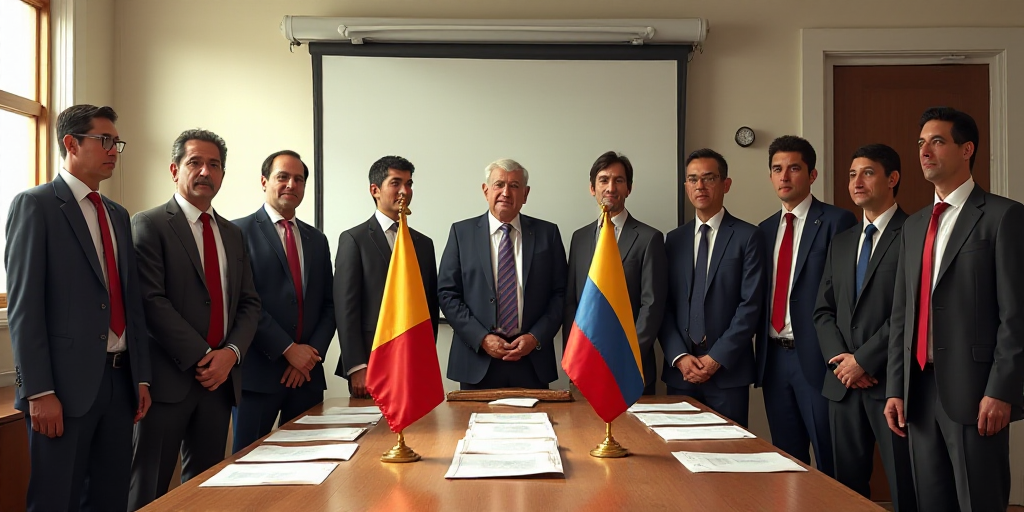
Background on Key Participants
Héctor Sánchez Morales, the president of the CCE (Council of Mexican Employers) in Puebla, led the business sector’s first meeting with President Claudia Sheinbaum Pardo. Beatriz Camacho Ruiz, the president of Coparmex (Confederation of Mexican Employers’ Organizations), also participated in the discussion. Gustavo Vargas Constantino, president of the Puebla chapter of the Mexican Construction Industry Association (CMIC), was another key figure in advocating for increased public works investment.
Meeting Overview and Key Discussions
The meeting took place in Angelópolis as part of the federal government’s security roundtables, with Puebla Governor Alejandro Armenta Mier in attendance. The primary topics of discussion were security, reducing informal employment, attracting more investments, and improving infrastructure.
Security Concerns and Coordination
Sánchez Morales expressed satisfaction with the meeting, stating that the Puebla private sector had a direct opportunity to voice their concerns about security to President Sheinbaum Pardo. He acknowledged the decrease in highway robberies on the Mexico-Puebla autopista during the current federal administration but emphasized the need for stronger coordination with states and municipalities.
He also mentioned that business leaders informed the president about local construction companies’ efforts to close illegal crossings on the Mexico-Puebla autopista, which were previously used by criminals for highway robberies.
Additionally, Sánchez Morales urged Sheinbaum Pardo to provide greater legal certainty for investors to develop projects that contribute to Puebla’s economic development.
Reducing Informal Employment
Camacho Ruiz proposed that formal employment be considered a crime prevention program, with business leaders willing to participate. She also suggested implementing efficient measures for informal sector workers to transition legally, including tax incentives for new businesses creating jobs.
Camacho Ruiz emphasized the need for secure rest areas along highways to protect transportation workers from potential robberies.
She further highlighted the private sector’s support for the Bienestar Development Polo in San José Chiapa, formerly known as Ciudad Modelo, to attract investments from various sectors.
Increased Public Works Investment
Vargas Constantino stressed the need for more federal investments in Puebla’s infrastructure to improve connectivity with other states, addressing the lack of completed road segments.
He pointed out that Puebla has been neglected in terms of road maintenance for at least five years and urged the federal government to invest more, considering its strategic geographical position in central Mexico.
Vargas Constantino expressed optimism that increased federal investment could boost the construction sector’s participation to 40% in local public works.
Key Questions and Answers
- Who participated in the meeting? The Puebla business sector, led by Héctor Sánchez Morales (CCE), Beatriz Camacho Ruiz (Coparmex), and Gustavo Vargas Constantino (CMIC), met with President Claudia Sheinbaum Pardo.
- What were the main topics discussed? Security, reducing informal employment, attracting investments, and improving infrastructure.
- What specific concerns were raised regarding security? The need for stronger coordination between federal, state, and municipal governments to address security issues along highways.
- How did the business sector propose to tackle informal employment? By implementing measures such as tax incentives for new businesses creating jobs and establishing secure rest areas for transportation workers.
- What infrastructure improvements were requested? More federal investments in Puebla’s road connectivity and maintenance to boost the construction sector’s participation.




