
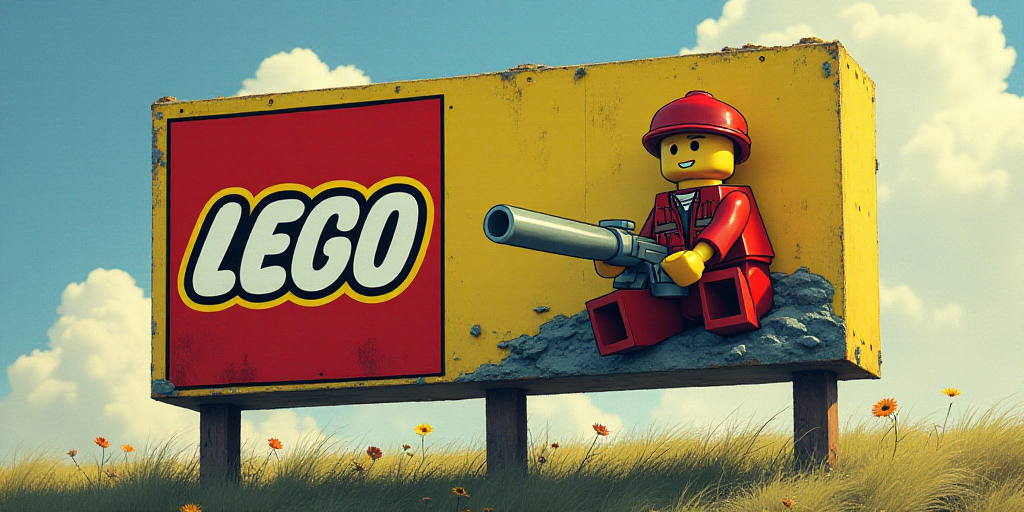
Background on Key Players and Their Relevance
The toy industry in Mexico, which includes major brands like Lego and Mattel, is heavily reliant on imported plastic components, primarily from Asia. This industry, like many others, is affected by the trade tensions between the U.S. government under Donald Trump, Mexico, and China.
Mexico’s Tariff Increase
At the beginning of the year, Mexico raised tariffs on several products and components from countries without which it has no trade agreements, primarily targeting China. This move was perceived by some analysts as Mexico aligning with the U.S. in preparation for the review of the T-MEC (United States-Mexico-Canada Agreement) this year, which also includes Canada.
Key Figures and Their Roles
Claudia Sheinbaum, the President of Mexico City, stated that these tariffs aim to “strengthen” the Mexican economy and encourage local suppliers. Meanwhile, Miguel Ángel Martín, President of the Mexican Toy Industry Association (AMIJU), supports the measure but expresses concern over rising input costs.
Impact on the Toy Industry
The toy manufacturing industry in Mexico, which houses plants for Lego and Mattel, welcomes the tariff increase but worries about higher input costs. Most of the required plastic is imported, as Mexico’s state-owned oil company, Pemex, only produces about 20% of the needed polyethylene.
- Many toys now include electronic chips, which are not produced domestically.
- Importing these materials has become a geopolitical issue, tied to the review of Mexico’s commercial relationship with the U.S., which must be completed before July 1.
Miguel Ángel Martín emphasizes the concern among numerous Mexican businesses, many of which are significant manufacturing centers. He notes that “all Lego consumed in the U.S. and Canada is made in Mexico,” but everyone is waiting to see how the negotiations conclude, hoping for a fair outcome benefiting all three countries.
China’s Role in T-MEC Discord
China has been a source of friction among the T-MEC partners: the U.S., Mexico, and Canada.
- In mid-January, China signed a preliminary trade agreement with Canada. Under this pact, Ottawa will allow Chinese electric cars to enter at preferential tariffs of 6.1%.
- This agreement angered Trump, who threatened to impose 100% tariffs on Canada and accused his partner of wanting to become a “transit hub” for China to ship products to the U.S.
Canadian Prime Minister Mark Carney viewed Trump’s comment as a strategy ahead of the T-MEC review. Sheinbaum has repeatedly stated that her government will work to prevent the treaty from being broken.
Experts believe that the U.S. aims to solidify its continental American hegemony and reduce China’s influence, given Mexico’s proximity and importance as a commercial partner.
Surviving Trade Tensions
While some industries, like textiles and footwear, benefit from tariffs on China, others, including the automotive industry with many components sourced from Asia, are concerned. Amidst the back-and-forth statements between Mexico, the U.S., and Canada, toy manufacturers focus on “surviving and gradually increasing production.”
- While the T-MEC is being reviewed, the toy industry aims to absorb most of the increased costs to avoid inflation.
- However, Martín warns that if the negotiations do not result in a favorable outcome for the industry, consumers will ultimately bear the brunt of these costs by the end of the year.
Key Questions and Answers
- What is the main issue at hand? The toy industry in Mexico is grappling with rising input costs due to tariff increases on imported plastic components from China, amidst ongoing trade negotiations between Mexico, the U.S., and Canada.
- Who are the key players involved? The U.S. government under Donald Trump, Mexico, Canada, and China are all involved in these trade negotiations. Claudia Sheinbaum, President of Mexico City, and Miguel Ángel Martín, President of the Mexican Toy Industry Association (AMIJU), are also significant figures in this context.
- How does this affect the toy industry in Mexico? The toy manufacturing industry in Mexico, which includes major brands like Lego and Mattel, is concerned about higher input costs due to tariff increases. They aim to absorb these costs while waiting for a favorable outcome in the T-MEC negotiations.
- What is China’s role in this situation? China has been a source of trade tension among the T-MEC partners. Its recent trade agreement with Canada has further complicated matters, prompting reactions from the U.S. and affecting Mexico’s position in these negotiations.




