
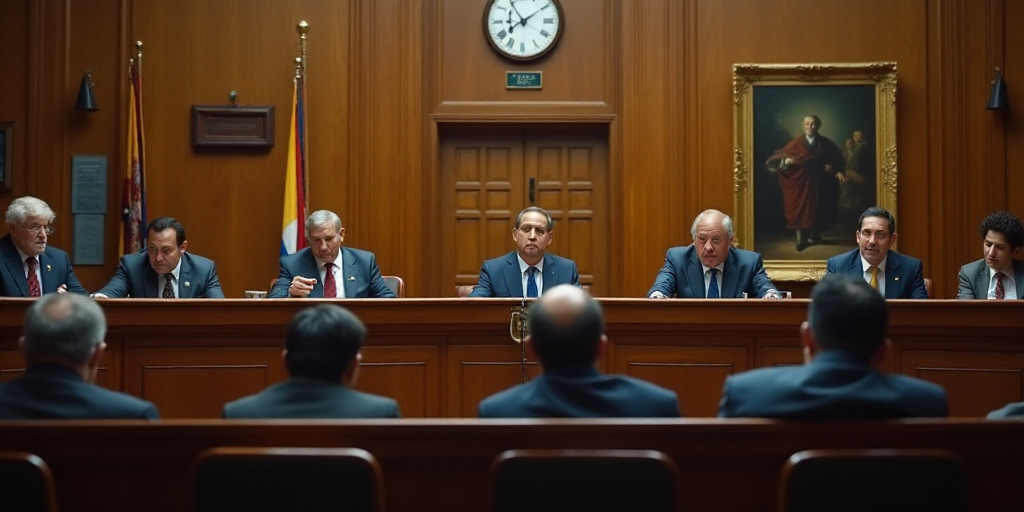
Supreme Court of Justice of the Nation (SCJN) Ruling on Video Recording of Interviews with Children and Adolescents
The Supreme Court of Justice of the Nation (SCJN) has ruled that video recording interviews with children and adolescents can be constitutionally valid, provided that it is accompanied by protective measures, confidentiality, and informed consent.
Background on the Ruling
The SCJN, under the leadership of Loretta Ortiz Ahlf, confirmed the appealed sentence and denied the amparo to the complainant. The ruling specifies that in certain cases, video recording is necessary to meet the reinforced protection obligations derived from Articles 1 and 4 of the Constitution.
Importance of Protecting Children’s Rights
The SCJN emphasized that the best interest of children, in their substantive rights, interpretative principle, and procedural norm dimensions, demands that all judicial actions involving children and adolescents maximize the protection of their dignity, emotional integrity, and effective participation in legal matters affecting their sphere.
Feminicide Ruling
In another matter, the SCJN’s plenary session determined the constitutionality of Article 338, Fraction VI, of the Criminal Code for the Free and Sovereign State of Puebla, which establishes the crime of feminicide.
The Court has consistently clarified that Articles 14 of the Mexican Federal Constitution and 9 of the American Convention on Human Rights recognize the right to exact application of the law in penal matters. It prohibits imposing, through simple analogy or even by majority vote, any penalty not specifically decreed for the crime in question at the time of the offense.
Key Questions and Answers
- What is the main decision of the SCJN? The SCJN ruled that video recording interviews with children and adolescents can be constitutionally valid, provided that protective measures, confidentiality, and informed consent are ensured.
- Why is this ruling important? This decision aims to protect the best interests of children by ensuring their dignity, emotional integrity, and effective participation in legal matters affecting them.
- What was the second ruling by the SCJN? The SCJN determined that Article 338, Fraction VI, of the Puebla Criminal Code, which establishes feminicide, is constitutional.
- Why is the feminicide ruling significant? The Court emphasized the exact application of the law in penal matters, prohibiting the imposition of penalties not specifically decreed for the crime in question.




