
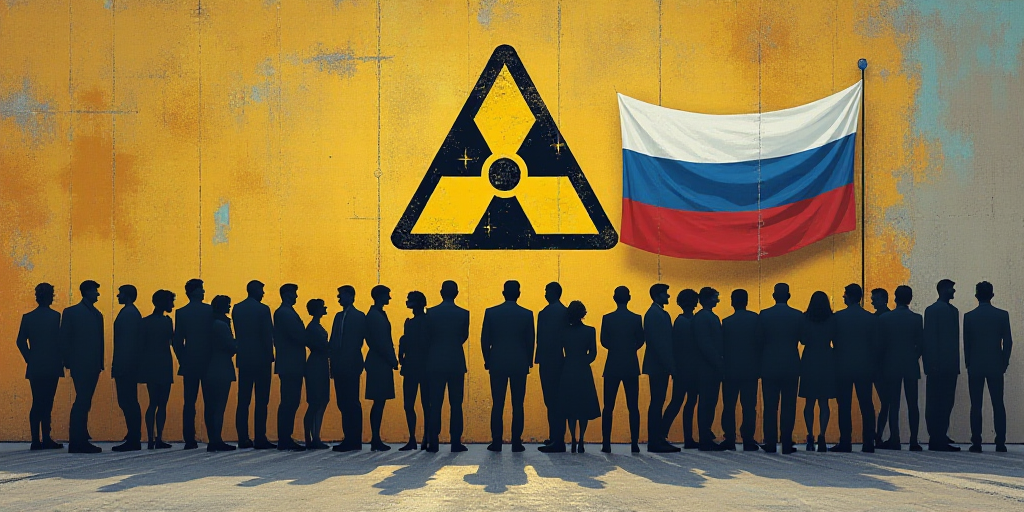
Background on the New START Treaty
The last global treaty restricting the deployment of nuclear weapons, known as the New START, agreed upon by United States and Russia, is set to expire on Thursday, unless there’s a last-minute change. This treaty, the most recent nuclear agreement between Washington and Moscow since the Cold War era, imposes limitations on the two major nuclear powers.
Who are the key figures?
President Vladimir Putin of Russia suggested a one-year extension of the New START in September. When questioned by his U.S. counterpart, Donald Trump, he reportedly found the idea appealing but no further updates have been shared.
Recent Stances on Nuclear Control
In July, Trump acknowledged the significance of nuclear restrictions, stating that their absence poses a global concern. However, in October, he surprised the world by advocating for the resumption of nuclear testing, which hasn’t been conducted in over 30 years. It remains unclear if he will follow through.
A White House official, speaking on the condition of anonymity, mentioned that Trump aims to establish “nuclear weapon limits” and involve China in disarmament talks. The official stated that the president will clarify his approach “at the appropriate time.”
Experts’ Perspectives on New START Extension
Jon Wolfsthal, director of global risk at the Federation of American Scientists, believes that Trump and Putin could easily extend the New START. He emphasizes that this opportunity should have been seized months ago.
Russia’s Actions and China’s Role
In 2023, Russia suspended a crucial aspect of the New START allowing inspections due to strained relations with President Joe Biden’s administration over Russia’s invasion of Ukraine.
Military analyst Alexander Khramchikhin stated that both nations have signaled their intent to act freely. Vassily Kashin, director of the Comprehensive European and International Studies Center in Moscow, suggests that Russia will monitor the U.S. nuclear arsenal developments and respond accordingly, possibly remaining silent if no drastic measures are taken.
New START’s Impact on Nuclear Arsenals
The New START treaty capped Russia and the U.S. at 1,550 strategic nuclear warheads each, a near 30% reduction from the 2002 limit. It also restricted each country to no more than 800 deployed intercontinental ballistic missiles and heavy bombers, still enough to obliterate the Earth.
During his first term, Trump insisted that any new treaty include China, whose nuclear arsenal is growing rapidly but remains significantly smaller than Russia’s and the U.S.’s.
Key Questions and Answers
- Q: What is the New START treaty?
- Q: Why is the expiration of New START significant?
- Q: What are the recent stances of U.S. and Russian leaders on nuclear control?
- Q: How might China’s growing nuclear arsenal factor into future nuclear treaties?
A: The New START is a nuclear arms control treaty between the United States and Russia, limiting each country to no more than 1,550 strategic nuclear warheads and restricting the number of deployed intercontinental ballistic missiles and heavy bombers.
A: The treaty’s expiration increases the risk of nuclear proliferation in a highly volatile global context.
A: Trump has expressed the importance of nuclear restrictions while also advocating for resuming nuclear testing, which hasn’t been conducted in over 30 years. Meanwhile, Putin suggested a one-year extension of New START.
A: Trump has insisted that any new treaty include China, whose nuclear arsenal is expanding rapidly but remains smaller than Russia’s and the U.S.’s.




