
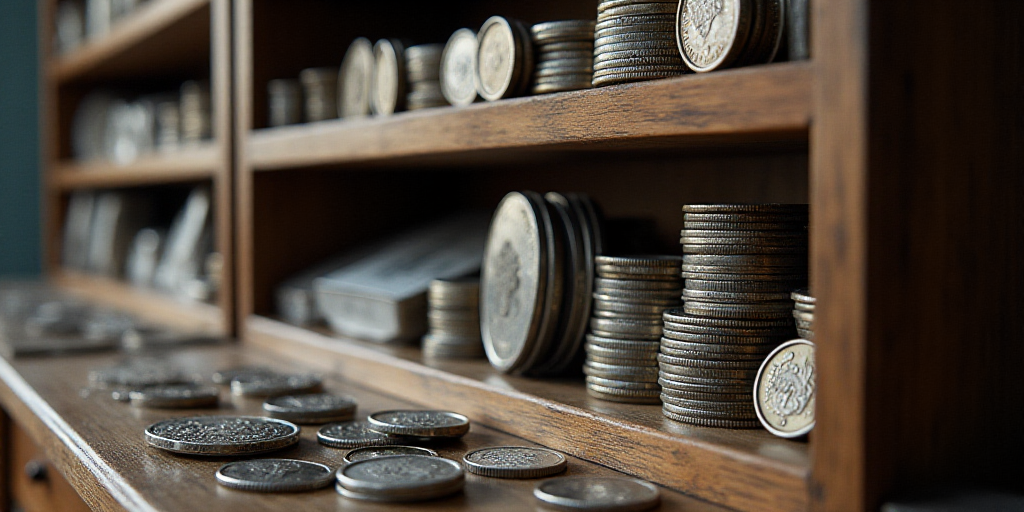
Silver Breaks Historical Barrier at $100 per Ounce
Silver, once considered the “younger sibling” of gold, has recently taken center stage in global financial markets. On January 23, the metal breached a historic milestone by surpassing $100 per ounce for the first time, driven by industrial demand, massive investor purchases, and a structural supply deficit that has persisted for five years.
Top Silver Producing Nations
With silver prices at record highs, it’s essential to understand which countries dominate production and reserves. Mexico, China, and Peru are the leading producers, accounting for more than half of the global output.
Mexico: The Market Leader
Mexico, with an estimated 6,300 metric tonnes of silver production in 2024, remains the world’s largest silver producer. Its strength lies in a well-established mining infrastructure and high-grade deposits, allowing it to extract volumes exceeding its geological proportion.
- China, with approximately 3,300 metric tonnes, is second. Most of its silver comes as a byproduct of lead and zinc mining, tying its supply to industrial cycles rather than just the precious metal’s price.
- Peru, with around 3,100 metric tonnes, secured the third spot and reinforced the region’s significance in the silver market.
Together, Mexico, China, and Peru produced over 12,400 metric tonnes of silver in 2024, accounting for more than half of the global output. Other countries like Bolivia (1,300 metric tonnes), Poland (1,300 metric tonnes), Chile (1,200 metric tonnes), Russia (1,200 metric tonnes), the United States (1,100 metric tonnes), Australia (1,000 metric tonnes), Kazakhstan (1,000 metric tonnes), Argentina (800 metric tonnes), India (800 metric tonnes), Sweden (unknown), and Canada (unknown) contribute to the global silver production, totaling approximately 25,000 metric tonnes.
Global Silver Market Dependence
Despite the wide distribution of production, the market remains heavily reliant on a few key players. Strong industrial demand in sectors such as electronics, solar energy, and electrification has kept the market in deficit for five consecutive years, driving up prices and increasing the strategic importance of producing nations.
Factors Driving Silver’s Surge
Silver’s jump to $100.29 per ounce on January 23 was not an isolated event. The market reacted to a combination of factors, including massive retail investor purchases in New York, London, and Shanghai; geopolitical uncertainty with trade tensions between the U.S. and its allies and lack of significant progress in the Ukraine war; and concerns over U.S. monetary policy.
Risks of Volatility
Despite the silver and gold surge, market signals warn of potential corrections. Technical indicators like the Relative Strength Index (RSI) suggest both metals might be overbought, increasing correction risks.
An RSI above 70 indicates overbought conditions, and in recent weeks, both gold and silver reached levels unseen for decades. Consequently, on the trading day before its record, gold fell by 5.7%, while silver plummeted by up to 8.4%.




