
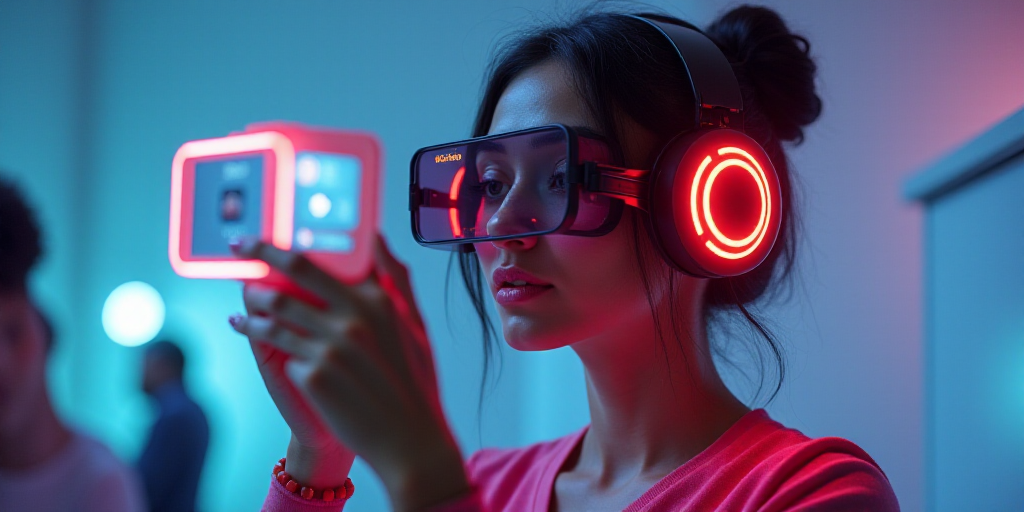
Introduction to INGENIA Play Lab
Zapopan, a city in Jalisco, Mexico, has launched INGENIA Play Lab, a public incubator aimed at taking video game ideas and prototypes to a minimum viable product (MVP) with a clear business path in the Mexican market, which boasts over 76 million players and $2.3 billion in revenue.
The Mexican Gaming Market
The size of the market underscores the urgency behind this initiative. Mexico has a gaming community of over 76 million players, with an estimated economic weight of $2.3 billion in revenue, according to the study “Game On: The Gaming Boom in Mexico” by Endeavor and Santander. In this environment, smartphones dominate as the primary entry point to gaming.
Government’s Role
Salvador Villaseñor, the coordinator general of Economic Development and Combating Inequality for the Zapopan government, explained in an interview that the goal is to push the gaming community towards production and employment.
Jalisco as the Operational Base
The program is built upon a local ecosystem that the municipality aims to turn into a competitive advantage. Villaseñor mentioned universities in Guadalajara with creative industries and animation-related careers as part of the talent pool that feeds development teams.
Regional Ambitions
Zapopan aims to become a “hub leader of developers in Latin America” while Villaseñor describes it as a local cluster goal around innovation, creativity, and video games.
Call for Participants
The call for participants is open to individuals over 18 residing in Mexico or Latin America, including recent graduates, professionals, and independent developers, individually or in teams, with a developed idea or prototype.
- Availability of up to five hours per week in a hybrid format
- Attendance at key events
The desired profile covers the entire video game development chain, requiring experience in programming, 2D/3D animation, digital art, virtual and augmented reality, visual effects, narrative, level design, and music or sound editing.
Program Structure
INGENIA Play Lab is designed for 28 weeks, divided into three phases with explicit output of a minimum viable product (MVP) and industry/investment connections.
- Pre-incubation: Six weeks of diagnosis and strengthening ideas
- Incubation: 12 weeks with a business model, legal advice, validation, workshops, and participation in the Gamer’s Choice Festival
- MVP Launch: Eight weeks focusing on developing a functional product and preparing its presentation
The first generation comprises 20 projects, described as a methodological work with advisors to land the idea, model, and project as an industry.
Public Infrastructure
Selected teams will receive specialized technical training, personalized mentoring, intellectual property guidance, and free access to the Centro Gamer y de Creación Digital’s infrastructure and equipment.
- Networking opportunities
- Participation in tournaments, hackathons, and game jams
- Connections with the industry and potential investors
Villaseñor described the facilities focused on production and creative work, including private offices, an audiovisual room for podcasts, a photography studio, and the “Casa del Autor” space linked to French government cooperation.
International Connections
Villaseñor mentioned advisors in Guadalajara’s metropolitan area and Zapopan, as well as advisors in Spain, Chile, and Colombia.
He highlighted the challenge of competing in high-level production, requiring significant investment and multidisciplinary teams.
Awards and Program Exit
The program concludes with financial incentives for top-performing projects, totaling 450,000 Mexican pesos distributed among first, second, and third places based on performance and evaluation.
Final Thoughts
INGENIA Play Lab is a municipal intervention attempting to transform a broad gaming base and consumption into studios with products and business strategies. The public initiative does not replace the sector’s harsh realities, which demand investment, multidisciplinary teams, and distribution routes. Simultaneously, it aims to lower the entry barrier with methodology, infrastructure, and support so more projects can emerge from Jalisco with genuine market prospects.




