
Introduction
NEW DELHI – There is a method behind the apparent madness of President Donald Trump’s transactional and sphere-of-influence approach to global geopolitics and economics. This logic has become clearer than ever in his administration’s illegal seizure of Venezuelan President Nicolas Maduro and its continuous efforts to secure control over the country’s oil reserves by installing a client regime.
The Core of Trump’s Doctrina Donroe
At the heart of Trump’s resurgence of the Monroe Doctrine —or the “Doctrina Donroe,” as he has rebranded it—lies the belief that the United States can act with impunity within its “backyard,” as he defines it, while other major powers, particularly China, can do the same in theirs. Simultaneously, the United States reserves the right to promote its strategic interests wherever it deems appropriate, including Greenland.
Imperialism Gánster
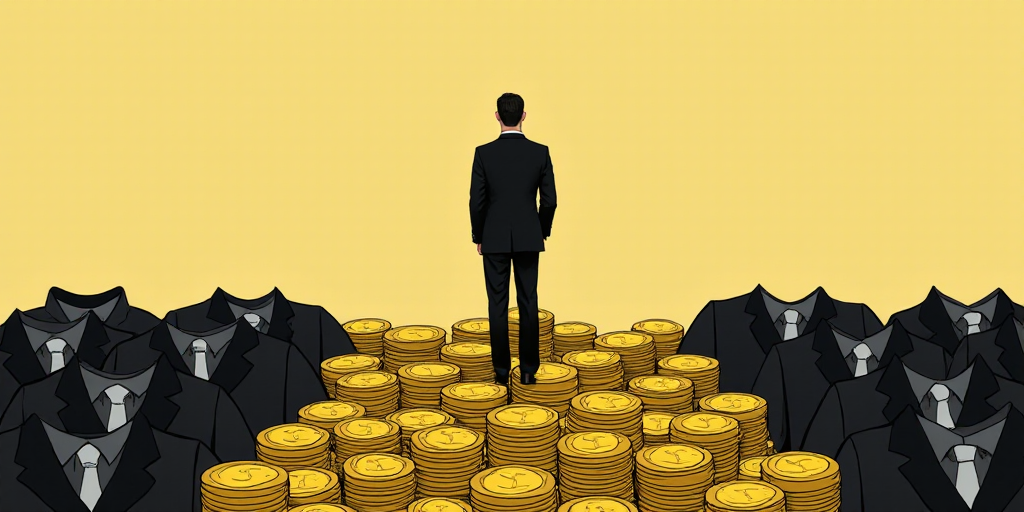
Economist Prabhat Patnaik accurately described this approach as “gangster imperialism,” rooted in the colonial origins of capitalism, where hierarchies among peoples and policies were based on relative power.
Can Trump’s Strategy Work?
Leaving aside the moral and legal questions raised by Trump’s strategy, can it truly succeed? Can dividing the world among major powers provide a more stable and dynamic capitalism at a time when the global economy seems increasingly volatile and directionless?
Historically, the answer is no. For the past two centuries, capitalism has oscillated between periods of intense rivalry among states and phases where a single dominant superpower acted as lawmaker and enforcer. In the 19th century, the United Kingdom played this role, building a larger colonial empire than its European rivals. Since mid-20th century, the United States has largely occupied this position.
While hegemony never meant the absence of war, it did limit large-scale interimperialist conflicts of the kind that preceded World War I, described famously by Vladimir Lenin as wars in which private capital backed by the state fought for control of economic territory. The relative stability, such as it was, rested on a combination of overwhelming military power and a framework of global norms and institutions designed to contain geopolitical rivalries.
The Overextended and Declining U.S. Empire
Today, however, the scope of U.S. imperialism is overstretched and in decline. Trump’s foreign policy agenda is based on the idea that, while U.S.-led globalization once served the interests of American capital—especially finance—its benefits have waned with the rise of emerging powers like China. His proposed solution is to rely on military dominance and residual economic power to secure direct control over resources and markets in regions deemed exclusively within the U.S. sphere of influence. This means abandoning even the pretense of an order based on norms, eliminating the excuse of promoting democracy and human rights, and openly displaying an old doctrine of resource appropriation based on power.
Unlikely to Succeed
Even on its own terms, this strategy is unlikely to succeed. While it is clearly disastrous for U.S. workers and small businesses, it also fuels instability and undermines the long-term interests of large U.S. corporations. Economic resources are not clearly contained within distinct spheres of control, and markets, by their nature, overlap. Consequently, disputes over access, borders, and control are inevitable when a power attempts to assert dominance across all fronts, increasing the likelihood of major wars.
Winners and Losers
Certain segments of U.S. businesses will undoubtedly benefit. The military-industrial complex, for example, has reaped enormous profits from wars in Ukraine and the Middle East. However, other powerful interests will lose out. Multinational corporations relying on vertically integrated and geographically dispersed supply chains will be affected; financial institutions accustomed to relatively unrestricted cross-border capital flows will see reduced opportunities; and large technology firms, dependent on global data access, will be excluded from key foreign markets.
Managing Contradictions
Trump’s administration has attempted to manage these contradictions through a patchwork of coercive demands imposed on various trading partners. However, while Trump’s intimidation tactics may produce short-term concessions, they are ultimately counterproductive. Many countries, including long-time allies, are already trying to reduce their reliance on the U.S. by forming new coalitions around specific concerns.
Economic Agenda and Its Consequences
These issues are exacerbated by Trump’s broader economic agenda, which continues to prioritize fossil fuels over emerging technologies like renewables, electric vehicles, and battery storage. As a result, U.S. businesses lack the economies of scale necessary for long-term competitiveness. Bubbles fueled by AI and overvalued cryptocurrencies are poor substitutes for sustained investment and technological leadership.
Latin American Resistance
Treating Latin America as the “backyard” of the U.S. is likely to provoke popular resistance. The U.S. has a long history of attempting to dominate the region through military interventions, support for military dictatorships, and sanctions. These efforts have yielded poor results, and with the rise of inequality and economic insecurity in much of Latin America, conditions are ripe for social and political unrest.
Global Consequences
The consequences will be felt in the U.S., but the rest of the world cannot afford to wait for Trump—or a future administration—to change course. Cautiousness displayed by some European leaders is not the answer, nor is reactive aggression or retreat into introverted isolationism.
International Cooperation
Given the magnitude and urgency of current global challenges, it is clear that countering Trump’s “gangster imperialism” requires international cooperation independent of U.S. consent. Collective action is no longer optional; it’s the only viable path to counter the threat posed by a defiant America.
About the Author
Jayati Ghosh, Professor of Economics at the University of Massachusetts Amherst, is a member of the Club of Rome’s Commission on Transformative Economies and co-president of the Independent Commission for the Reform of International Corporate Taxation.
Copyright:
Project
Syndicate,
1995 – 2026
www.project-syndicate.org




