
Background and Key Players
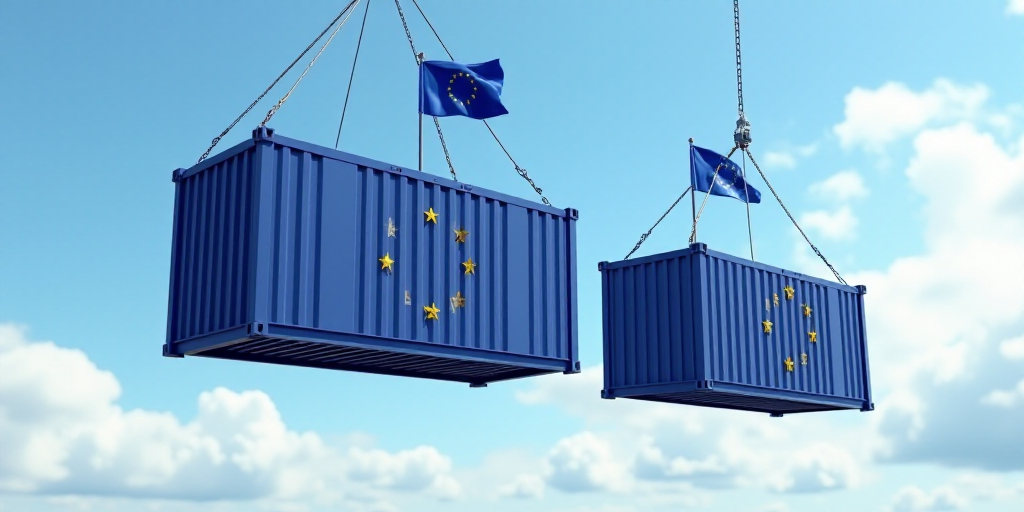
The European Union (EU) signed the largest trade agreement in its history on Saturday with Mercosur members Argentina, Brazil, Paraguay, and Uruguay after 25 years of negotiations. However, European lawmakers voted on Wednesday to challenge the controversial free trade agreement before the EU’s highest court, potentially delaying it by two years and possibly causing its failure.
The Controversy
German Chancellor Friedrich Merz, one of the main proponents of the agreement, expressed disappointment over the referral to the court and stated in a social media post that the EU Assembly had “erroneously assessed the geopolitical situation.” He insisted that the agreement should be implemented soon on a provisional basis.
Supporters like Germany and Spain argue that the agreement is crucial to counterbalance trade disruptions caused by U.S. President Donald Trump’s policies. They emphasize that the agreement will help offset losses from U.S. tariffs and reduce reliance on China by ensuring access to critical minerals.
However, critics led by France, the EU’s largest agricultural producer, claim that the agreement will significantly increase imports of cheap beef, sugar, and poultry, harming domestic farmers who have staged numerous protests.
The Legislative Challenge
A group of 144 lawmakers presented a parliamentary motion requesting the EU Court of Justice to rule on whether the agreement can be applied before its definitive ratification by all member states and if its provisions limit the EU’s ability to establish environmental and consumer health policies.
The court typically takes about two years to issue such opinions.
The European Parliament backed the motion with 334 votes in favor, 324 against, and 11 abstentions.
France’s largest agricultural union, FNSEA, hailed the vote as a victory. French Prime Minister Sebastien Lecornu emphasized the importance of respecting the vote in a social media post.
The European Commission, which negotiated the pact, stated that the issues raised in the motion had already been extensively discussed with EU lawmakers and addressed in previous trade agreements. They claimed they would consult with member state governments and lawmakers before deciding on subsequent actions.
Key Questions and Answers
- What is the EU-Mercosur trade agreement? It’s a massive free trade deal between the European Union and Mercosur (Argentina, Brazil, Paraguay, and Uruguay) after 25 years of negotiations.
- Why are European lawmakers challenging the agreement? They argue that it will negatively impact domestic agriculture by flooding the market with cheap beef, sugar, and poultry imports.
- Who supports the agreement? Supporters like Germany and Spain argue it’s essential to counterbalance trade disruptions caused by U.S. President Donald Trump’s policies and reduce reliance on China.
- What happens next? The EU Court of Justice will issue a ruling on whether the agreement can be applied before definitive ratification and if it limits the EU’s ability to establish environmental and consumer health policies.




