
Introduction to Tony Viramontes and His Journey
The Mexican wine that now competes on international tables does not begin in the barrel or the label. It starts much earlier, in Tony Viramontes’ journey from Tlaltenango, Zacatecas. Driven by the urgency to help his family, he spent over three decades in the United States, learning that agriculture is fundamentally a human science.
From Agroindustrial Sector to Viticulture
Viramontes’ story isn’t one of individual success, but rather a quiet logic: consistent hard work, observation, and understanding that agricultural quality depends more on the people working the land than the soil itself. After 35 years in the US agroindustrial sector, reaching the highest position held by a Hispanic in a large agricultural company, Viramontes set his sights on replicating the successful model he had witnessed, adapted to his roots.
Vinos del Oeste: A Viticulture Company with a Human Focus
Today, Viramontes leads Vinos del Oeste, a viticulture company with operations in Querétaro and the Valle de Guadalupe. While their labels have gained recognition, their core focus isn’t technology or inputs but the migrant labor force. Viramontes believes that wine isn’t improvised; it’s built with skilled, well-treated, and present workers during the critical agricultural cycle moments.
Managing Migrant Labor through H-2A Visas
Viramontes’ US experience taught him that labor mobility isn’t a problem to contain but an economic phenomenon to manage. Thus, a crucial part of Vinos del Oeste’s operations relies on the H-2A visa program, allowing temporary and regulated agricultural worker hiring. Through this mechanism, the company has enabled individuals from marginalized communities in Chiapas and Oaxaca to access formal employment with guaranteed salary, housing, food, and transportation.
Human Presence in the Vineyards
In the vineyards, this human presence translates into technical decisions. Where other vineyards rely on recurring chemical applications, Viramontes’ model prioritizes manual labor. Timely de-leafing, precise pruning, and constant supervision have significantly reduced agrochemical use. This isn’t an ideological stance but a direct result of having sufficient, skilled workers.
Navigating Political Uncertainty
Political context introduces uncertainty. The hardening of migrant discourse in the US under Donald Trump’s second term has created doubts among workers and employers. However, Viramontes maintains that, despite its cost, ordered migration remains viable when clear rules and mutual compliance exist.
The Broader Impact of Vinos del Oeste
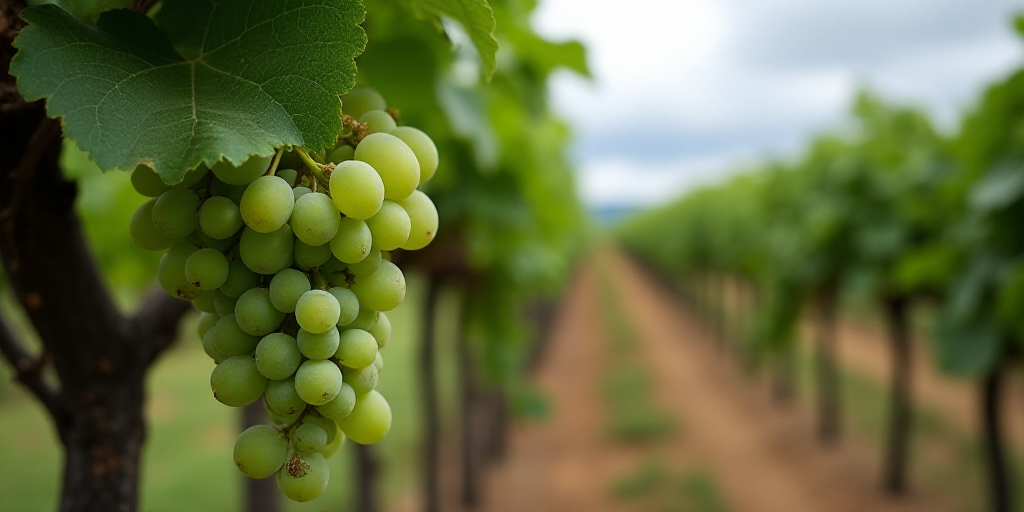
Vinos del Oeste doesn’t just produce wine; it generates income that returns to origin communities, provides stability for families living off the land, and demonstrates that labor migration supports entire economic sectors. In their vineyards, grapes mature under the sun, but the project rests on something less visible: people crossing borders to work and returning with more than just a salary.
The Time, Care, and Hands Required in Agriculture
In a public discourse dominated by slogans, Tony Viramontes’ story reminds us that, like wine, agriculture requires time, care, and hands willing to make it possible.
Key Questions and Answers
- Who is Tony Viramontes? Tony Viramontes is a Mexican viticulturist who spent over three decades in the US agroindustrial sector before founding Vinos del Oeste, a wine company in Mexico focused on human-centered labor practices.
- What is Vinos del Oeste’s core focus? Vinos del Oeste prioritizes the migrant labor force and skilled, well-treated workers over technology or inputs.
- How does Vinos del Oeste manage labor mobility? The company uses the H-2A visa program to regulate and facilitate temporary agricultural worker hiring from marginalized communities in Mexico.
- What makes Vinos del Oeste’s approach unique? Viramontes’ model emphasizes manual labor in vineyards, significantly reducing agrochemical use and demonstrating that ordered migration supports entire economic sectors.
- How does political uncertainty affect Vinos del Oeste? Despite challenges posed by hardening migrant discourse in the US, Viramontes believes ordered migration remains viable with clear rules and mutual compliance.




