
Understanding Affirmative Fiction and Its Potential Impact
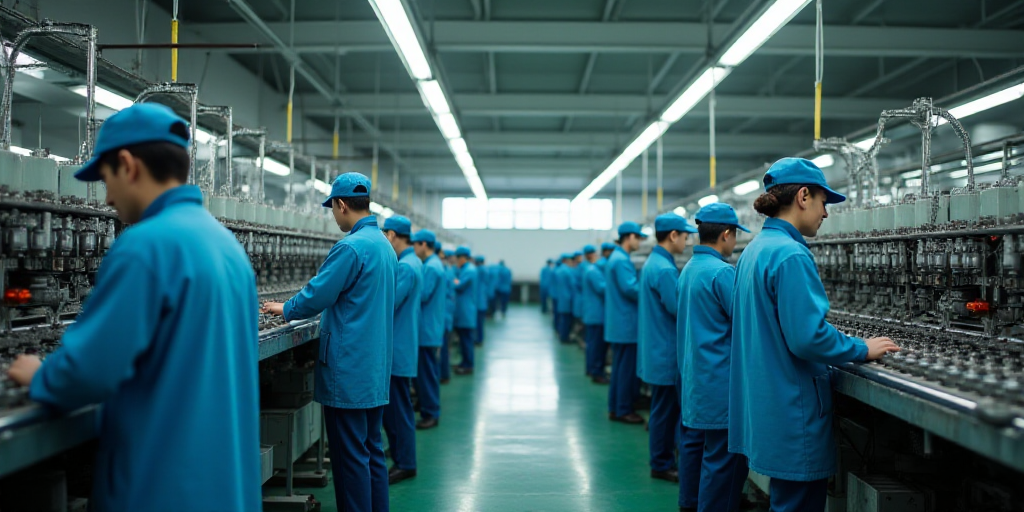
The National Council of Export Manufacturing Industry (Index) has proposed implementing the legal figure known as “affirmative fiction” for factory openings or expansions in Mexico. This legal concept implies that if an authority fails to respond within the legally established timeframe to a request, it is understood that the response is positive, granting the applicant the right they sought through administrative silence.
Who is Israel Morales and Why is His Opinion Relevant?
Israel Morales, director of the National Committee for Mexico-United States Relations and International Agreements at Index, has been advocating for adjustments to address over-regulation issues in Mexico’s manufacturing sector. Morales argues that instead of waiting for lengthy approval processes, businesses should be allowed to proceed with their plans and then undergo a subsequent review by the authorities.
Current State of Manufacturing Sector in Mexico
As of August 2025, there were 6,586 registered establishments under the IMMEX program. Out of these, 5,260 were engaged in manufacturing activities, while 1,326 focused on agriculture, fishing, commerce, and services.
Index’s Role and Recommendations
The Index, a civil association founded in 1973, represents around 1,500 companies utilizing the IMMEX program. This program allows temporary import of materials without paying taxes for production, transformation, or repair of goods intended for export.
Morales emphasizes the importance of capitalizing on existing investment conditions, as there is a perception in the United States that they want to reduce Mexican investments. If some investments are still looking towards Mexico, it’s crucial to take advantage of these opportunities and remove regulatory obstacles.
Index’s Proposal for Tariff Adjustments
In addition to affirmative fiction, Index has suggested that if the federal government considers raising tariffs, they should target imported products rather than those produced domestically.
Two potential methods for tariff exemptions have been proposed: the Eighth Rule and Programas de Promoción Sectorial (Prosec).
- Eighth Rule: Allows tariff-free import of materials or machinery for export-oriented companies (like IMMEX) with case-by-case authorization from the Secretariat of Economy.
- Prosec: Offers permanent preferential tariffs to domestic producers, even if they don’t export, as long as they belong to strategic sectors (automotive, electronics, etc.)
Government’s Tariff Increase Proposal and Index’s Response
The administration of President Claudia Sheinbaum proposed imposing the maximum tariff allowed by the World Trade Organization (WTO) on 1,463 product classifications within 17 strategic sectors. This initiative was part of the 2026 Economic Package, subject to approval by legislators.
Morales acknowledges the government’s analysis on these 1,463 classifications and suggests making necessary adjustments. He also indicates that the government is open to making changes, which could then be complemented with programs like the Eighth Rule or Prosec for justifyable non-produced imports.




