
Background on the Situation
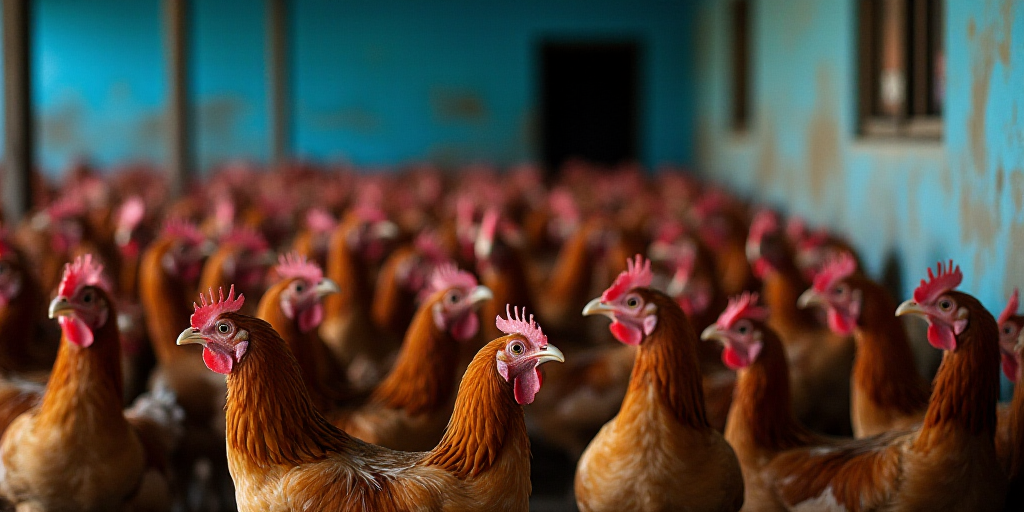
Lleida, a region in Spain, has reported a suspected case of H5N1 avian influenza, also known as H5N1 avian flu. The Catalan Department of Agriculture, led by Conseller Òscar Ordeig, has initiated the necessary health protocols pending confirmation from the Spanish Ministry of Agriculture.
Key Players and Their Roles
Esteve Fernández, the General Secretary of Health for the Government, has reassured the public that it is safe to consume poultry meat and eggs. He emphasized the activation of a monitoring protocol for workers at the affected farm.
Government’s Response and Measures
A crisis committee meeting was held on the same day involving all relevant departments and the Catalan poultry sector to inform and coordinate containment efforts. The Government confirmed that no other poultry farms are within a 1-kilometer radius of the affected farm, and there have been no animal movements from this farm.
- Activated preventive protocols, including the humane sacrifice of animals from the affected farm.
- Veterinarians from the Catalan government conducted tests and inspections at farms within 3- and 10-kilometer radii.
- Confinement of birds
- Reinforced access and movement protocols
- Personal hygiene, cleaning, and disinfection
- Animal, feed, water, and bedding management
- Waste and carcass management
- Sanitary surveillance
- Staff training and awareness
Preemptive Measures Implemented
On November 17, the Catalan government had already implemented additional biosecurity measures in poultry farms due to a high-risk epidemiological scenario communicated by the European Ministry and authorities.
Understanding H5N1 Avian Influenza
H5N1 avian influenza is a contagious viral disease primarily affecting birds. Human transmission cases are rare, occurring mainly in high-contact work environments with infected birds.
Government’s Recommendations and Current Status
The Government advises citizens and media not to approach the affected farm. They emphasize that sanitary protocols are fully activated, with Hospital Arnau de Vilanova coordinating the healthcare circuit.
While investigating the source of the outbreak, the Government highlights that wild birds are significant transmitters of H5N1 avian influenza, especially amidst climate change-induced migration pattern shifts.
The Catalan government asserts its coordination with the poultry sector, prioritizing biosecurity to safeguard both animal production and public health.
Key Questions and Answers
- What is the reported case? Lleida has detected a suspected H5N1 avian influenza case.
- Who is responsible for the response? The Catalan Department of Agriculture, led by Conseller Òscar Ordeig, and the General Secretary of Health for the Government, Esteve Fernández.
- What measures have been taken? Activated preventive protocols, including animal sacrifice and inspections at nearby farms.
- Are poultry and eggs safe to consume? Yes, according to the Government, as confirmed by Esteve Fernández.
- What is the source of H5N1 avian influenza? Primarily birds, with wild birds being significant transmitters.
- What is the current status of the situation? Sanitary protocols are fully activated, and the outbreak’s source is under investigation.




