
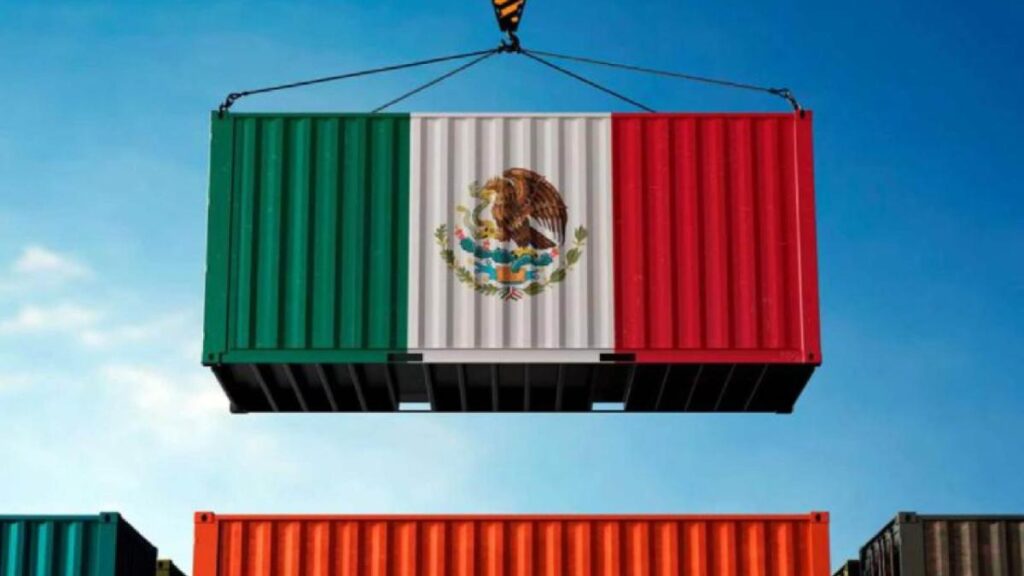
Background on the Situation
On Thursday, tariffs imposed by Mexico on various product imports from China and other countries without trade agreements came into effect. These customs duties were approved by the Mexican Congress in December, following a year marked by trade wars initiated by former U.S. President Donald Trump, who threatened Mexico with tariffs since his return to the White House.
Relevance and Impact
Experts view Mexico’s measure as an alignment with the United States, its primary trading partner, in preparation for the review of the T-MEC free trade agreement involving both countries and Canada.
The tariffs target diverse products from sectors such as footwear, automotive, textiles, and toys, among others, industries heavily reliant on Chinese imports.
- In 2024, Mexico imported $2.163 billion worth of footwear, with 41.5% originating from China. Tariffs for this sector range between 25% and 35%, depending on the product type.
- For toys, with Mexican imports totaling $3.281 billion in 2024, a 30% tariff has been in effect since 2026. In 2024, 61.5% of toy imports came from China, according to Mexico’s National Institute of Statistics and Geography (Inegi).
Mexico’s Secretariat of Economy stated that the primary goal of this measure is to “safeguard approximately 350,000 jobs” and contribute to the country’s reindustrialization.
Reactions from China
Following the tariff approval in Congress, a spokesperson from China’s Ministry of Commerce expressed hope that “Mexico will correct this erroneous unilateralism and protectionist practice.”
In a statement released on December 30, Mexico’s Secretariat of Economy clarified that the measure “is not targeted at any specific country.”
Key Questions and Answers
- What products are affected by these tariffs? The tariffs target various products from sectors including footwear, automotive, textiles, and toys, among others, which heavily rely on Chinese imports.
- Why were these tariffs implemented? Mexico’s primary objective is to safeguard around 350,000 jobs and contribute to the country’s reindustrialization.
- Which countries are impacted by these tariffs? The tariffs apply to imports from China and other countries without trade agreements with Mexico.
- What is China’s response to these tariffs? A Chinese Ministry of Commerce spokesperson expressed hope that Mexico would correct its unilateral and protectionist practices.
- Is this measure directed at a specific country? According to Mexico’s Secretariat of Economy, the tariffs are not targeted at any particular country.




