
Background on Pemex and its Relevance
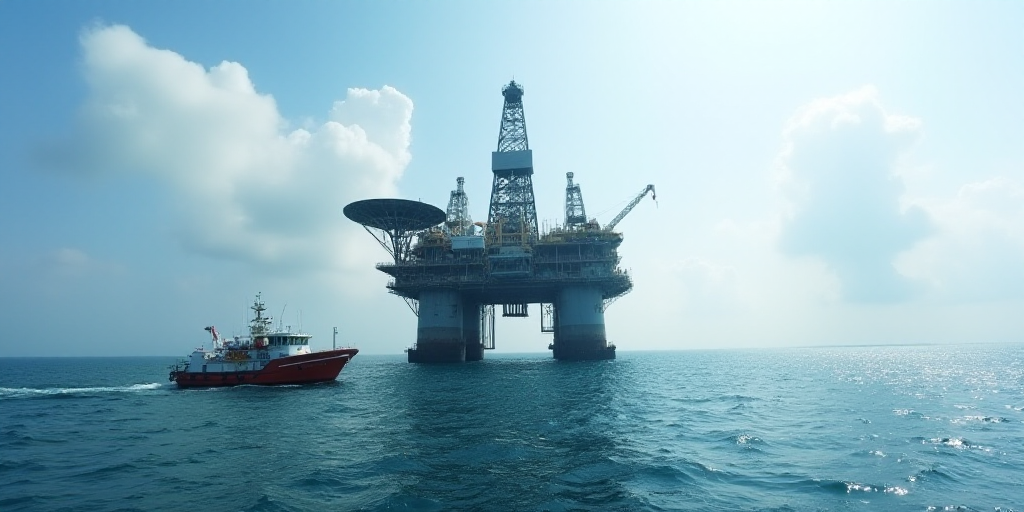
Petróleos Mexicanos (Pemex) is Mexico’s state-owned petroleum company, responsible for exploration, production, refining, and marketing of oil and natural gas. As Mexico’s primary energy source, Pemex plays a crucial role in the country’s economy and energy security. Understanding its performance is essential for gauging Mexico’s overall economic health and energy independence.
Export Trends and Impact
During the third quarter of 2021, Pemex’s crude oil exports averaged 556,978 barrels per day, marking a 25-year low. This decline is part of a larger trend: over the past decade, crude oil exports have fallen by 31%, and since 2018, they’ve dropped by 54%. The company’s import of petroleum derivatives also decreased, falling nearly to 2020 levels at 545,714 barrels per day.
Policy and its Consequences
Pemex’s current policy aims for energy sovereignty, intending to utilize domestic hydrocarbon production to meet national fuel demands while minimizing foreign purchases. This strategy, however, results in reduced export revenues.
Income Reduction
In value terms, Pemex’s crude oil exports fell by 31% year-over-year, generating $3.184 billion in the third quarter. Over a decade, this amount has decreased by 31%, and since 2018, it has dropped by 45%.
Spending on foreign petroleum derivative purchases totaled $4.226 billion, resulting in a 33% year-over-year reduction, a 22% decline over the decade, and a 47% decrease compared to 2018.
Key automotive fuel imports, such as gasoline and diesel, also experienced reductions. Gasoline import value was $2.715 billion, a 31% decrease from the previous year and a 45% reduction since 2018. Diesel import spending fell by 57% year-over-year and 71% since the policy change in 2018.
Refining Capacity Utilization
Despite reduced exports, Pemex’s refining capacity utilization has increased. The National Refining System reported the highest levels of petroleum derivative production since 2015, averaging 1.017 million barrels per day in the third quarter of 2021—a 57% increase from 2018 and a 1.3% quarterly rise.
The Dos Bocas refinery reached its highest crude processing level so far, averaging 194,874 barrels per day in September. However, the national crude processing level dropped by 10% in a month, settling at 949,772 barrels per day.
With this national average, Pemex reported a crude processing level below one million barrels per day for the first time in four months.
At 48%, Pemex’s refinery capacity utilization is currently at its highest point in years.
Production Decline
Despite the export trends, Pemex’s extraction indicators show continuous reductions. In the third quarter, liquid hydrocarbon production averaged 1.681 million barrels per day, marking a 6.6% annual decline. This production has fallen by 10% since 2018 and is now 27% lower than the same period a decade ago.
Crude oil production alone averaged 1.374 million barrels per day in the third quarter, experiencing a 7.7% interannual drop and a 24% decrease since 2018, along with a 39% decline over the decade.
Key Questions and Answers
- What is the current state of Pemex’s crude oil exports? In July-September 2021, Pemex’s crude oil exports averaged 556,978 barrels per day, the lowest in 25 years.
- How have Pemex’s export revenues changed over the past decade? Export revenues have decreased by 31% in a year and 31% over the decade.
- What is Pemex’s refining capacity utilization rate? The national refinery capacity utilization is currently at 48%.
- How has Pemex’s liquid hydrocarbon production changed in recent years? Liquid hydrocarbon production has declined by 6.6% annually and 27% since a decade ago.
- What are the key changes in Pemex’s petroleum derivative imports? Imports of gasoline and diesel have decreased by 31% and 57% year-over-year, respectively.




