
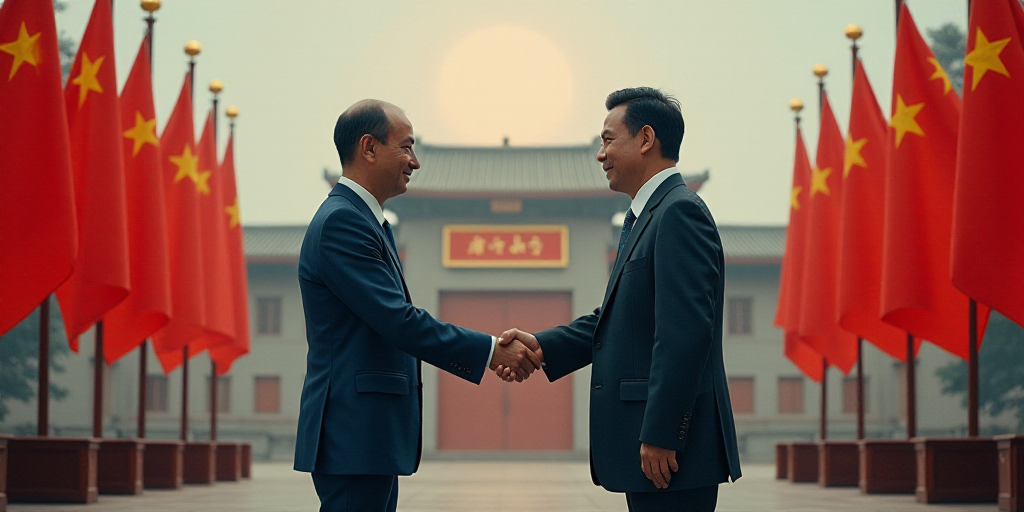
Background on Key Figures
Donald Trump, the President of the United States, recently announced a reduction in tariffs on Chinese imports following his meeting with Xi Jinping, the President of China. This encounter marked the end of Trump’s whirlwind tour of Asia, during which he also promoted trade advancements with South Korea, Japan, and Southeast Asian countries.
Key Points of the Agreement
- Tariff Reduction: Trump stated that tariffs on Chinese imports would be cut by 47% from 57%, effectively halving the tariff rate related to trading precursor substances of fentanyl, lowering it from 20% to 10%.
- Fentanyl Crackdown: Xi Jinping committed to taking “very hard measures” to stop the flow of fentanyl, a deadly synthetic opioid that is the leading cause of overdose deaths in the U.S.
- Soja Purchases Resumption: China agreed to resume substantial purchases of U. rare earth exports, ensuring the continuity of export flows.
Trump described the meeting as “incredible,” giving it a rating of “12 out of 10.” The news caused market fluctuations, with major Asian and European futures oscillating between gains and losses.
Global Market Reaction
Prior to the meeting, global stock markets, including Wall Street and Tokyo, had reached historical highs due to anticipation of progress in the trade war between the world’s two largest economies, which has disrupted global supply chains and shaken business confidence.
Remaining Trade Tensions
Despite the agreement, significant trade tensions persist. India and Brazil remain subject to higher tariffs among the U.S.’s major trading partners.
Historical Context and Future Uncertainty
Trump and Xi had discussed the possibility of reaching an agreement since Sunday, when U.S. negotiators reportedly agreed on a framework with China to avoid U.S. tariffs of 100% on Chinese products and achieve a delay in China’s export restrictions on rare earths, an area where China holds global dominance.
However, given the competitive nature of economic and geopolitical areas between both nations, it remains uncertain how long this trade truce will last.
Details of the Meeting
The cordial meeting, held on the sidelines of the APEC summit in Busan, lasted nearly two hours. Xi Jinping told Trump that friction between superpowers is normal from time to time.
Both parties had previously reached a “fundamental consensus to address each other’s main concerns,” said Xi. He expressed his willingness to work with Trump to establish a solid foundation for U.S.-China relations.
Additional Concessions
China sought relaxation of U.S. export controls on sensitive technology and a reduction in new U.S. port fees for Chinese ships, aiming to curb China’s global dominance in shipbuilding, maritime transportation, and logistics.
Key Questions and Answers
- What tariff rate will China’s imports now face? The new tariff rate for Chinese imports is 47%, down from 57%.
- What specific measures did China agree to take regarding fentanyl? China committed to taking “very hard measures” to stop the flow of fentanyl.
- What agricultural products will China purchase from the U.S.? China agreed to buy “huge quantities” of U.S. soja and other agricultural products “from now on.”
- When do the current trade agreements expire? The existing trade agreements, which reduced U.S. retaliatory tariffs and resumed the flow of rare earth magnets from China, expire on November 10.




