
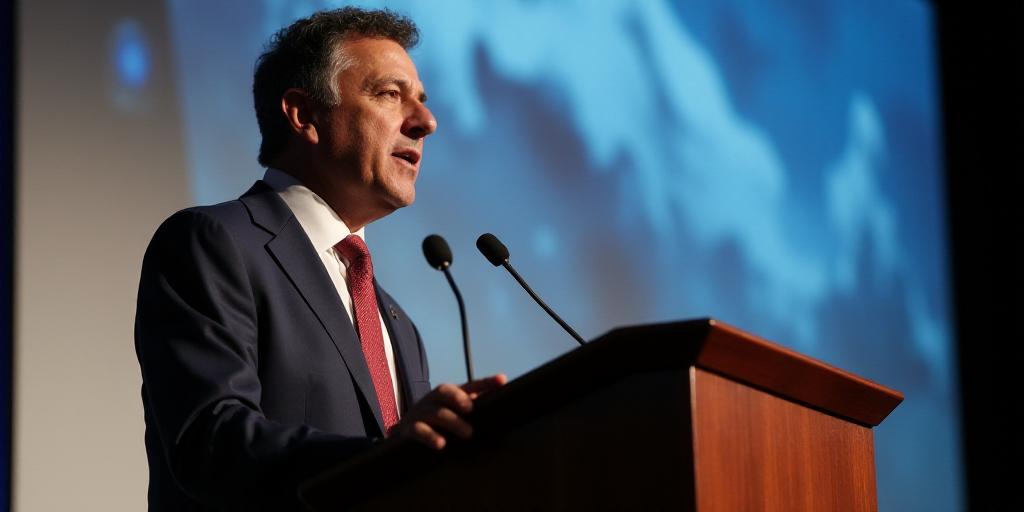
Introduction to the University Iberoamericana Rector, Dr. Luis Arriaga Valenzuela S. J.
Dr. Luis Arriaga Valenzuela S. J., the rector of the University Iberoamericana, presented his Fourth Annual Activities Report to the University Senate and the Iberoamericana community. He detailed the achievements during his four-year tenure, which was renewed for another two years, and outlined the priorities shaping the institution’s future agenda.
Consolidated University Project with a Strategic Direction
During his first term, the rector led the definition of the Strategic Horizon 2023-2027, emphasizing holistic excellence, social impact, international projection, strengthening Ignacian identity, and the sustainability of the university.
- Updated educational offer based on social relevance
- Strengthened scholarship and financial support schemes (currently benefiting 33% of the student body)
- Sustained investment in academic and technological infrastructure
University Research with Social Impact
In 2025, the University Iberoamericana established a community of 160 members in the National System of Researchers and Researchers (SNII), reinforcing its applied research in strategic areas like inequality, democracy, human rights, health, and the environment through its institutes, centers, legal clinics, and observatories.
- Creation of student-led observatories on Supreme Court and Justice System profiles
- Focus on critical responses to navigate challenging environments, rooted in the Ignacian tradition
Internationalization as a Model
The university announced the opening of two new English-taught undergraduate programs: Global Business and International Relations, aimed at forming globally-minded, internationally competitive professionals.
The university community, IBEROpreneurs, comprising students, alumni, alumnae, and faculty, fosters entrepreneurship, innovation, and collaboration with the business sector.
Ethical AI as Part of Educational Innovation
The report highlighted the university’s response to rapid technological transformation through the critical integration of artificial intelligence in university education, focusing on ethics, humanities, and social impact.
- Institutional Pedagogical Strategy for AI use
- Development of a proprietary ecosystem for responsible AI adoption
- Establishment of the IDEA Collaboratory as an innovation education and teaching methodology space
Community, Well-being, and Holistic Formation
The rector emphasized the strengthening of comprehensive student support through the creation of the Observatorio de Salud Mental, Laboral y Ocupacional, along with institutional routes for attention, prevention, and care.
The Jesuit continuum was furthered through the IBERO Institute, integrating secondary and preparatory education into an international formative project aligned with models like Cambridge and the Bachillerato Internacional.
- 12,378-student community
- 4,919 students receiving scholarships or financial aid
- 703 students studying abroad; 312 international students; 48 new agreements with higher education institutions in 35 countries
- 5,838 participants in 259 Continuing Education programs; professional insertion and collaboration with legal clinics benefiting 481 people
Commitment to Excellence, Critical Thinking, and Social Responsibility
Dr. Arriaga Valenzuela S. J. reaffirmed the university’s commitment to an educational model that combines academic excellence, critical thinking, and social responsibility, ensuring knowledge serves human dignity and the common good.




