
Introduction
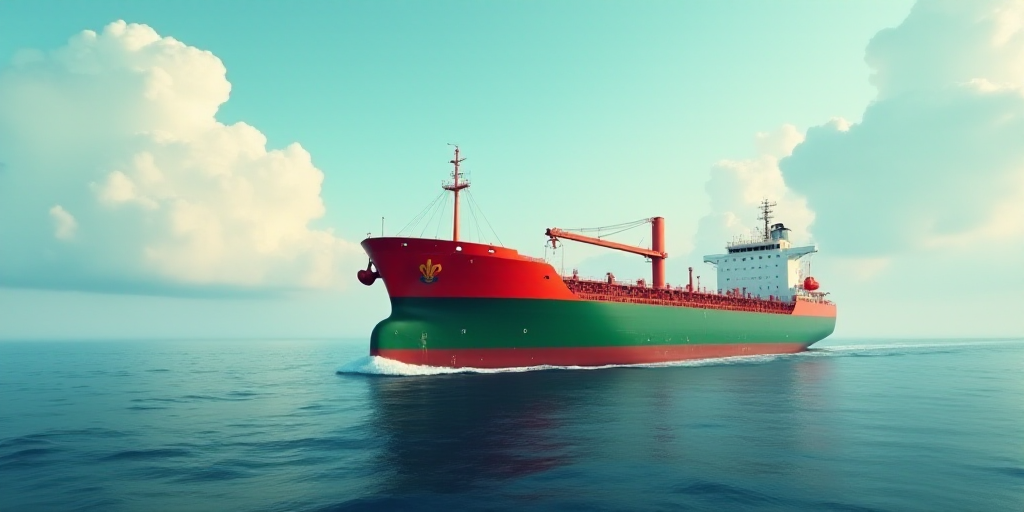
The loading of tankers in Venezuela has slowed to a minimum, with most vessels transporting petroleum cargos exclusively between domestic ports, following US measures against two ships near the country’s coast. This situation has significantly impacted Venezuela’s oil exports, which are crucial for the nation’s economy and international relations.
US Intercepts Venezuelan Oil Tankers
The US Coast Guard seized a sanctioned super-tanker carrying Venezuelan crude this month and attempted to intercept two other vessels linked to Venezuela over the weekend, according to maritime data and sources. One of these ships is a sanctioned empty tanker, while the other is an unsanctioned fully loaded tanker destined for China.
The Seized Vessels
- A sanctioned super-tanker, the Centuries, flying the Panamanian flag, was intercepted by the US Coast Guard on Saturday while transporting a petroleum cargo from Venezuela. The vessel allegedly disregarded Panama’s maritime regulations, altered its name, and disconnected its tracking device.
- Another sanctioned tanker, the Bella 1, was left drifting northeast of Bermuda in the Caribbean on Monday after the US Coast Guard attempted to intercept it as it approached Venezuela’s coast.
Impact on Venezuelan Oil Exports
The US campaign against Venezuelan President Nicolás Maduro has intensified military presence in the region and led to over two dozen military attacks against alleged drug-smuggling boats in the Pacific and Caribbean, near Venezuela. At least 100 people have died in these attacks.
US Objectives and Oil Prices
The US aims to ensure regional stability and security, according to Secretary of State Marco Rubio. The imposed sanctions on Venezuela’s former intermediary trading partners, two units of Russia’s Rosneft, have forced PDVSA to cut production and exports since 2020.
Oil futures for Brent rose by 2.4% to $61.94 per barrel on Monday afternoon, while WTI crude in the US increased by 2.4% to $57.89, following the US actions and amidst Russia’s war against Ukraine. These events have fueled concerns about potential supply disruptions.
Consequences for PDVSA
The seizures have severely affected PDVSA since the US Treasury Department imposed sanctions on Venezuela’s former intermediary trading partners in 2020. These sanctions forced PDVSA to reduce production and exports.
As of Monday, PDVSA had delivered a 1.9 million barrel cargo of heavy crude to the sanctioned Azure Voyager tanker in Jose port, northeastern Venezuela. However, no other super-tankers destined for Asia were expected to set sail soon, according to internal PDVSA documents.
The number of tankers loaded but not yet departed has increased in recent days, leaving millions of barrels of Venezuelan oil stranded on ships while clients demand greater discounts and contract changes for risky voyages beyond the country’s waters.
Some tankers approaching Venezuela’s coast, either to export petroleum or deliver imported naphtha, have also reversed course or suspended navigation recently until their owners clarify loading instructions, according to LSEG monitoring data on Monday.
PDVSA is gradually restoring some systems and relying on manual records following a cyberattack last week. The company has yet to fully restore its centralized administrative system, and many workers haven’t received timely salaries, according to sources.
PDVSA and the Venezuelan Oil Ministry have not responded to comment requests. Venezuelan Foreign Affairs Minister Yván Gil stated on Monday that the US seizures violate international law and constitute “acts of piracy.”
China’s Foreign Ministry also said on Monday that the recent US interceptions represent a serious violation of international law.
Chevron’s Role
Chevron, PDVSA’s main partner, exported a 500,000-barrel Venezuelan oil cargo to the US Gulf Coast on Sunday under US authorization, according to LSEG data. Venezuelan Oil Minister Delcy Rodríguez stated on Sunday that Venezuela hadn’t interrupted deliveries to Chevron. The company has exported seven Venezuelan oil cargos to the US this month, each ranging from 300,000 to 500,000 barrels, according to monitoring data.
Key Questions and Answers
- What are the recent US actions against Venezuelan oil tankers? The US Coast Guard seized a sanctioned super-tanker carrying Venezuelan crude and attempted to intercept two other vessels linked to Venezuela. These actions aim to pressure the Maduro regime.
- How have these seizures affected Venezuelan oil exports? The seizures have slowed Venezuelan oil exports, with tankers now primarily transporting petroleum between domestic ports. This has left millions of barrels stranded on ships and disrupted international trade.
- What is the impact on oil prices? Oil futures for Brent and WTI crude increased following the US actions, reflecting concerns about potential supply disruptions due to regional instability.
- How has PDVSA responded to these challenges? PDVSA is gradually restoring some systems and relying on manual records following a cyberattack. However, the company has not fully restored its centralized administrative system, affecting operations and worker salaries.
- What role does Chevron play in this situation? Chevron, PDVSA’s main partner, has continued exporting Venezuelan oil to the US under US authorization, despite the challenges posed by the sanctions and interceptions.




