
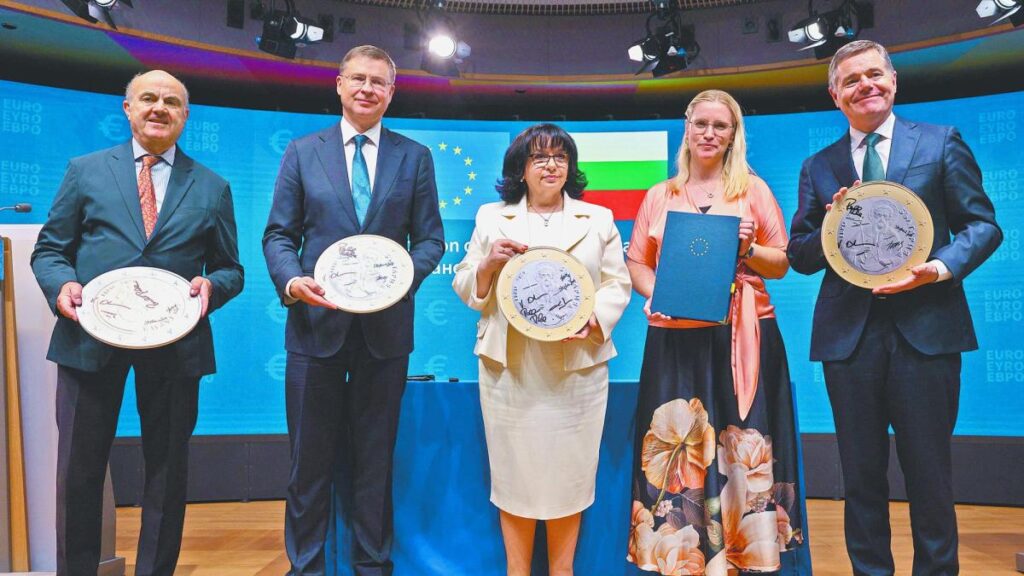
Bulgaria Officially Replaces Lev with Euro
Starting January 1, 2026, Bulgaria officially replaces the lev as its national currency with the euro, becoming the 21st member of the Eurozone. This move is hailed as a “historic” milestone in Bulgaria’s integration into the European Union by President Rumen Radev.
Political Context and Public Opinion
Despite the significance of this step, there have been concerns about the lack of a referendum on adopting the euro. President Radev acknowledged that “the decision to adopt the single European currency was a strategic choice at a controversial time,” but critics argue that “the leaders failed to listen to the people, as evidenced by massive nationwide protests.”
These protests, often referred to as the “Generation Z” demonstrations, expressed frustration with corruption, inflation, institutional arbitrariness, and an unjust economic and political model. Radev highlighted that “the major political event of 2025 has been the popular consensus against political mafia,” urging citizens to avoid repeating past mistakes in upcoming legislative elections and to push for political regeneration.
The government resigned on December 11 following widespread protests against the 2026 budget, which proposed tax increases and greater borrowing to fund public spending.
Collaboration Against International Trends
Christine Lagarde, President of the European Central Bank (ECB), emphasized that Bulgaria’s euro adoption demonstrates Europe’s ability to collaborate against international trends.
“The euro is a powerful symbol of what Europe can achieve when we work together and the shared values and collective strength we wield amidst today’s global geopolitical uncertainty,” Lagarde stated.
Ursula von der Leyen, President of the European Commission, also commented on Bulgaria’s euro entry. She noted that Bulgarian citizens “will now have easier travel and payments,” adding that the move brings new opportunities for Bulgarian businesses to capitalize on the common single market.
The ECB’s Frankfurt headquarters will be illuminated for the first eleven days of 2026, featuring messages celebrating Bulgaria’s adhesion and the integration of 358 million eurozone residents using the euro as their currency, according to an ECB press release.
Transition Period
The lev will remain legal currency during January 2026, with the option to exchange it for euros at a fixed rate in banks and post offices without additional charges until June 30.
Key Questions and Answers
- Q: Why is Bulgaria adopting the euro now? A: The adoption of the euro is considered a strategic move by Bulgaria to further integrate into the European Union, following massive public protests against the 2026 budget.
- Q: How has the public reacted to the euro adoption without a referendum? A: Critics argue that the lack of a referendum signifies a disconnect between political leaders and citizens, as evidenced by widespread protests against the proposed budget.
- Q: What benefits does the euro bring to Bulgarian citizens and businesses? A: The euro is expected to facilitate travel and payments for Bulgarians, while offering new opportunities for businesses within the common single market.
- Q: How will the transition from lev to euro be managed? A: The lev will remain legal currency during January 2026, allowing citizens to exchange it for euros at a fixed rate in banks and post offices until June 30.




